Guiding Ships into a Lumber Boomtown
Long before Cheboygan became a quiet harbor town, it was a bustling shipping hub shaped by lumber, lake commerce, and the steady glow of lighthouse beams. The Cheboygan Front Range Lighthouse played a crucial role in guiding vessels safely into the river during a time when shallow water and shifting sandbars made navigation risky. Its story is closely tied to the growth of the harbor. Additionally, it is connected to the people who kept its lights burning.
Improving the Cheboygan Harbor
In 1871, plans were adopted to dramatically improve Cheboygan Harbor by dredging the river to accommodate larger vessels. The project aimed for a channel that was 200 feet wide and at least fourteen feet deep. By 1883, dredging had transformed the river between the steamboat landing and the railroad dock. It created a carefully cut channel extending lakeward into Lake Huron. Before these improvements, the river mouth had just seven feet of water—far too shallow for heavy commercial traffic.
These upgrades were essential. By 1888, Cheboygan was shipping enormous quantities of lumber: 100 million board feet, along with millions of lathes, shingles, and pickets. Fish and flour also left the harbor. Imports were limited to basics like coal, brick, and general merchandise. Cheboygan was clearly a town built on exports.
Establishing the Cheboygan Range Lights
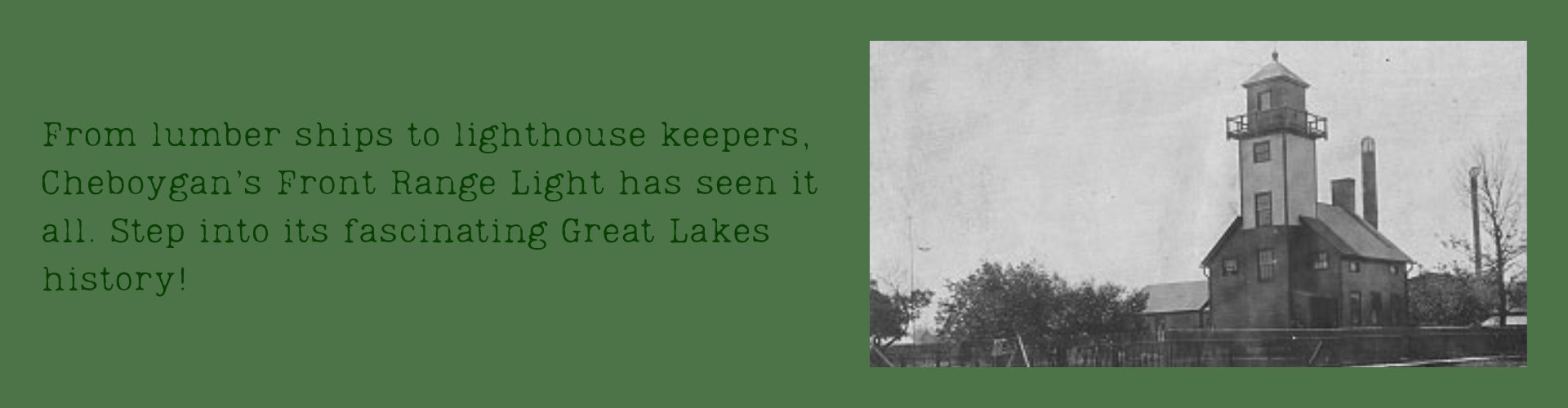
To support the improved harbor, Congress allocated $10,000 in 1876 for range lights at the mouth of the Cheboygan River. Legal issues delayed construction, but work finally began in 1880. The front light was mounted atop a two-story keeper’s dwelling. It was displayed from a small square tower on the roof. The rear light stood on a skeletal wooden tower farther inland.
The lights were first exhibited on September 30, 1880. Initially fixed white, both lights were changed to fixed red in 1884. This change occurred when a sixth-order Henry-Lepaute Fresnel lens replaced the original lantern in the front light. The focal plane stood forty-two feet above the water for the front light and sixty-eight feet for the rear.
Keepers and Daily Life at the Station
The first keeper, George P. Humphreys, served just two years before resigning. His replacement, James W. Rich, stayed only four months before being transferred to Copper Harbor. Stability came in 1883 with Ivory Littlefield, a Civil War veteran who had lost his left foot during the war.
Littlefield’s responsibilities expanded when Cheboygan Crib Lighthouse began operation in 1884, requiring an assistant keeper. After Littlefield’s death in 1894, his wife Philancy briefly served as keeper before resigning. John Sinclair Jr. took over until 1899, followed by John Duffy.
Changes to the Structures and Grounds
The lighthouse property evolved steadily. City water reached the keeper’s dwelling in 1889, but flooding problems plagued the cellar. While waiting decades for congressional funding to purchase adjacent land, the dwelling was moved in 1891 and drainage piping installed. Additional land was finally acquired in 1910—twenty years after the initial request.
In 1890, the rear light’s wooden tower was replaced with a steel skeletal tower rising seventy-five feet. White boards formed a distinctive oval daymark on its frame, making it highly visible during daylight hours. Over time, paint schemes changed. The dwelling was eventually painted venetian red, while the tower remained white with a black lantern.
Later Years and Preservation
In 1914, reflectors increased the intensity of the range lights. During winter months, lightships like the Martin and Poe Reef vessels were often moored nearby. The front range light later served as a supply point for offshore stations. When Coast Guard operations moved to St. Ignace in the 1980s, federal agencies repurposed the dwelling.
A new chapter began in 2001 when the Cheboygan Front Range Lighthouse was among the first to be transferred under the National Historic Lighthouse Preservation Act. The Great Lakes Lighthouse Keepers Association received the deed in 2004. With support from the Michigan Lighthouse Assistance Program, they undertook restoration work. Today, the lantern and gallery have been rebuilt, and volunteer guest keepers welcome visitors on weekends and holidays from Memorial Day through Labor Day.
More than a Navigational Aid
The Cheboygan Front Range Lighthouse is more than a navigational aid—it’s a reminder of a time when Cheboygan’s harbor powered a booming lumber economy. It also signifies when keepers played a vital role in Great Lakes commerce. Thanks to dedicated preservation efforts, this historic light continues to shine. It connects modern visitors to the hardworking maritime past of Northern Michigan.
Explore our full collection of Northern Michigan lighthouse stories here
Start planning your trip today and explore the legacy of Michigan’s maritime history!
📍 Explore the Map Below