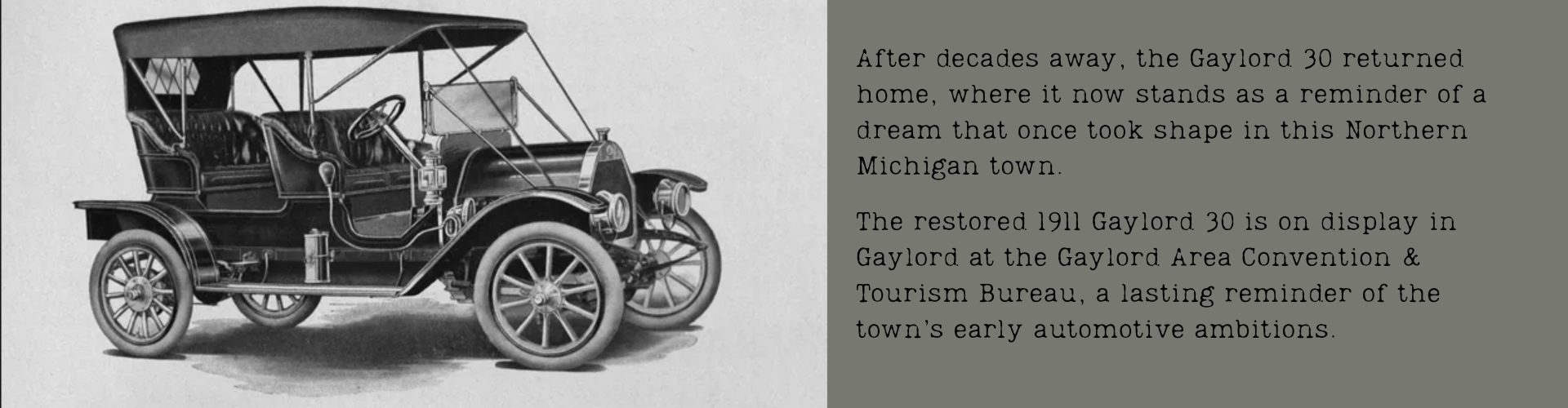
In the early years of the twentieth century, the future of many Northern Michigan towns felt uncertain.
The logging era that had built places like Gaylord was fading. What came next was not always clear. Some communities slowed. Others searched for something new.
In Gaylord, a group of local residents decided not to wait and see what would happen. They chose to build something bold.
A Community Invests in Its Future
In the spring of 1910, the idea began to take shape.
A local banker, A. B. C. Comstock, understood that the lumber economy was nearing its end. Around the same time, a Detroit machinist named Guy Hamilton arrived in town on a fishing trip. The two men met, talked, and saw possibility where others saw uncertainty.
Not long after, fifty three residents of Otsego County pooled their money to start the Gaylord Motor Car Company.
It was an ambitious move. Within a month, they had raised fifty thousand dollars, a significant sum for the time. Their goal was simple in idea, but difficult in practice. They would build automobiles in Northern Michigan and compete with the growing industry downstate.
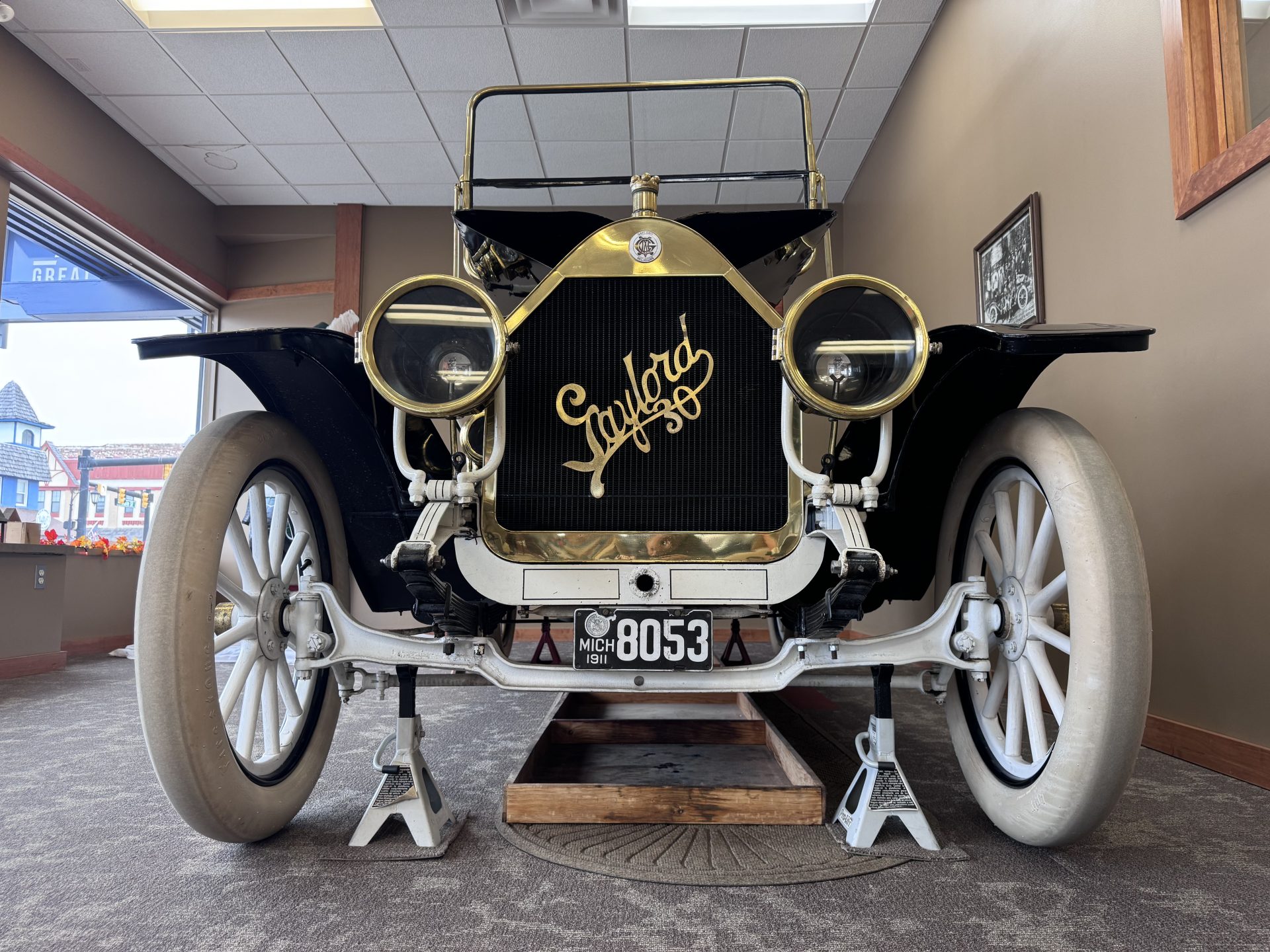
More than a century after it was built, the Gaylord 30 still reflects the craftsmanship and vision behind the original company.
Photo courtesy of the Gaylord Area Convention & Tourism Bureau
Building a Car, and a Reputation
Construction on the factory began that same year on the south side of town, near the railroad tracks. The location was practical. Materials could come in by rail, and finished cars could be shipped out.
Before the plant was even complete, the first Gaylord car was assembled in Detroit and driven north to its new home.
The journey itself became part of the story.
Traveling across Michigan roads that were often rough and unpredictable, the car made its way through cities and small towns. At one point, it struck a hole in the road and bent an axle. The crew stopped, made repairs in a nearby town, and continued on. Speeds reached higher than some passengers were comfortable with. One man decided the train was the better option for the return trip.
When the car finally arrived in Gaylord in August of 1910, it had done more than travel miles. It had proven something to the people waiting to see it.
This was real.
A Car Built for Northern Michigan
The Gaylord Motor Car Company began production soon after. About fifty cars were built in the first year, with more models introduced in 1911 and 1912.
These were not just pleasure vehicles. They were designed with Northern Michigan in mind.
Some models featured higher ground clearance so they could travel over rough terrain, including stump filled land left behind after logging. The cars were meant to work as well as to carry people. Farming, hauling, and daily use were all part of the vision.
For a time, the excitement spread beyond Gaylord. The company displayed its vehicles at the New York Automobile Show, where the design and versatility drew attention. Orders came in, and local newspapers followed each step with optimism.
It felt like the beginning of something lasting.
The Reality of Competition
But the automobile industry in the early 1900s was crowded.
Hundreds of small companies were trying to do what Gaylord was doing, building reliable cars and convincing buyers to take a chance on something new. At the same time, larger manufacturers were finding ways to lower costs and increase production.
The biggest challenge came from Ford Motor Company.
When the price of the Model T dropped to around seven hundred fifty dollars, it changed the landscape almost overnight. A Gaylord car could cost between one thousand and seventeen hundred dollars at the time, a price that would be several tens of thousands today.
For a small company with limited capital, it was a difficult gap to overcome.
By 1913, after only a few years in operation and roughly three hundred fifty cars produced, the Gaylord Motor Car Company closed its doors.
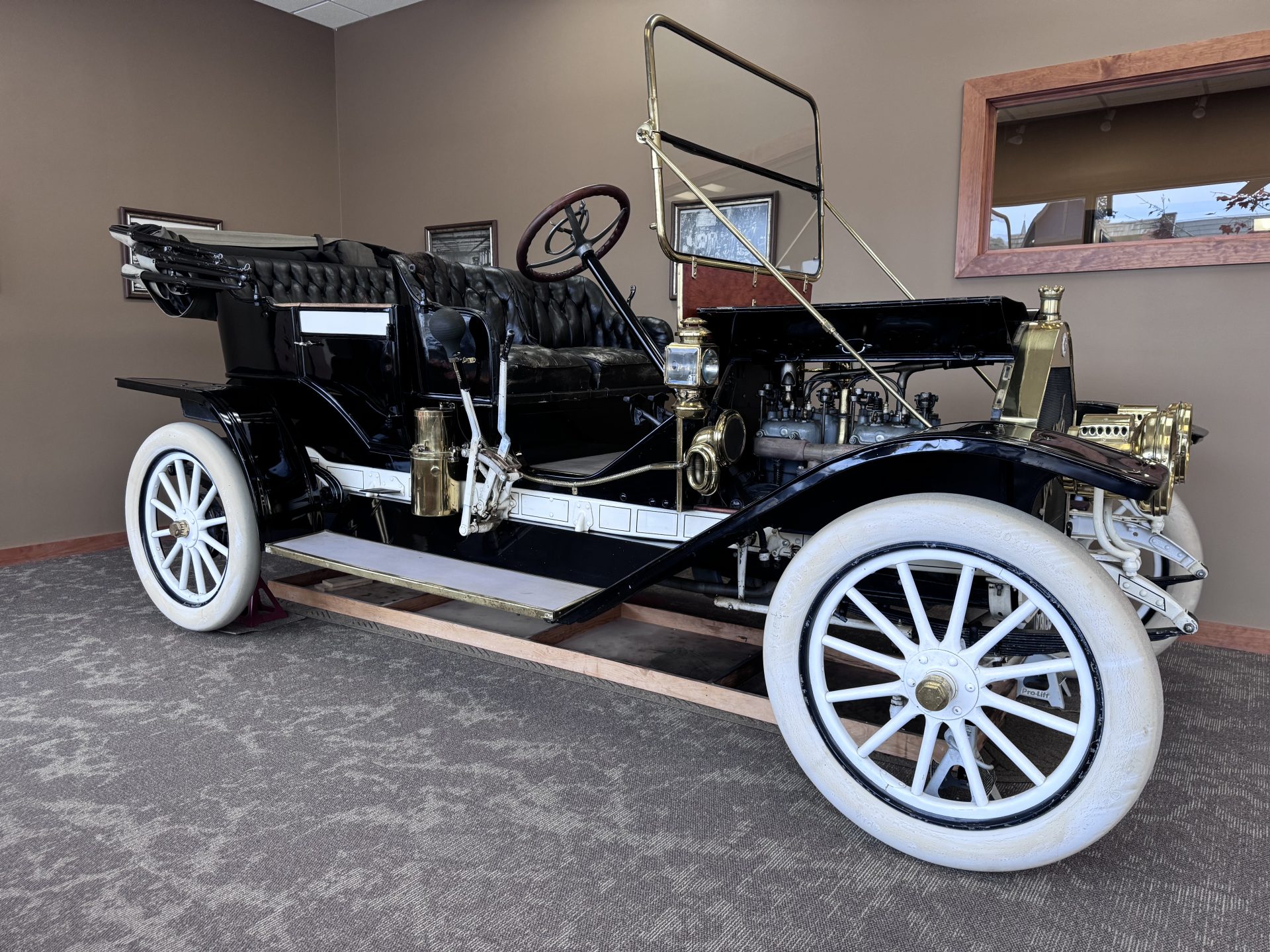
The restored 1911 Gaylord 30 on display in Gaylord, a lasting reminder of the town’s early automotive ambitions.
Photo courtesy of the Gaylord Area Convention & Tourism Bureau
What Remains Today
The factory building still stands, a quiet reminder of what once took place there.
And one car remains.
Today, a restored 1911 Gaylord Model 30 is on display at the Gaylord Area Chamber of Commerce. It is the only known surviving example of the company’s work.
Its survival is due in large part to Ivan Polus, who discovered the car in the early 1960s and carefully restored it for future generations to see.
The Car That Came Home
The story of the Gaylord car did not end when the factory closed. Decades later, it would take an unexpected turn.
As a boy growing up near Elmira, Ivan Polus once imagined what it would be like to find one of the old Gaylord cars and bring it back to life. At the time, it felt like a distant idea. Most people assumed they were all gone.
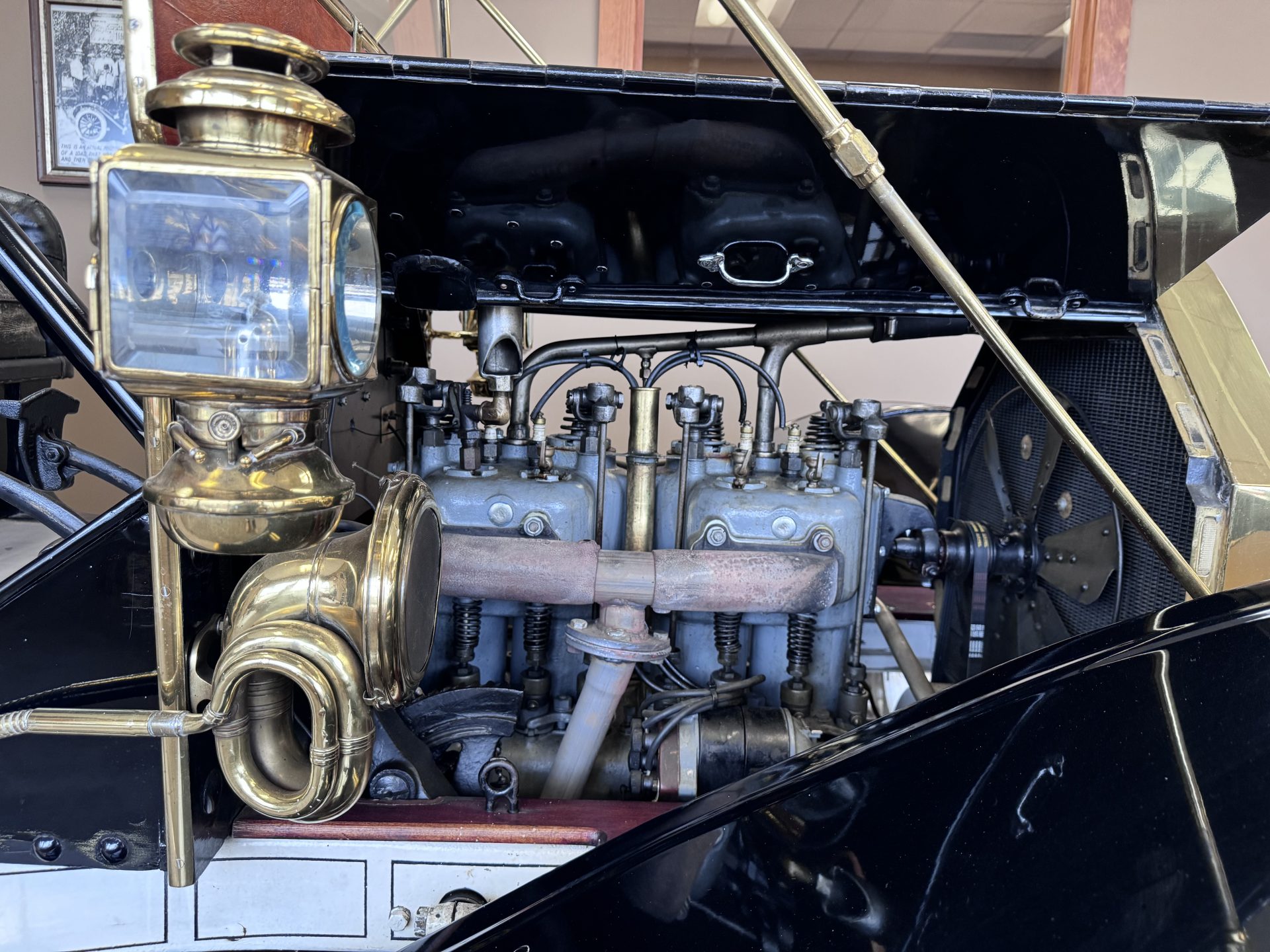
Carefully restored over time, the Gaylord 30 stands as one of the few remaining links to this short lived Northern Michigan industry.
Photo courtesy of the Gaylord Area Convention & Tourism Bureau
In 1963, that changed.
While searching for a different piece of machinery in a remote area of northern Michigan, Polus came across an old barn. Inside, scattered across the property, were the remains of a Gaylord 30. The frame and motor sat in one place. The body rested on boards. Other pieces were spread out, some inside, some outside, some tucked away in unexpected places. It was not a complete car in the usual sense, but enough remained to tell what it once had been.
The owner considered it little more than scrap. The price was fifty dollars, just over five hundred today, for what would become the only known surviving Gaylord car.
Polus gathered what he could and took the car west to Montana, where he began the long process of restoring it. Over the years, he worked carefully to bring it back to its original form, relying on photographs and patience to guide the process. It was not a quick project, but a steady one.
By the time the work was complete, the Gaylord 30 was once again a working automobile, a rare survivor from a company that had nearly disappeared from memory.
In 1968, Polus shared the story of the car and the company in the Horseless Carriage Gazette, offering one of the most detailed early accounts of Gaylord’s brief time in the automobile industry. That work continues to guide how the story is told today, and you can still read his original article, now preserved and shared for a new generation.
Gaylord Centennial
Years later, in 1981, Gaylord was preparing to celebrate its centennial. Local organizers began to wonder if the car could be brought back to the town where it had been built. After tracking it down in Montana, they found it fully restored and still in remarkable condition.
With the help of local businesses, banks, and community support, the Gaylord Area Chamber of Commerce was able to purchase the car. Fundraising efforts helped secure its return, and on October 10, 1981, it arrived back in Gaylord in time for the celebration.
After decades away, the car had come home.
If you would like to read the full story of “The Gaylord of Gaylord” as shared by the Gaylord Area Convention and Tourism Bureau, you can view it here.
A Name That Can Be Confusing
It is worth noting that this early Gaylord Motor Car Company is not connected to the Gaylord Gladiator, a much later automobile from the 1950s.
The Gaylord Gladiator was a luxury sports car developed by two brothers from Chicago and built in Germany. While it shares the name, it belongs to a completely different story.
Looking Beyond Gaylord
Gaylord was not alone in this moment. In June of 1910, just a month after the Gaylord Motor Car Company was formed, the Alpena Motor Car Company was established to the northeast. In different towns, with the same sense of possibility, people were trying to build something new. You can read that story here.
More Than a Short Lived Company
The Gaylord Motor Car Company existed for only a few years, but its story reaches beyond numbers or production totals.
It is a story about a community that chose to act at a moment of uncertainty. Fifty three people invested not just money, but belief. They imagined a future for their town and worked to build it with their own hands. The company did not survive, but the effort itself left something behind.
You can still see it today, not only in the restored car on display, but in the sense that even in a small Northern Michigan town, people were willing to take a chance on something new.
And for a brief time, in places like Gaylord and Alpena, it seemed like Northern Michigan might find its future on four wheels.