Guiding Ships at the Mouth of Green Bay
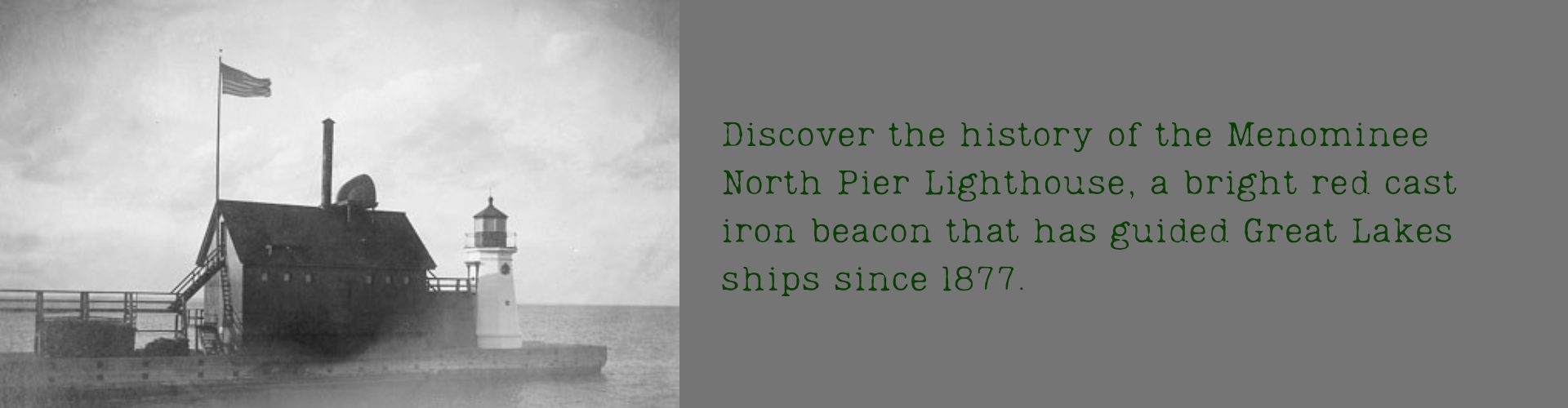
Standing at the end of the north pier in Menominee Harbor, the Menominee North Pier Lighthouse has welcomed sailors and guided vessels safely into port for nearly 150 years. Though modest in size compared to some of the Great Lakes’ towering lights, this bright red beacon has played an important role in maritime navigation along the western shore of Michigan’s Upper Peninsula.
Located where the waters of Green Bay meet the harbor shared by Menominee, Michigan, and Marinette, Wisconsin, the lighthouse continues to serve as an active aid to navigation. Its distinctive appearance and long history make it one of the most recognizable landmarks on the waterfront.
A Growing Harbor Needed Reliable Navigation
During the late nineteenth century, Menominee was a booming lumber and shipping center. Massive quantities of timber moved through the harbor, and commercial vessels regularly entered and departed the port. As maritime traffic increased, the need for dependable navigation aids became increasingly important.
To help guide ships safely through the harbor entrance, the Menominee North Pier Lighthouse station was established in 1877. The original light marked the end of the north pier and helped captains navigate the often challenging waters at the mouth of Green Bay.
The harbor’s importance continued to grow during the following decades, eventually leading to improvements and modernization of the lighthouse facilities.
The Lighthouse We See Today
The structure standing on the pier today dates to 1927. That year, a new lighthouse was constructed and its light was first displayed to mariners.
Built atop a concrete pier foundation, the lighthouse features an octagonal cast iron tower standing 34 feet tall. The structure’s bright red exterior makes it highly visible against the blue waters of Green Bay and the often gray skies of the Great Lakes. A black lantern crowns the tower, while a white base provides additional contrast.
Although relatively compact, the lighthouse’s focal plane sits 46 feet above the water, allowing its light to be seen by approaching vessels as they make their way toward the harbor entrance.
The design reflects a period when cast iron lighthouse construction offered durability while requiring less space than traditional masonry towers. Its sturdy construction has allowed the lighthouse to withstand decades of storms, ice, wind, and changing lake conditions.
The Lens and the Light
When the current lighthouse entered service in 1927, it was equipped with a Fourth Order Fresnel lens. Developed during the nineteenth century, Fresnel lenses revolutionized lighthouse technology by concentrating and projecting light much farther than earlier systems.
These remarkable lenses became the standard for many Great Lakes lighthouses and significantly improved navigation safety throughout the region.
Over time, technological advances led to the installation of a modern 12 inch acrylic optic lens. While less complex than the original Fresnel lens, the newer optic continues to provide an effective and reliable navigational signal.
The original Fourth Order Fresnel lens was preserved and now resides at Sand Point Light in Escanaba, where visitors can view an important piece of Menominee’s maritime history.
Fog Signals and Automation
For many years, the lighthouse included a diaphone fog signal structure attached to the building. Fog was a constant concern for Great Lakes mariners, particularly during spring and fall when weather conditions could change rapidly.
The powerful fog signal helped vessels locate the harbor entrance when visibility was reduced and the lighthouse beam could not be seen.
Another feature of the station was an iron catwalk that provided access around portions of the structure. As lighthouse technology evolved, many traditional features became unnecessary.
In 1972, the Menominee North Pier Lighthouse was automated. Automation eliminated the need for resident lighthouse keepers and allowed the light to operate without continuous on site staffing. During that modernization, the iron catwalk was removed and the station transitioned into the automated aid to navigation that remains active today.
Working Together with the Rear Range Light
The pierhead lighthouse is only one part of the harbor’s navigation system.
Approximately 600 feet behind the pierhead stands the Menominee North Pier Rear Range Light. This companion structure helps mariners align their vessels properly when entering the harbor channel.
Unlike the cast iron pierhead lighthouse, the rear range light is a 50 foot square pyramidal steel skeletal tower painted red. Its focal plane is 59 feet above the water, and it displays a continuous red light.
When viewed together, the two lights create a range that allows captains to maintain the correct course through the harbor entrance. This system remains an important navigational tool and continues to serve commercial and recreational boat traffic today.
A Lasting Harbor Landmark
More than a century after the station was first established and nearly one hundred years after the current lighthouse was built, the Menominee North Pier Lighthouse continues to fulfill the purpose for which it was created.
Visitors walking the pier can still approach the lighthouse and appreciate its distinctive red tower standing watch over the harbor. While modern navigation equipment has changed the way mariners travel the Great Lakes, traditional lighthouses like this one remain valuable aids and powerful reminders of the region’s maritime heritage.
For generations of sailors entering Menominee Harbor, this small red beacon has represented something important: safe passage home.
Explore our full collection of Northern Michigan lighthouse stories here
Start planning your trip today and explore the legacy of Michigan’s maritime history!
📍 Explore the Map Below