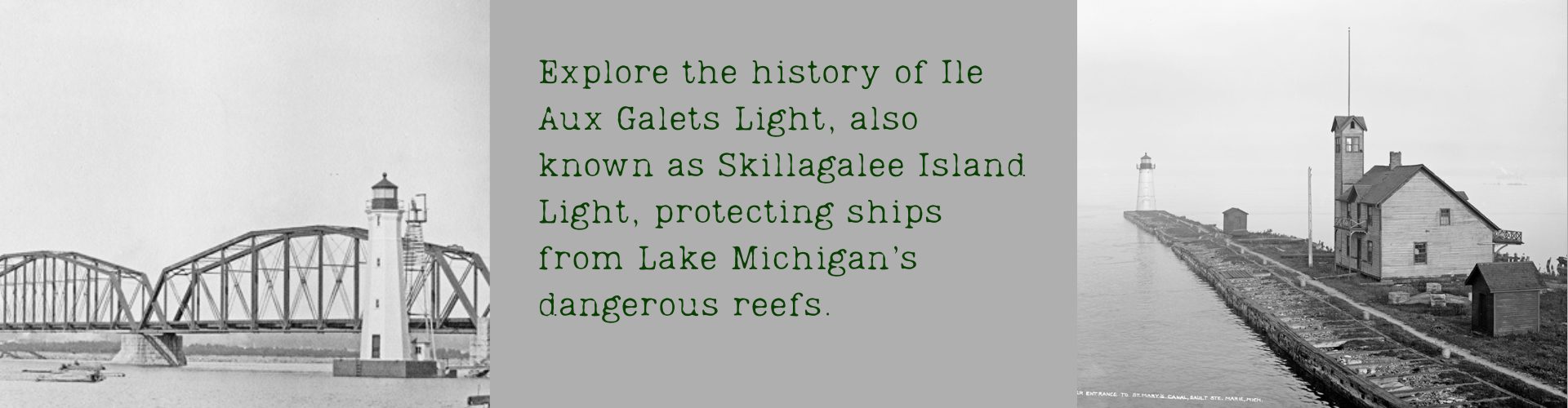
Along the busy approaches to the Soo Locks, a complex system of range lights once guided vessels through one of the most critical shipping corridors in North America. The Vidal Shoals Range Lights directly supported the growth of the St. Marys River shipping channel and the expanding importance of the canal system connecting Lake Superior to the lower Great Lakes.
A Canal of National Importance
Workers completed the Soo Locks in 1855, transforming transportation on the Great Lakes. By allowing ships to bypass the rapids at Sault Ste. Marie, the locks created a vital link for iron ore, timber, and grain shipments moving between the upper and lower lakes.
As traffic increased during the late nineteenth century, officials improved the western entrance of the canal and surrounding channels. Shoals near Vidal Island posed a continuing hazard, prompting the installation of range lights to mark a safe route for vessels.
In the early 1880s, workers erected an iron tower on the north pier to serve as a rear range light guiding ships into the canal’s western entrance. The structure rested on a rubble masonry foundation and was accompanied by a small storage shed for supplies. Over time, engineers modified the tower to strengthen it and improve its operation.
Expanding Infrastructure
By the mid-1880s, they constructed additional facilities to support the growing navigation system. They built a keeper’s dwelling, buoy storage sheds, and a boathouse near the canal. These structures reflected the increasing complexity of maintaining navigation aids in a heavily used shipping corridor.
Technological changes followed. In the late nineteenth century, engineers improved lantern equipment and lighting characteristics. At various times, the light displayed fixed white or fixed red signals, depending on navigation requirements.
Rebuilding the Range
As channel improvements continued, officials relocated and rebuilt the range lights to align with new shipping routes. By the end of the nineteenth century, engineers had repositioned the lights to form a range marking the centerline of the newly improved Vidal Shoals Channel.
Workers completed concrete foundations and rebuilt towers in 1899, and made further adjustments in the early twentieth century. These included raising focal planes, installing new lantern equipment, and replacing older skeletal towers with more substantial structures.
Electrification and Modernization
The early 1900s brought significant technological advancements. Electric lighting systems replaced earlier oil and lens lantern equipment. This shift improved reliability and increased the intensity of the lights, making them more effective for night navigation.
In 1913, officials made major changes to both front and rear range lights. They adjusted the positions, upgraded the illumination systems, and altered the light characteristics to better serve evolving shipping needs. The establishment of new channel alignments forced additional relocations in 1915.
In 1918, authorities added a range beacon to further assist vessels navigating the shoals. Over time, these layered navigation aids formed a comprehensive system guiding ships safely through the canal approaches.
Continuing Maritime Legacy
By the early twentieth century, the role of the Vidal Shoals Range Lights was firmly established within the broader navigation network of the St. Marys River. Though individual towers were relocated, rebuilt, or repurposed, their function remained constant.
One notable example of reuse occurred in 1927, when an earlier front range tower was incorporated into the construction of Fourteen Foot Shoal Lighthouse in the Straits of Mackinac. This reuse reflects the practical approach often taken in Great Lakes lighthouse engineering.
Today, the story of the Vidal Shoals Range Lights illustrates the evolving relationship between navigation technology, engineering innovation, and the demands of commercial shipping. Their history is inseparable from the growth of the Soo Locks and the transformation of Great Lakes maritime trade.
Explore our full collection of Northern Michigan lighthouse stories here
Start planning your trip today and explore the legacy of Michigan’s maritime history!
📍 Explore the Map Below