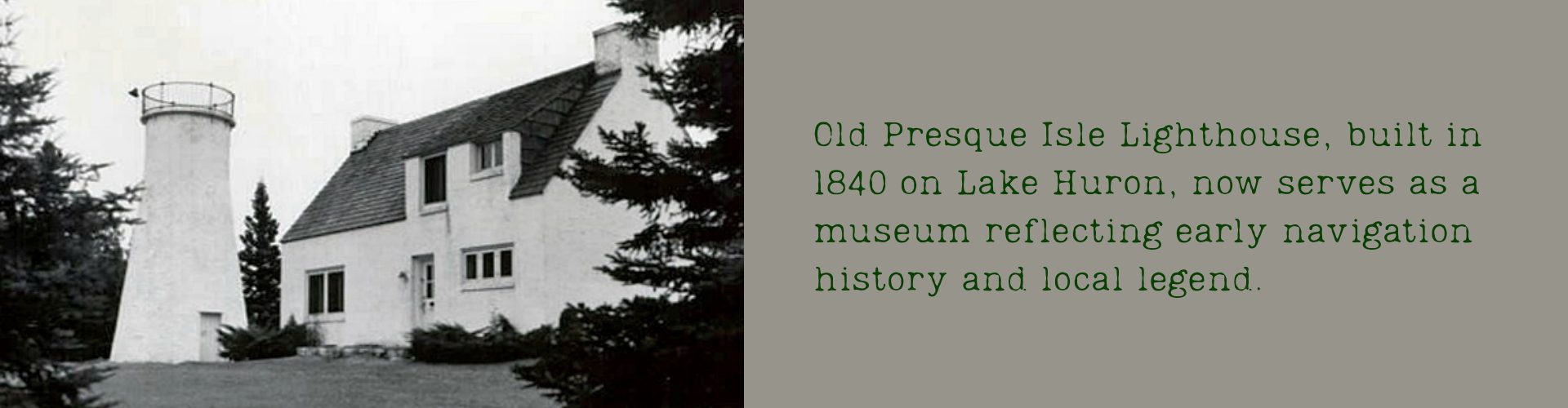
Along the northeastern shoreline of Lake Huron, the Old Presque Isle Lighthouse marks the beginning of a long tradition of navigation aids in the Presque Isle region. Built in 1840, the station served mariners for decades. Later, a newer, taller lighthouse was constructed nearby. Today, the original structure stands as a museum. As a result, it offers a glimpse into the early years of Great Lakes lighthouse history.
An Early Beacon on Lake Huron
Funding for the first Presque Isle lighthouse was approved by Congress in the late 1830s. This reflected the growing need to guide vessels along Michigan’s Lake Huron coast. Construction was completed in 1840 using a combination of stone and brick. These materials were chosen for durability in an environment shaped by wind, waves, and seasonal ice.
Despite these efforts, the harsh conditions of the shoreline took a toll. Within a few decades, deterioration of the tower and dwelling made continued operation difficult. By the late 1860s, officials determined that a new lighthouse would be required to better serve vessels navigating farther offshore.
Transition to a New Station
Plans were made to relocate the primary navigation light roughly two miles north. There, it could be more easily seen by ships traveling at a greater distance from the coast. Congress appropriated funds for the new tower. Notably, this tower would rise significantly higher than the original structure.
With the completion of the New Presque Isle Lighthouse in the early 1870s, the older station’s operational role diminished. Over time, it was deactivated and later preserved as a historic site.
Life at the Lighthouse
Like many early stations, the Old Presque Isle Light required constant attention. Keepers were responsible for maintaining the light, tending the grounds, and ensuring that equipment remained functional in all seasons. These duties often demanded resilience and adaptability, particularly during harsh winter months.
Though the lighthouse is no longer an active aid to navigation, its interior still reflects elements of the period. This refers to the time when keepers and their families lived and worked along the remote shoreline.
Legends and Local Memory
In addition to its historical significance, the lighthouse has become associated with local folklore. Stories passed down through the community suggest that the spirit of a former caretaker, George Parris, still lingers at the site. Accounts describe unusual encounters within the tower and adjoining buildings. Therefore, these stories blend maritime history with regional legend.
Such stories are part of a broader tradition of lighthouse lore. They reflect the isolation and emotional intensity often experienced at remote stations. Whether viewed as history or folklore, these narratives continue to shape the cultural memory of the site.
Preservation and Public Access
Today, the Old Presque Isle Lighthouse is maintained as a museum, allowing visitors to explore the early development of navigation along Lake Huron. Artifacts, including lenses and historical materials connected to the station, help illustrate the technological and human aspects of lighthouse operation.
Standing alongside its later successor, the original tower offers a tangible connection to the first efforts to safeguard maritime travel in this region. Together, the two Presque Isle lights tell a story of adaptation and engineering progress. Moreover, they highlight the enduring presence of Great Lakes heritage.
Explore our full collection of Northern Michigan lighthouse stories here
Start planning your trip today and explore the legacy of Michigan’s maritime history!
📍 Explore the Map Below