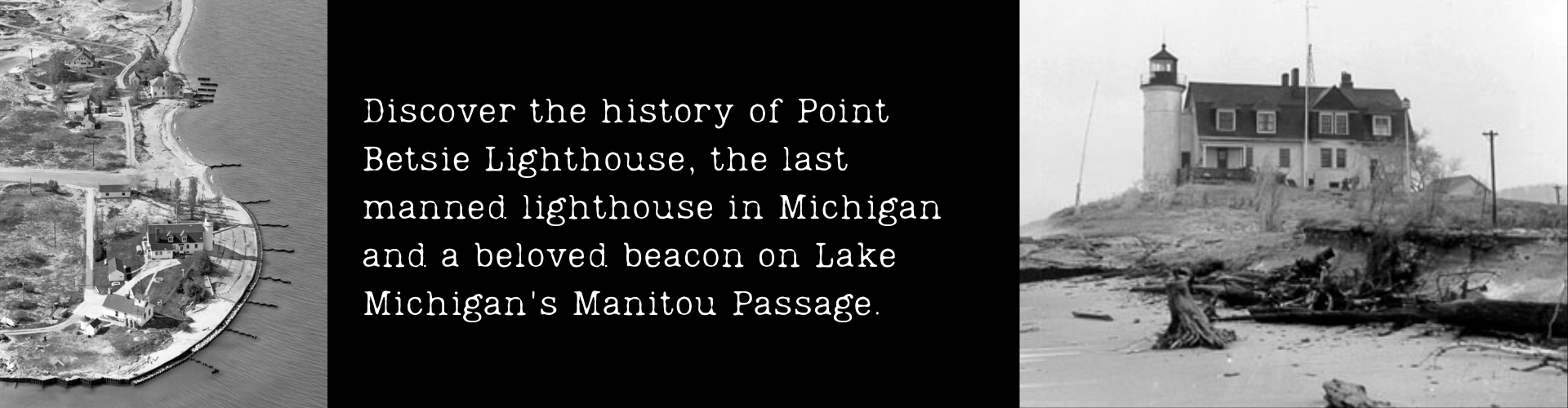
The Last Keeper on Lake Michigan
Few Michigan lighthouses are as recognizable as Point Betsie Lighthouse.
Perched atop a sandy dune along the northeastern shore of Lake Michigan, the lighthouse has guided mariners entering the Manitou Passage for more than 165 years. Its picturesque setting, distinctive tower, and beautifully restored keeper’s house have made it one of the most photographed lighthouses in the Great Lakes.
Yet beyond its beauty lies a remarkable story of maritime commerce, lifesaving service, evolving technology, and one historic distinction. This distinction sets it apart from nearly every other lighthouse in Michigan.
Point Betsie was the last crewed lighthouse on Lake Michigan and the last Michigan lighthouse to lose its keeper.
Guarding the Gateway to the Manitou Passage
Point Betsie occupies one of the most important navigational locations on Lake Michigan.
Located north of Frankfort, the lighthouse marks the southern entrance to the Manitou Passage. This passage is a major shipping route used by vessels traveling between the Straits of Mackinac and ports farther south.
The passage offered a safer route than traveling farther offshore, particularly during periods of rough weather. As shipping traffic increased during the nineteenth century, mariners needed a dependable lighthouse to guide them through the area.
Construction of Point Betsie Lighthouse began in 1854. Delays slowed progress, but the station was finally completed in 1858 and entered service during the 1859 navigation season.
The total cost of the lighthouse was $5,000, a significant investment that reflected the growing importance of Great Lakes shipping.
A Lighthouse Built for the Dunes
Unlike many Michigan lighthouses built on towering cliffs or prominent points of land, Point Betsie gains much of its visibility from its location atop a sand dune.
The cylindrical brick tower stands 39 feet tall. However, its elevated position allows the light to be seen much farther than its modest height might suggest.
Attached to the tower is the keeper’s dwelling. This dwelling was later modified with an attractive gambrel roof that remains one of the station’s most recognizable features today.
Together, the tower and house form one of the most charming and distinctive lighthouse complexes on the Great Lakes.
The Power of the Fresnel Lens
When Point Betsie entered service, it was equipped with a fourth order Fresnel lens.
In 1880, the station received an upgrade to a larger third order Fresnel lens equipped with a bullseye design. The improved lens dramatically increased the lighthouse’s effectiveness. In addition, it allowed the light to be seen for nearly twenty-four nautical miles under favorable conditions.
The lens represented some of the finest optical technology available during the nineteenth century.
For generations, the brilliant glass prisms concentrated and magnified the light, helping vessels safely navigate the busy waters of Lake Michigan.
In 1996, the historic lens was removed from active service. After spending years in storage at Sleeping Bear Dunes National Lakeshore, it was eventually returned to Point Betsie.
Today, visitors can view the lens inside the lighthouse and appreciate the remarkable craftsmanship that once illuminated the Manitou Passage.
Lifesavers Along the Shore
The dangers of Lake Michigan required more than a lighthouse.
In 1875, a lifesaving station was constructed near Point Betsie at a cost of $3,000. It became one of the earliest stations operated by the United States Life Saving Service.
The crews stationed there stood ready to assist vessels in distress. Often, they launched into storms and dangerous conditions to rescue stranded sailors.
The lifesaving service eventually became part of the United States Coast Guard. This development helped establish the modern maritime rescue system that continues today.
Although many of the original lifesaving structures have disappeared, traces of the station’s history remain scattered throughout the surrounding dunes.
The Sound of Safety
Point Betsie became equally famous for its fog signals.
Lake Michigan fog could appear quickly and reduce visibility to almost nothing. During those conditions, sound became just as important as light.
In 1912, the station’s fog signal building was rebuilt and its original whistles replaced with more effective chime whistles. At the same time, the lighthouse lamp was upgraded to an incandescent oil vapor system producing 55,000 candlepower.
Further modernization arrived in 1921 when electricity reached the station.
The light was converted to an electric bulb, and the fog signal was upgraded to twin Type G diaphones powered by electric air compressors. The new system doubled the effective range of the signal. Moreover, it could be activated immediately without waiting for steam pressure to build.
Mariners soon became familiar with the station’s distinctive pattern of two blasts every thirty seconds.
Unfortunately, the original fog signal equipment was removed and sold for scrap during the 1970s. As a result, only photographs and memories of the once powerful system remain.
The Last Keepers
For more than a century, lighthouse keepers-maintained Point Betsie’s light.
Known affectionately as “wickies,” these keepers tended lamps, maintained equipment, monitored weather conditions, and ensured the station remained operational through every navigation season.
Their service continued longer than at almost any other lighthouse in Michigan.
When Point Betsie was automated in 1983, it became the last crewed lighthouse on Lake Michigan. It was also the last Michigan lighthouse to lose its resident keeper.
The original Fresnel lens was replaced with a modern Vega VRB 25 optic system, ending a chapter that had lasted 106 years.
Restoration and Renewal
Like many historic lighthouses, Point Betsie faced challenges after automation.
Fortunately, strong local support helped ensure its preservation.
In 2004, ownership of the station was transferred to Benzie County under the National Historic Lighthouse Preservation Act. The Friends of Point Betsie Lighthouse then spearheaded extensive restoration and preservation efforts.
Volunteers and supporters have worked tirelessly to maintain the buildings, restore historic features, and return the station to its original appearance.
Among their accomplishments has been repainting the lighthouse using its historic color scheme. Thus, visitors can experience the station much as it appeared decades ago.
Today, Point Betsie remains one of Michigan’s premier lighthouse destinations.
A Lighthouse That Still Captivates
Point Betsie’s beauty is undeniable.
Its dune top location, historic Fresnel lens, restored buildings, and dramatic Lake Michigan setting have inspired countless photographs, paintings, and even needlepoint designs.
Yet its true significance lies in the role it played for generations of mariners.
For more than 165 years, the lighthouse has marked the entrance to the Manitou Passage and guided ships through darkness and fog. In addition, it supported lifesaving crews and stood watch over one of the busiest waterways on the Great Lakes.
From the era of oil lamps to modern navigation technology, Point Betsie Lighthouse remains a shining symbol of Michigan’s maritime heritage.
Explore our full collection of Northern Michigan lighthouse stories here
Start planning your trip today and explore the legacy of Michigan’s maritime history!
📍 Explore the Map Below