Where Iron, Railroads and Lake Superior Came Together
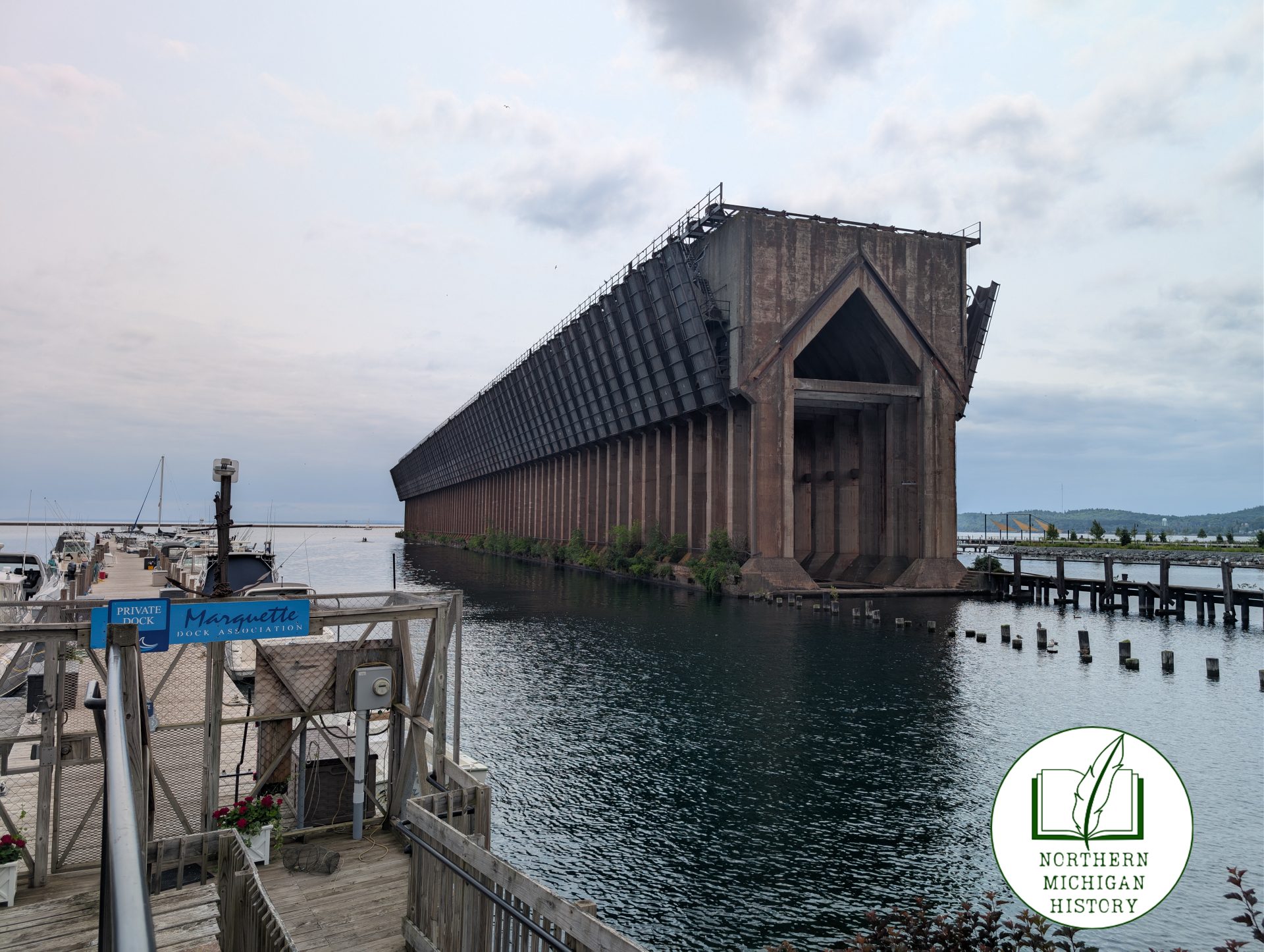
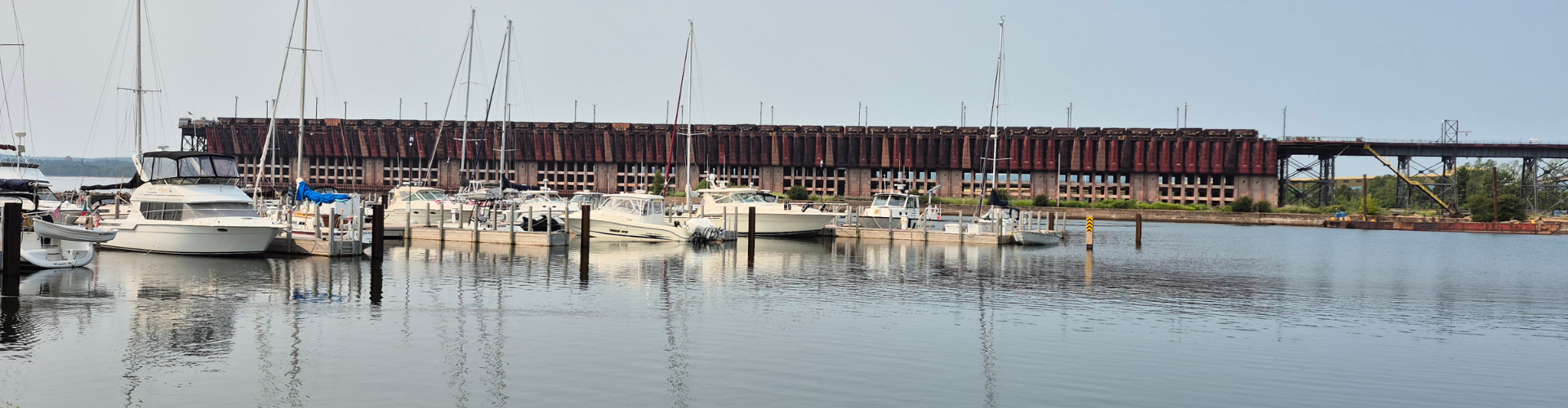
Lower Ore Docks Downtown Marquette
Stand along Marquette’s waterfront today and it is difficult to miss the enormous ore dock reaching into Lake Superior from the Lower Harbor.
It is massive, unmistakable, and strangely beautiful.
Travel a few miles north to Presque Isle and you will find another one. This dock is not simply a reminder of Marquette’s industrial past. More than a century after it was built, it is still doing the job it was designed to do.
Together, Marquette’s Lower and Upper Harbor ore docks tell a much larger story.
It is a story that begins beneath the forests of the Upper Peninsula, follows railroad tracks toward Lake Superior, and continues aboard great ore freighters headed for distant steel mills.
And Marquette was there almost from the beginning.
First, What Exactly Is an Ore Dock?
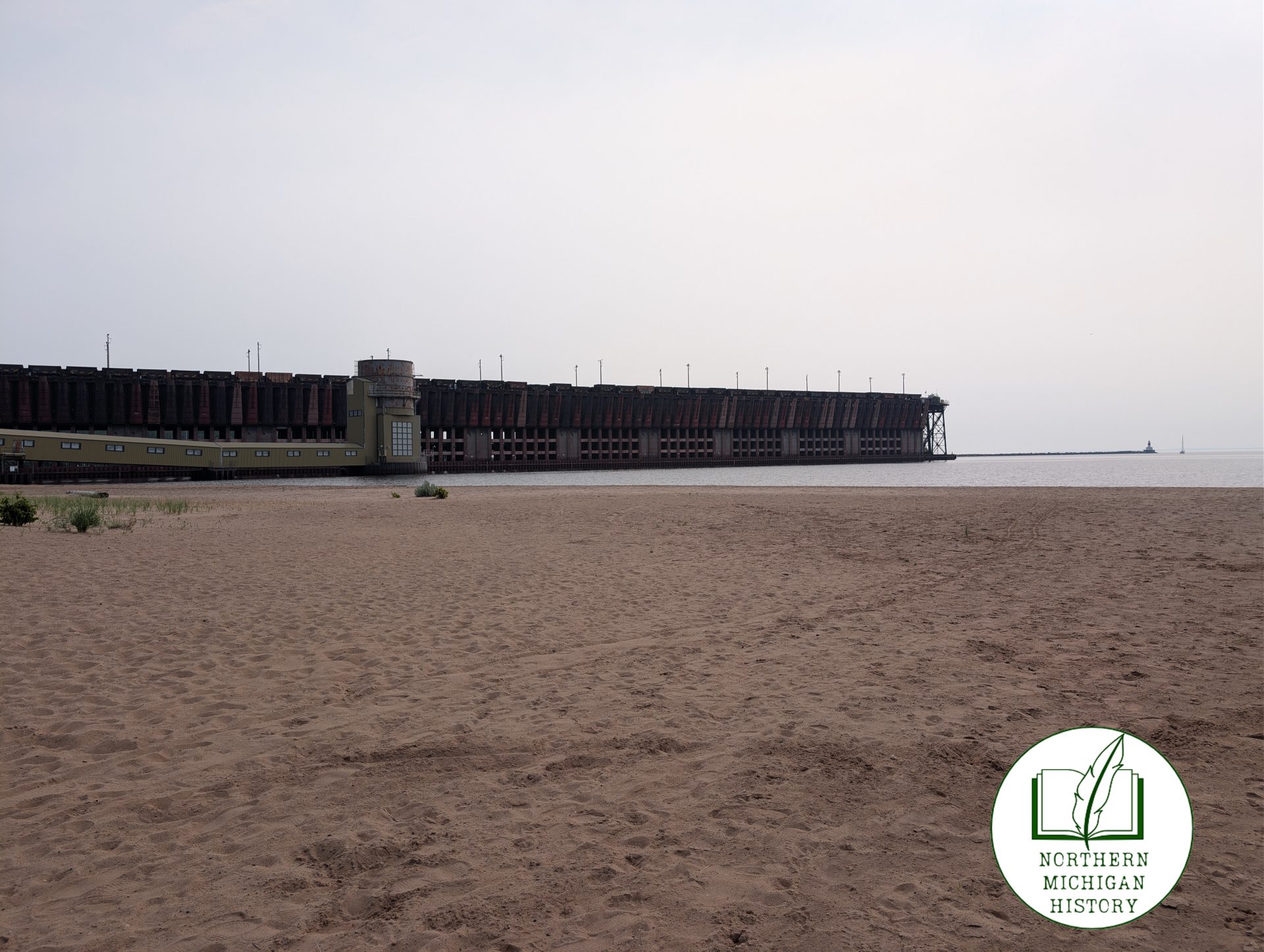
East side of Upper Ore Docks Presque Isle Park
Despite the name, an ore dock is much more than a place for a ship to tie up.
The enormous structures were designed to solve a basic problem. Mining companies could dig tremendous quantities of iron ore from the ground, but they needed an efficient way to move all that heavy material from railroad cars into ships.
Ore docks provided the answer.
Most were tall structures with railroad tracks running across the top. Loaded ore cars traveled onto the dock and emptied their contents into large storage bins called pockets.
A ship would pull alongside the dock below. Steel chutes were lowered from the pockets to openings in the ship’s cargo hold. When the doors were opened, gravity did most of the work, sending the ore down the chute and into the vessel.
It was a remarkably simple idea carried out on an enormous scale.
The docks and Great Lakes freighters even evolved together. Ore dock chutes were commonly spaced to correspond with the hatches of the ships being loaded. As freighters became larger and capable of carrying more ore, docks had to grow along with them.
But Marquette’s first ore dock was considerably less sophisticated.
There were no towering concrete supports or rows of steel chutes.
There were wheelbarrows.
Iron Ore Changes the Upper Peninsula
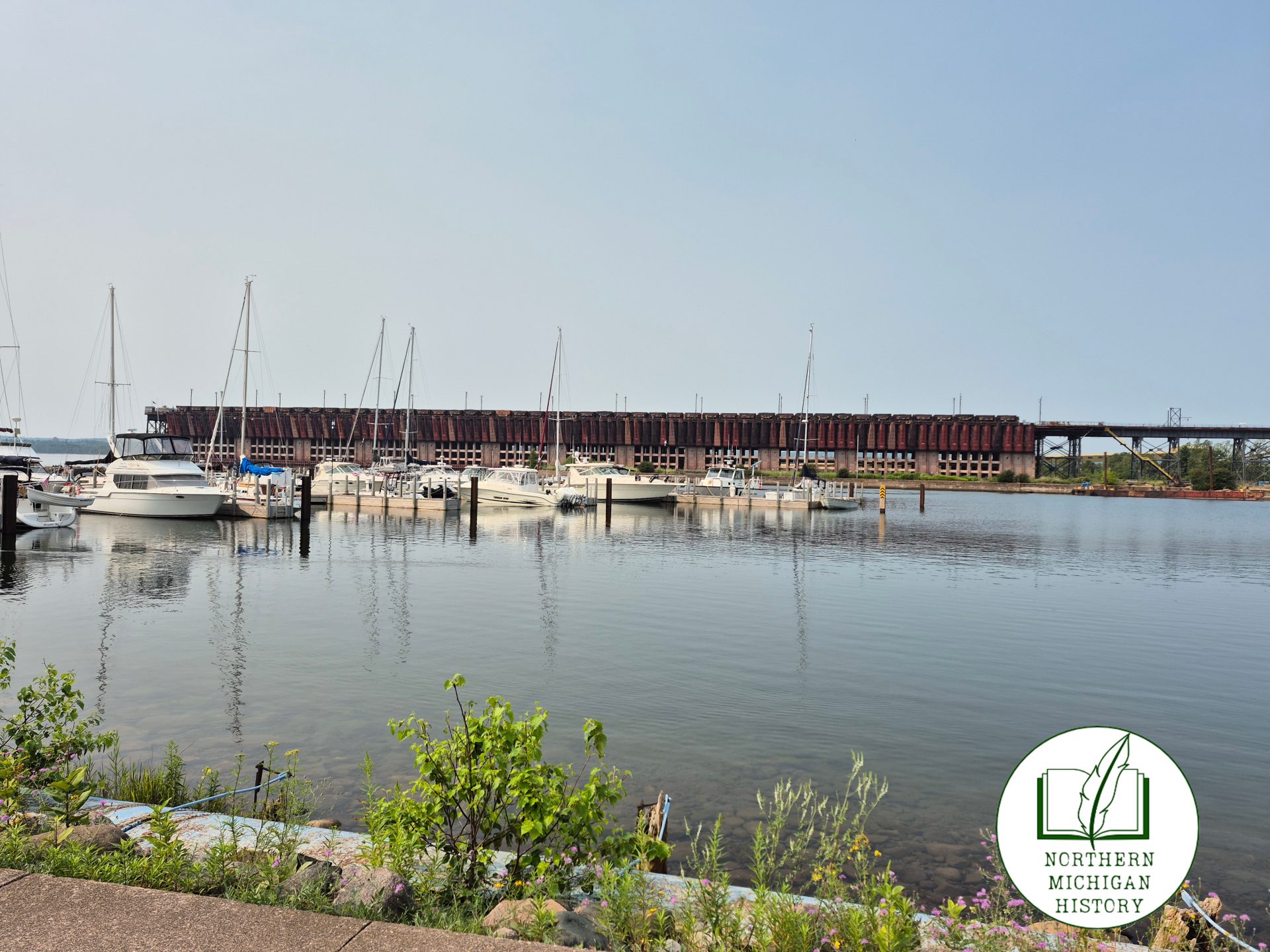
West side Upper Ore Docks Presque Isle Park
The story goes back to 1844.
William Austin Burt was leading a federal surveying party through what would become the Marquette Iron Range when the group’s magnetic compasses began behaving strangely.
There was a good reason.
Iron deposits beneath the ground were interfering with the instruments. In some places, the ore was remarkably close to the surface.
The discovery helped set enormous changes in motion.
Mining operations developed during the 1840s and early 1850s, but finding iron ore and getting it to market were two very different things.
At first, much of the iron was intended for local use because transporting ore out of the Upper Peninsula was difficult and expensive. Early attempts involved mule teams, plank roads, barrels, schooners, and the troublesome rapids of the St. Marys River.
Then came one of the most important developments in Great Lakes transportation.
The Soo Locks opened in 1855.
Suddenly, ships could move between Lake Superior and the lower Great Lakes far more efficiently. For the growing iron industry around Marquette, an enormous obstacle had been removed.
Now the mines needed a better way to get their ore aboard those ships.
Marquette Builds an Ore Dock
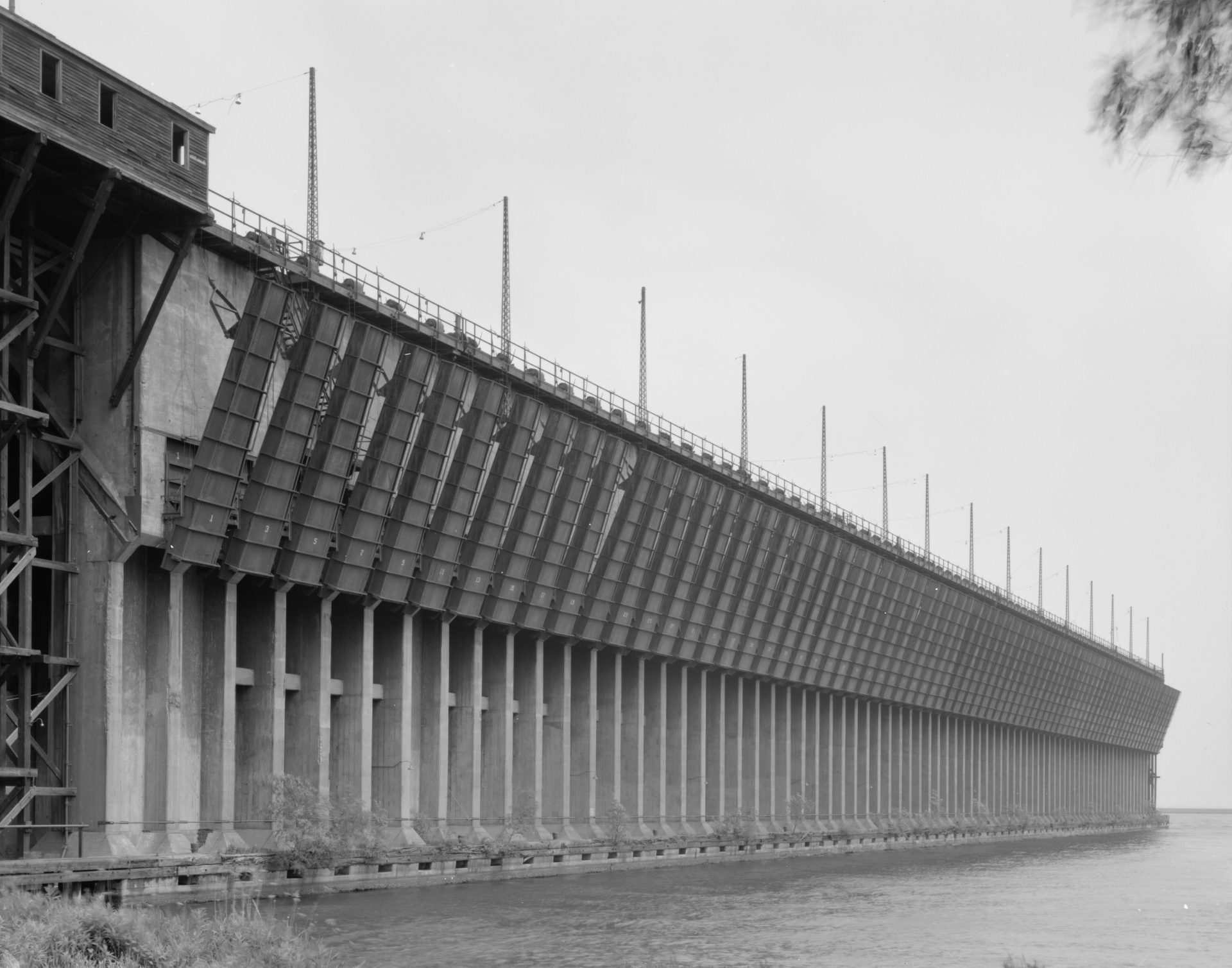
Marquette Ore Dock
In 1857, Marquette became home to the first dock built specifically for the iron ore trade.
It probably would not look much like an ore dock to us today.
The structure was flat rather than elevated. Once ore reached the waterfront, men loaded it aboard vessels using wheelbarrows.
Imagine the labor involved.
Iron ore is heavy, ships were getting larger, and production from the mines was increasing. Loading thousands of tons by hand was hardly a long term solution.
By 1862, Marquette had another dock, and this one pointed toward the future.
An elevated wooden railroad trestle allowed ore cars to travel above storage pockets. Instead of men moving the ore aboard one wheelbarrow at a time, gravity could move it from the railroad cars toward the waiting ships.
The transformation happened quickly.
After the Civil War, Marquette’s ore docks expanded as shipments increased. In 1873 alone, more than one million tons of iron ore were shipped through the port. Until 1876, Marquette was the only Lake Superior port shipping iron ore eastward.
Eventually, Marquette would have six ore docks, with three operating in the Lower Harbor at the same time.
The waterfront had become part of a vast transportation system linking Upper Peninsula mines with the industrial cities of the Great Lakes.
Bigger Mines, Bigger Ships, Bigger Docks
Ore docks could not remain unchanged because the ships did not remain unchanged.
In 1867, an ore vessel might carry about 550 tons. The first steel ore freighters of the 1880s could carry around 2,500 tons. By 1898, ships were carrying approximately 6,400 tons, and by 1938 that figure had climbed to 15,000 tons.
Railroads were improving too.
Larger ore cars and more powerful locomotives could move greater quantities from the mines to Lake Superior. Older wooden docks that once represented impressive technology gradually became outdated.
Marquette’s surviving ore docks grew out of this period of change.

East side Upper Ore Docks Presque Isle Park
The Upper Harbor Ore Dock at Presque Isle
At the north end of Marquette, near Presque Isle Park, the Lake Superior and Ishpeming Railroad constructed a new ore dock in 1911 and 1912.
This was a very different structure from Marquette’s early wooden docks.
Built of reinforced concrete and steel, the dock towered approximately 75 feet above the water. It contained 200 ore pockets and could hold roughly 50,000 tons of ore.
Its size is impressive even today.
The dock stretches roughly a quarter mile into the harbor. Beneath it is an equally remarkable foundation consisting of thousands of wooden piles driven into the lake bed.
Most importantly, the Presque Isle dock never became simply a historic landmark.
It kept working.
Trains still bring iron ore pellets to the dock. The pellets are dumped into storage pockets beneath the tracks, ships pull alongside, and the dock’s chutes send the cargo into their holds.
The basic principle is remarkably similar to the gravity loading system developed generations ago.
Marquette’s collected history is not confined to museums or old photographs. At Presque Isle, part of that history is still at work.
The Lower Harbor Gets a New Giant
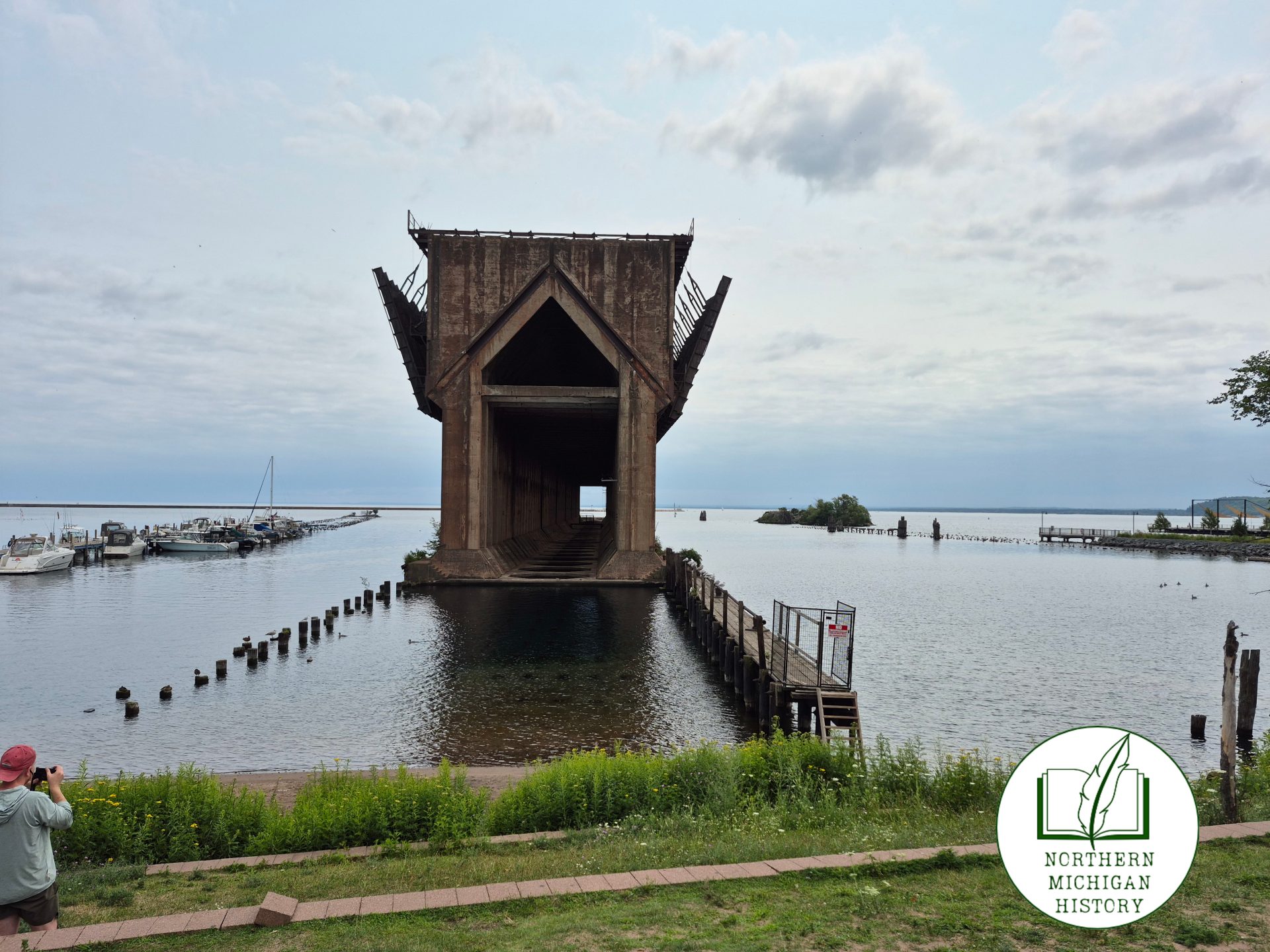
Lower Ore Docks Downtown Marquette
While the Presque Isle dock handled ore in Marquette’s Upper Harbor, activity continued downtown.
The Duluth, South Shore and Atlantic Railway needed a modern facility of its own. Construction of a new Lower Harbor dock began in 1931 and was completed in 1932.
The result is the structure that still dominates Marquette’s downtown waterfront.
At 969 feet long and more than 85 feet high, the steel reinforced concrete dock contained 150 ore pockets. It was built on timber pilings driven into the lake bed.
Its operation followed the familiar gravity system.
Railroad cars traveled across tracks at the top of the dock and dumped ore into the pockets below. When a freighter arrived, hinged steel chutes were lowered toward its cargo holds. Doors opened, and the ore poured into the ship.
For decades, trains, ships, machinery, and workers made this portion of Marquette’s waterfront an active industrial landscape.
Then the industry changed again.
The Lower Harbor dock was taken out of service in 1971.
The trains stopped crossing its upper deck.
The ore stopped flowing through its pockets.
The ships stopped pulling alongside to be loaded.
But the dock stayed.
Two Docks, Two Pieces of Marquette’s Story
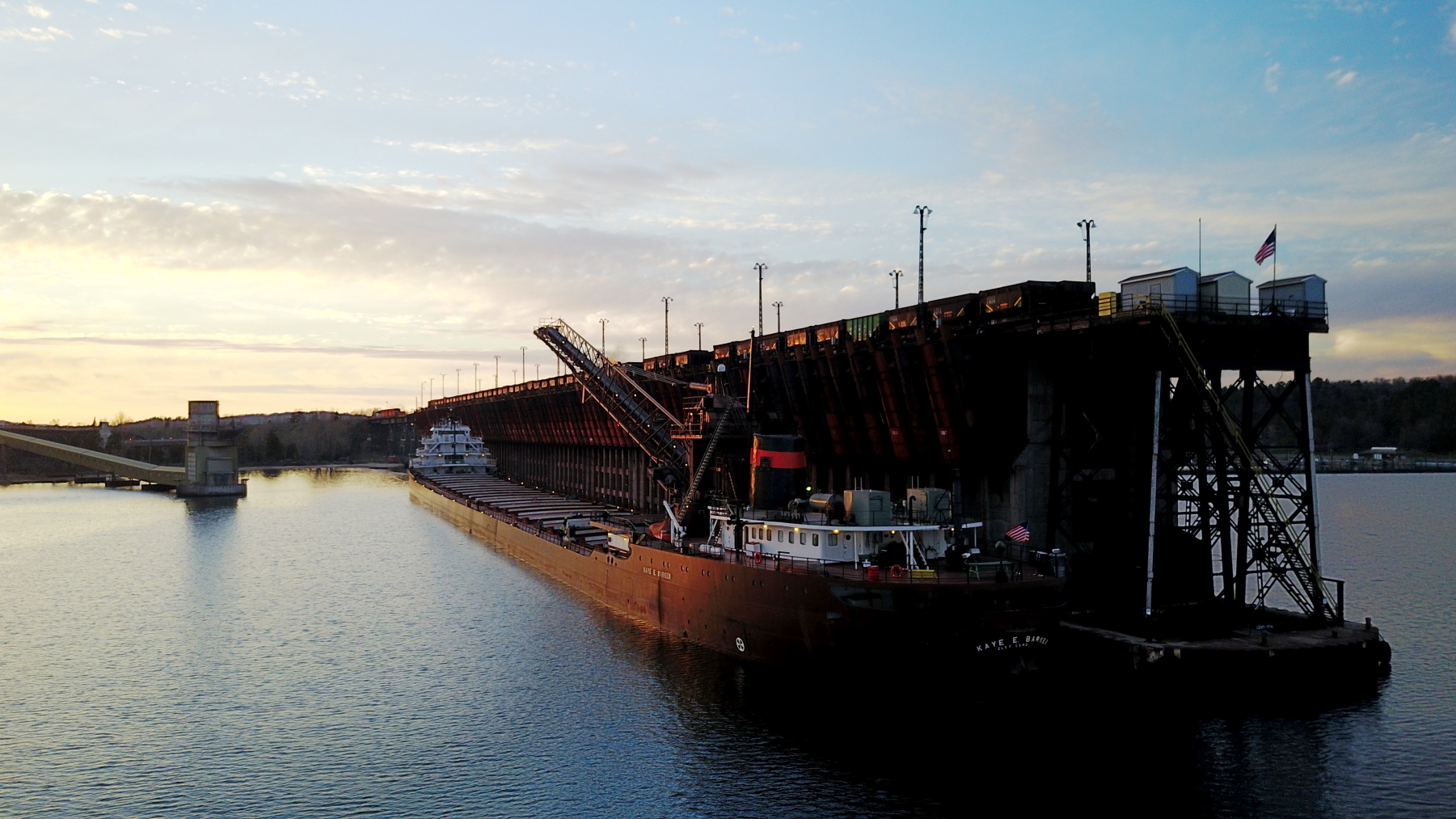
Kaye E Barker at the Ore dock in Marquette in 2017
That leaves Marquette with an unusual connection to its past.
Downtown, the Lower Harbor Ore Dock stands silent. Its concrete and steel frame has become one of the city’s most recognizable landmarks.
At Presque Isle, the Upper Harbor Ore Dock continues working.
One shows us what Marquette’s industrial waterfront once looked like.
The other allows us to watch that history continue.
And perhaps that is what makes these structures so interesting.
Ore docks were never intended to be monuments. They were working machines built for a very practical purpose. They connected mines to railroads, railroads to ships, and the Upper Peninsula to steel mills and industrial cities throughout the Great Lakes.
Yet more than 165 years after workers pushed wheelbarrows of iron ore across Marquette’s first dock, two enormous descendants of that early operation still stand along the Lake Superior shoreline.
One has become part of Marquette’s history.
The other is still helping to write it.
A Little Marquette Tradition: Orehenge
The Lower Harbor dock has even found a second life in a way its builders certainly never planned.
Twice during the winter season, the rising sun can align with the openings in the massive structure, creating a local phenomenon affectionately known as “Orehenge.”
Around November 21 and January 20, photographers gather along the waterfront hoping for clear skies as the sun rises through the center of the dock.
It is a wonderfully Marquette combination of industry, history, Lake Superior, winter weather, and a little bit of luck.
And maybe it is fitting.
A structure built to move iron ore more than 90 years ago now gives people another reason to stop along the waterfront, look toward the lake, and wonder about everything that came before.
See a Marquette Ore Dock in Action
After more than a century of changes in ships, railroads, and mining, the basic idea behind an ore dock remains remarkably simple. Let gravity do the heavy lifting.
This video offers a fascinating look at the entire process, from railroad cars arriving with the ore to the dock being loaded and, finally, the ore pouring into the hold of a waiting Great Lakes freighter.
It is about 18 minutes long, but after learning the history of Marquette’s ore docks, seeing the process in action brings the whole story together.