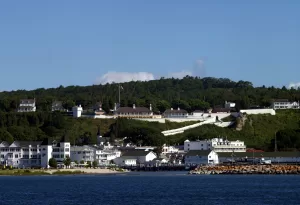
Eastern Upper Peninsula

Exploring the History of Michigan’s Eastern Upper Peninsula

The Eastern Upper Peninsula has long been a place of movement and connection. From early travel routes to the busy waterways of Sault Ste. Marie, people have passed through this region for generations. Its history is shaped by trade, travel, and the natural beauty that continues to draw visitors north.


History of the Soo Locks

The Soo Locks in Sault Ste. Marie in Michigan’s Upper Peninsula are operated and maintained by the U.S. Army Corps of Engineer. The name came from Father Jacques Marquette, a French Jesuit missionary. With this name Father Marquette was honoring Sainte Marie, a nod to Mary, mother of Jesus. Sainte is the feminine version of Saint. In an older version of French, sault translates to rapids. Father Marquette was naming the town of the geographical feature of the area: the rapids of Saint Mary. They are a set of parallel locks that make ships travelling between Lake Superior and Lower… Read More »


Eastern Upper Peninsula Hauntings

Eastern Upper Peninsula Hauntings

Join Northern Michigan History in our 5 part series as we explore the most haunted places in northern Michigan. This third part in our series visits the Eastern Upper Peninsula. This area includes a suicide that may have been a murder, witches, soldiers and a brothel. The Eastern Upper Peninsula did not disappoint! Mackinac Island Mission Point Resort – The resort is rumored to have a ghost that comes for an occasional visit. It is believed to be a college student name Harvey who died behind the resort in the late 60s. It was reported that he shot himself because… Read More »


Methodist Indian Mission

Soo Lock Park

Last week we published an article about the Zeba Indian United Methodist Church and that it started in Sault Ste. Marie. This week we are going to talk about how it started. John Sunday and Rev. John Clark Before heading west to start the Missionary in Zeba John Sunday, a Methodist Native American Preacher from Canada, began mission work in the Native American settlement at the Sault Ste. Marie Rapids. In 1832 Rev. John Clark, heard of the movement at the ‘Soo’ and decided to work there. He would later follow John Sunday west. In the spring of 1833, Clark… Read More »