The Copper Discovery That Helped Build Michigan’s Copper Country
Hidden among the forests of the Keweenaw Peninsula are the remains of a copper mine that helped change the course of Michigan’s history.
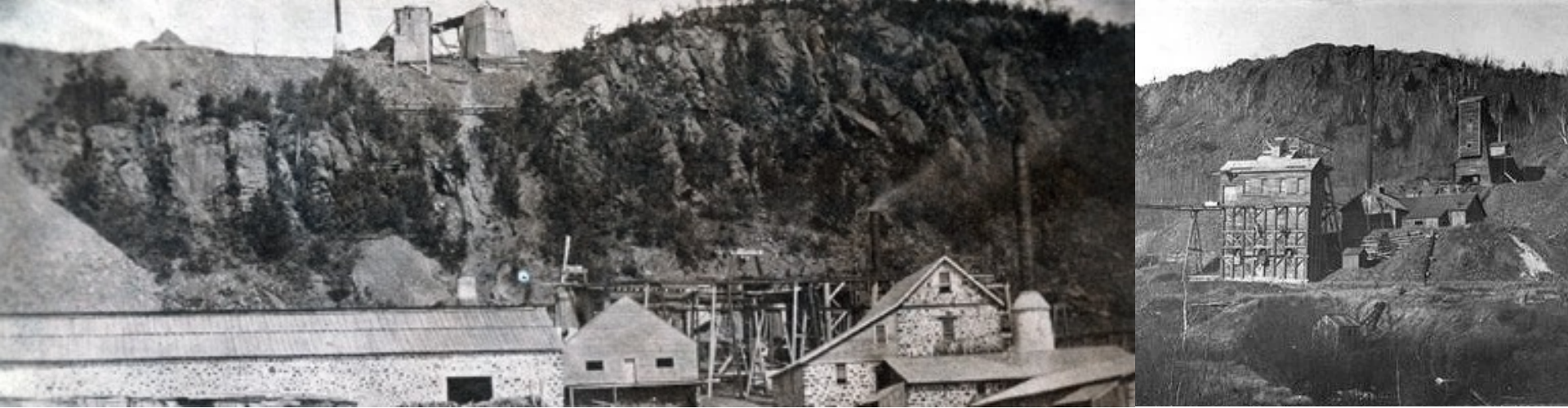
Today, the old Cliff Mine is a quiet place. Stone walls and foundations stand among the trees with piles of discarded rock marking the landscape. Little remains of the busy mining community that once stood beneath the towering greenstone bluff.
It’s hard to imagine that this peaceful stretch of the Keweenaw Peninsula was once home to the most productive copper mine in the United States. This was a busy area in the mid-1800s thanks to the Cliff Mine.
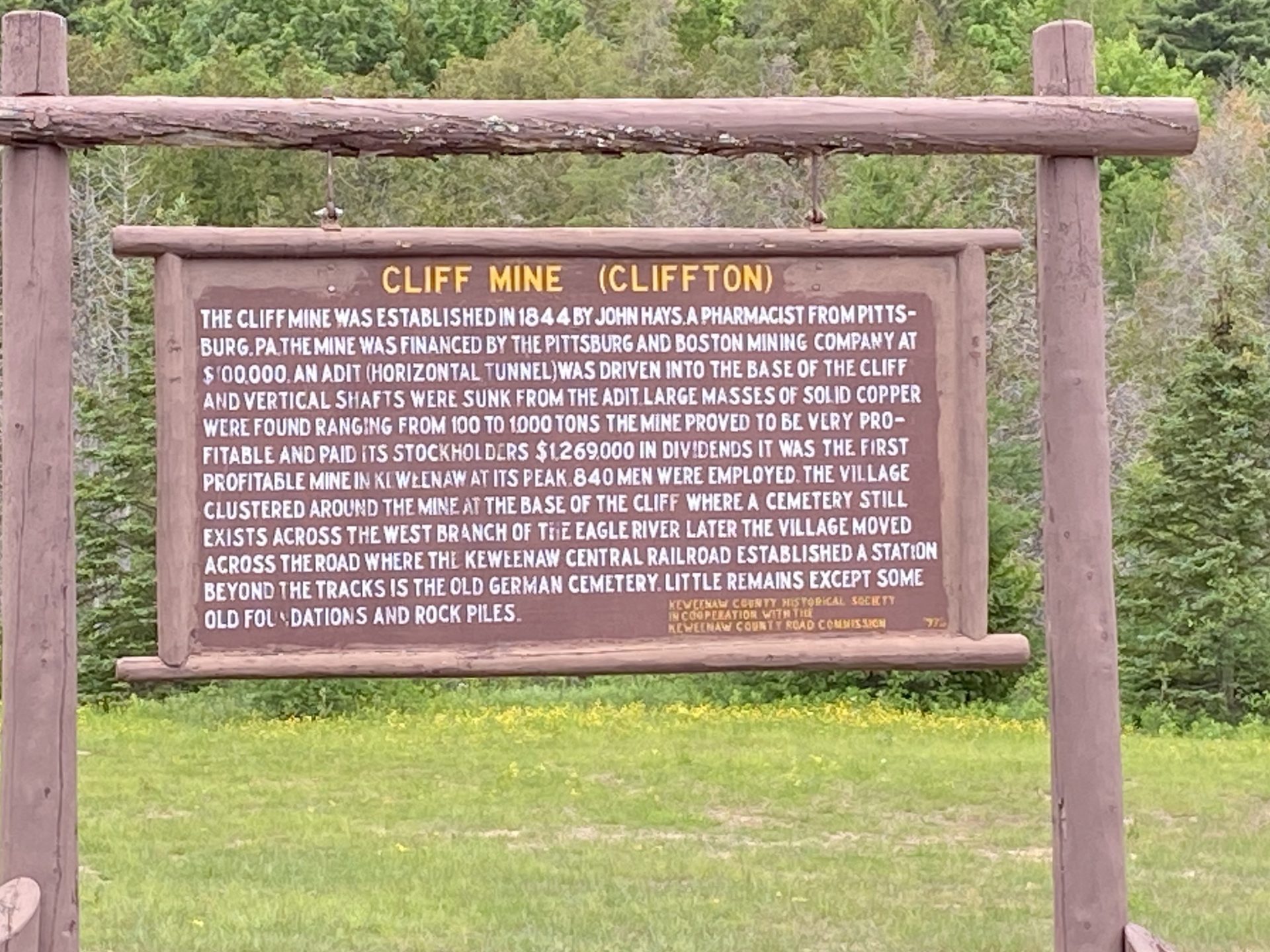
Established in 1845, it became the first major profitable copper mine in Michigan’s Copper Country. Its success attracted investors and encouraged further exploration. The mine helped establish the Keweenaw Peninsula as one of America’s great copper mining regions.
And it all began with a remarkable discovery beneath a cliff.
 Copper in the Keweenaw
Long before European settlers arrived in Michigan’s Upper Peninsula, Indigenous peoples were mining and working copper from the Keweenaw Peninsula and Isle Royale. For thousands of years, they used the region’s naturally occurring copper to make tools, ornaments, and other useful objects.
The copper deposits were attracting attention in the early 1800s helped by Michigan’s first state geologist, Douglass Houghton. His geological surveys and reports encouraged investors and prospectors to the Keweenaw Peninsula. His findings suggested the possibilities hidden beneath the rocky landscape.
In 1843, the federal government opened lands in the Upper Peninsula to mineral leasing, setting off a wave of exploration.
Among those hoping to find copper was a group of investors from Pittsburgh and Boston. They organized the Pittsburgh and Boston Copper Harbor Mining Company in 1844 and began exploring the Keweenaw.
Their early efforts near Copper Harbor were disappointing. But the company continued searching, eventually turning its attention inland toward a towering greenstone bluff a few miles south of Eagle River.
There, they found something worth pursuing.
 A Remarkable Discovery Beneath the Cliff
In August 1845, miners working along the greenstone bluff discovered a promising vein of copper. As they followed it into the rock, the vein widened, eventually revealing a substantial mass of native copper.
Unlike many copper deposits that required extensive processing to separate the metal from surrounding minerals, native copper occurred in nearly pure metallic form.
And the Cliff Mine had plenty of it.
Some of the copper masses discovered underground weighed several tons. Others were so large that removing them would become a major challenge for the miners.
The discovery was exactly what investors had been hoping to find. After several disappointing mining ventures in the region, the Cliff Mine offered convincing evidence that commercial copper mining in the Keweenaw could succeed.
Of course, there’s also a more colorful version of how the copper was discovered.
According to an old local legend, an unfortunate prospector tumbled down the face of the greenstone bluff and landed rather painfully on a piece of solid copper. You could say he hit bottom. 😊
Whether the story has any truth to it is another matter. But it’s certainly one of the more memorable copper discovery stories to come out of the Keweenaw.
The documented discovery was made through deliberate exploration and mining. Still, the legend has become part of the folklore surrounding the Cliff Mine.
Mining Copper Was Anything but Easy
Finding copper was one thing. Getting it out of the ground was another.
The Cliff Mine followed a nearly vertical fissure vein, a natural crack in the bedrock that had filled with copper and other minerals. As miners followed the vein deeper underground, the work became increasingly difficult.
In the early years, much of the labor was done by hand.
Miners would work underground by candlelight and oil lamps, often in teams of three. One man held and turned a steel drill while the other two struck it with heavy hammers, slowly boring holes into the rock.
Once the holes were deep enough, they were packed with black powder and blasted to break apart the surrounding stone.
But copper presented a special problem.
Unlike brittle rock, native copper was soft and malleable. Instead of shattering under the force of an explosion, large copper masses often bent or absorbed the impact.
That meant miners sometimes had to spend days cutting and chiseling enormous pieces of copper into smaller sections that could be brought to the surface.
And getting to work was exhausting in itself.
Before improved mechanical systems were introduced, miners climbed wooden ladders that extended hundreds of feet underground. By the early 1850s, some were climbing nearly 1,000 feet to reach their workplaces and then making the same climb at the end of their shifts.
Imagine finishing a long day of drilling, hammering, and hauling rock, only to face that climb before you could go home.
In 1852, the mine installed a massive 45-ton steam engine to help operate its stamping equipment and pump water from underground. It was an important improvement, but mining remained physically demanding and dangerous work.
 The Mine That Proved Copper Could Pay
The Cliff Mine quickly became a financial success and by 1848 the copper being extracted was remarkably rich. The average ore contained approximately 26 percent copper, an extraordinary concentration compared with many other mines.
In 1849, the Cliff Mine accomplished something no other copper mine in the region had done.
It paid a dividend to its investors.
On May 21, 1849, the company declared a dividend of $60,000, making it the first dividend-paying copper mine in the Keweenaw.
That payment was about more than rewarding investors. It proved that copper mining in the region could be a profitable business.
The Cliff Mine went on to become the most productive copper mine in the United States during much of its first decade. The mine’s success helped to attract additional investment and exploration throughout the Copper Country.
By the time its productive years were over, the mine had yielded approximately 38.2 million pounds of refined copper, along with significant quantities of native silver.
Its operators paid investors approximately $2.5 million in dividends, an enormous sum for the nineteenth century.
The success of the Cliff Mine helped lay the groundwork for the much larger copper mining industry that would eventually develop across the Keweenaw Peninsula.
But the mine’s influence extended well beyond the copper it produced. It also created a community.
 Clifton: A Town Built Around Copper
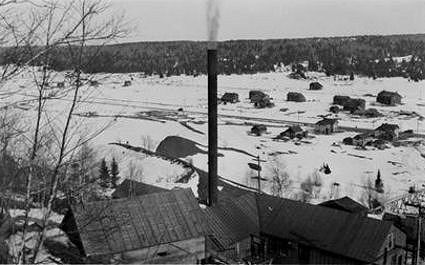
As the Cliff Mine grew, so did the settlement at its base.
The town of Clifton developed to house the miners and their families. Housing was also needed for the people whose work supported the mining operation.
What had once been a remote wooded landscape became a busy community of homes, workshops, businesses, and public buildings.
Many of the miners came from European mining regions, particularly Cornwall, bringing generations of mining knowledge and experience to the Keweenaw. Other immigrant families also helped build the community.
Life in Clifton did revolve around the mine, but it involved much more than work underground.
Families raised children, attended church, gathered with neighbors, and endured the long winters of the Upper Peninsula. The community had schools, churches, and businesses that served the people living there.
At its height, Clifton was home to more than 1,000 residents, according to historical research cited by the National Park Service.
Living in an isolated mining settlement was not always easy especially for the families of the miners.
Lake Superior’s shipping season was limited, and supplies had to be brought into the region before winter closed the waterways. Mining companies developed stores, housing, and other services to support their workers and keep operations running.
For the families of Clifton, the mine provided a livelihood, but it also shaped nearly every aspect of daily life.
The sound of machinery, the movement of workers, and the constant activity surrounding copper production would have been familiar parts of the community.
Today, the surviving foundations and cemeteries offer reminders that Clifton was once a place people called home.
A Piece of the Cliff Mine in Washington, D.C.
One of the more interesting chapters in the Cliff Mine’s history took place far from the Keweenaw Peninsula.
In 1852, Michigan contributed a memorial stone to the Washington Monument in Washington, D.C.
Rather than sending any old block of stone, Michigan provided a remarkable 2,180-pound piece of native copper and silver.
The copper came from the Cliff Mine.
The contribution was a fitting symbol of Michigan’s growing importance as a copper producing state. At a time when the Keweenaw’s mining industry was still relatively young, copper from the Cliff Mine was being recognized as something worthy of representing Michigan in the nation’s capital.
It’s an interesting connection between a remote mine in the forests of the Upper Peninsula and one of America’s most recognizable monuments.
When the Copper Began to Run Out
For all its early success, the Cliff Mine faced a problem that eventually caught up with many of the Keweenaw’s early copper mines.
The richest deposits did not last forever.
As miners followed the fissure vein deeper underground, the amount of copper contained in the rock gradually declined.
In 1848, the average ore grade had been approximately 26 percent copper. By 1869, it had fallen to about 3 percent.
That was still a workable concentration at some mines, but the Cliff Mine was becoming increasingly expensive to operate.
The Pittsburgh and Boston Mining Company ended its operations in 1870, and the property was sold to the Cliff Copper Company in 1871.
Mining resumed in 1872, but the remarkable profits of the earlier years were gone.
Large-scale operations came to an end in 1878.
Smaller mining efforts continued for several more years, with limited production lasting into the 1880s. Later attempts to locate additional profitable copper deposits also failed to restore the mine to its former success.
The Tamarack Mining Company conducted extensive underground exploration between 1903 and 1908, but no significant new ore bodies were found.
The Cliff Mine’s great copper producing days were over.
And without the mine, Clifton gradually lost the reason it had been built.
Families moved away, buildings were abandoned, and the once busy community slowly disappeared.
Over time, the forest began reclaiming the land.
 What Remains of the Cliff Mine Today?
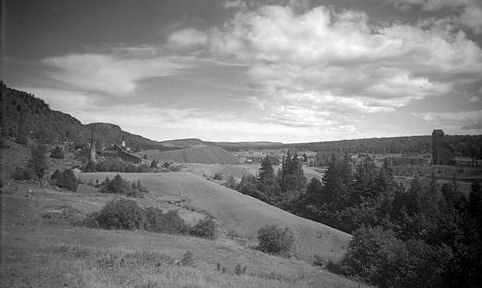
Today, the Cliff Mine site offers a very different experience from the industrial activity that once filled this part of the Keweenaw.
Located south of Phoenix near Cliff Drive and US-41, the former mining site is now a landscape of wooded trails, stone ruins, old foundations, and piles of rock left behind by mining operations.
The towering greenstone bluff remains one of the most striking features of the area.
Among the trees, visitors can find remnants of buildings that once supported the mining operation. Stone walls and foundations provide clues to the scale of the activity that took place here.
Nearby are the remains of Clifton and its historic cemeteries, where weathered gravestones help tell the stories of the families who lived and worked in the community.
The site is also known among rock collectors, who search the old mine rock piles for pieces of native copper and minerals associated with the area’s geology.
But the Cliff Mine Ruins are more than a place to explore and look for copper.
It’s a place where the landscape still holds the outlines of an important chapter in Michigan’s history.
Researchers from Michigan Technological University have studied the site through archaeological fieldwork, documenting the surviving features and learning more about the mining operation and the people who lived there.
Clifton the Ghost Town
For visitors, walking among the remains offers an opportunity to imagine what this place must have been like when the mine was operating. Family activities, kids going to school, ladies getting groceries. It was just about mining.
The stone walls that now stand quietly among the trees once belonged to an active industrial community. The discarded rock piles represent years of difficult underground labor. And the cemeteries remind us that the story of the Cliff Mine was also the story of the families who made their lives here.
Anyone exploring the site should use caution around old mining structures, unstable rock, and possible underground openings. Historic ruins should be left undisturbed for future visitors.
A Lasting Legacy in Michigan’s Copper Country
The Cliff Mine may have closed long ago, but its place in Michigan history remains important.
It was the first major copper mine in the Keweenaw to demonstrate that large-scale commercial mining could be profitable. Its success encouraged the investment and exploration that helped transform the region into one of the country’s leading copper producing areas.
Other mines would eventually surpass it in size and production, including the great operations at Quincy and Calumet & Hecla.
But the Cliff Mine helped show what was possible.
Today, the machinery is silent, Clifton is gone, and trees grow where miners and their families once lived, worked and played.
Yet the stone ruins, old foundations, and towering greenstone bluff remain.
They offer a quiet reminder that one of Michigan’s most important industrial stories began here, deep in the forests of the Keweenaw Peninsula.
And sometimes, the places that seem the quietest today have the most interesting stories to tell.