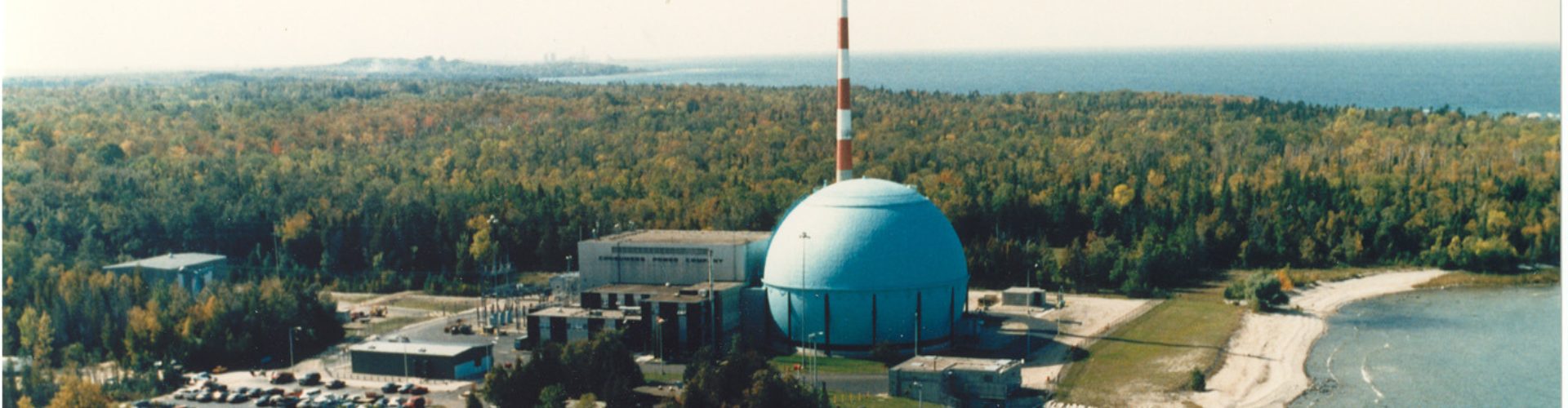
Nuclear Power Plant Begins Operation
When you think of Michigan history, you might not immediately picture a pioneering nuclear power plant or a dramatic military aviation tragedy. But on this day back in 1962, Consumers Power, now Consumers Energy started up Big Rock Point Nuclear Power Plant. The plant was Michigan’s first and the nation’s fifth nuclear plant. Nestled near Charlevoix, this plant marked a big step in the state’s energy future. It left a lasting legacy in both power generation and medical technology.
Big Rock Point was no small feat. With a boiling water reactor built by General Electric, it could produce 67 megawatts of electricity. This was enough to power tens of thousands of homes. Ground was broken in 1960, and in just 29 months, the plant was licensed, went critical, and generated its first electricity by December 1962. It even produced cobalt-60 for medical uses from 1971 to 1982, showing its versatility beyond just electricity.
Power Plant Shuts Down
Though the plant ceased operation in 1997, exactly 35 years after its license was issued, Big Rock Point is remembered for more than just energy. The site’s iconic stack was a visual landmark for freighters navigating Lake Michigan. The plant’s technology was so advanced that just a 10-ton load of uranium fuel could match the energy output of 260,000 tons of coal.
But Big Rock Point’s story isn’t just about power—nearby, in 1971, a tragic military accident unfolded. On January 7, a B-52C bomber known by the radio call sign ‘Hiram 16’ was conducting a radar bombing mission with the nearby Bay Shore Radar Bombing Score group. After completing three successful simulated bomb runs, contact was lost with the aircraft. Witnesses later saw a fireball crash into Little Traverse Bay, just five miles north of the plant. Sadly, all nine crew members were lost in what became known as the 1971 B-52C Lake Michigan crash.
Today, Big Rock Point’s site has been fully decommissioned. There are no structures remaining except for a few spent fuel casks. The plant’s reactor vessel was removed in 2003, and the site has been cleared. Still, the legacy of Michigan’s nuclear beginnings and the lives lost nearby remain a poignant chapter in the state’s story.
Historical Marker
Big Rock Point/Big Rock Point Nuclear Power Plant Historical Marker
Statehood Era (1815-1860) – Registered in 2006 and erected in 2007 – ID #S701C
Located at Adams Roadside Park, US-31, Charlevoix, Hayes Township – Lat: 45.35890038 / Long: -85.19605636

Consumers Power Company (later Consumers Energy) opened the Big Rock Point Nuclear Power Plant just west of here in 1962. It was the world´s first high- power density boiling water reactor, and the fifth commercial nuclear power plant in the U.S. The plant began as a research and development facility, with the first goal being to prove that nuclear power was economical. In addition to generating electricity, the reactor produced cobalt 60 that was used to treat an estimated 400,000 cancer patients. In 1991 the American Nuclear Society named the plant a Nuclear Historic Landmark. When it closed in 1997, Big Rock was the longest running nuclear plant in the U.S. Consumers Energy later restored the site to a natural area.
Big Rock Point Nuclear Power Plant
Big Rock Point is named for a large boulder used as a landmark by Native Americans. At least as early as the mid-nineteenth century Odawa (Ottawa) Indians used Big Rock, which they called Kitcheossening, as a gathering place each spring. The Odawa summered at Waganaksing (the area between Harbor Springs and Cross Village), but dispersed into smaller groups and traveled during the winter. Each spring they returned to Big Rock, their canoes loaded with sugar, furs, deer skins, prepared venison, bear’s oil, and bear meat prepared in oil, deer tallow, and sometimes a lot of honey. From there they returned to Waganaksing by crossing the bay in wiigwaas jiimaan (birch bark canoes). In 1999 elders and youth from the Little Traverse Bay Band of Odawa Indians recreated the crossing.
Want to learn more?
Discover what else happened during the month of September by exploring our On This Day in Michigan’s History – September feature, where you’ll find fascinating events, people, and milestones from every day of the month.