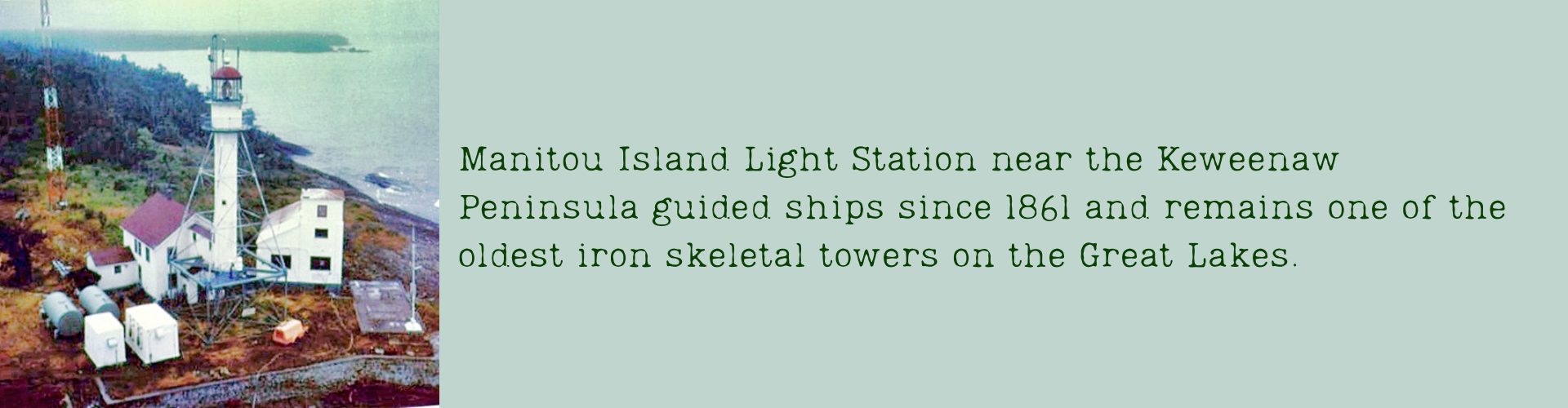
At the remote tip of Michigan’s Keweenaw Peninsula, Manitou Island rises from the waters of Lake Superior. Here, the Manitou Island Light Station has guided vessels for more than a century and a half. It stands as one of the oldest surviving iron skeletal lighthouse towers on the Great Lakes.
A Strategic Light on Lake Superior
Workers constructed the first lighthouse on Manitou Island as a rubble stone tower in 1850. Its placement reflected the growing need to guide vessels navigating the northern reaches of Lake Superior. In this area, rocky shorelines and sudden storms made travel uncertain.
In 1861, builders replaced the original structure with the current skeletal iron tower, one of three built that year using iron components manufactured at the West Point Foundry in New York. This transition marked an important moment in lighthouse engineering. Iron skeletal towers offered both durability and efficiency in exposed locations.
Builders constructed the keeper’s house at the same time, establishing the foundation of what would become a larger station complex.
Expanding the Station
As maritime activity increased, officials added additional structures to support the lighthouse’s operation. They introduced a fog signal in 1871 and constructed dedicated buildings in the following years. Additionally, improvements continued into the late nineteenth century. These included the addition of an oil house in 1895 and a boathouse in 1901.
By 1930, a new concrete fog signal building replaced earlier structures. This reflected advances in lighthouse technology and the need for more robust facilities in harsh Lake Superior conditions.
Design and Construction
The light tower itself rises from a steel base measuring roughly twenty-six feet square. Above this platform, a skeletal tower extends more than forty feet. A ten-sided cast iron watch room and lantern top the tower. A circular staircase enclosed in iron provides access to the upper levels.
The original third order Fresnel lens, crafted in Paris, featured multiple panels designed to project a powerful beam across open water. Though the current lens has been replaced, it remains of the same order. This maintains the lighthouse’s historic optical character.
Nearby, the keeper’s house stands as a two-story frame structure with ten rooms, reflecting the demands of maintaining a remote light station. Though modern materials have been added over time, portions of the original interior woodwork remain.
Automation and Preservation
The lighthouse was automated in 1978, ending the era of resident keepers. Despite this change, the light continues to function as an active aid to navigation. It continues guiding vessels along the Keweenaw’s rugged shoreline.
In 2004, the Keweenaw Land Trust acquired the station and surrounding land through federal preservation efforts. Today, the site is open to the public, offering opportunities for hiking, boating, camping, and exploring the island’s maritime landscape.
A Lasting Presence on the Lake
Recognized for its historical significance, the Manitou Island Light Station was listed on the National Register of Historic Places in 1984. Its skeletal tower and accompanying buildings reflect both early engineering innovation and the enduring importance of navigation along Lake Superior.
Standing amid the windswept terrain of Manitou Island, the lighthouse continues to represent a long tradition of maritime guidance in one of the Great Lakes’ most remote settings.
Explore our full collection of Northern Michigan lighthouse stories here
Start planning your trip today and explore the legacy of Michigan’s maritime history!
📍 Explore the Map Below