Most people have heard stories about the Bermuda Triangle. Ships disappear, airplanes vanish, and strange theories seem to explain the unexplainable. What many people do not realize is that the Great Lakes have their own legendary stretch of water with a remarkably similar reputation.
Known as the Michigan Triangle, this area of Lake Michigan has been linked to mysterious shipwrecks, unexplained disappearances, and even reports of unusual lights in the sky. Over the centuries, countless stories have added to its reputation, blending documented history with folklore until it became one of the Great Lakes’ most enduring legends.
Whether you believe the Michigan Triangle is simply the result of dangerous weather or something far more mysterious, there is no denying that the stories surrounding these waters have fascinated generations.
 Where Is the Michigan Triangle?

The traditional Michigan Triangle is formed by drawing lines between Ludington, Michigan, Manitowoc, Wisconsin, and Benton Harbor, Michigan. Together these three points create a large section of Lake Michigan that stretches across much of the lake’s eastern shoreline.
Some researchers argue the area is larger than that, extending across most of Lake Michigan rather than forming a triangle, it is a rectangle. Regardless of its exact shape, much of the legendary region lies just offshore from Northern Michigan, making it a familiar part of the Great Lakes for residents and visitors alike.
Long before anyone gave the area a name, Lake Michigan had already earned a reputation for sudden storms, towering waves, and unpredictable conditions. Those natural dangers would eventually give rise to stories that continue to be told today.
The Mystery Begins with Le Griffon
The earliest story connected with the Michigan Triangle dates back to 1679.
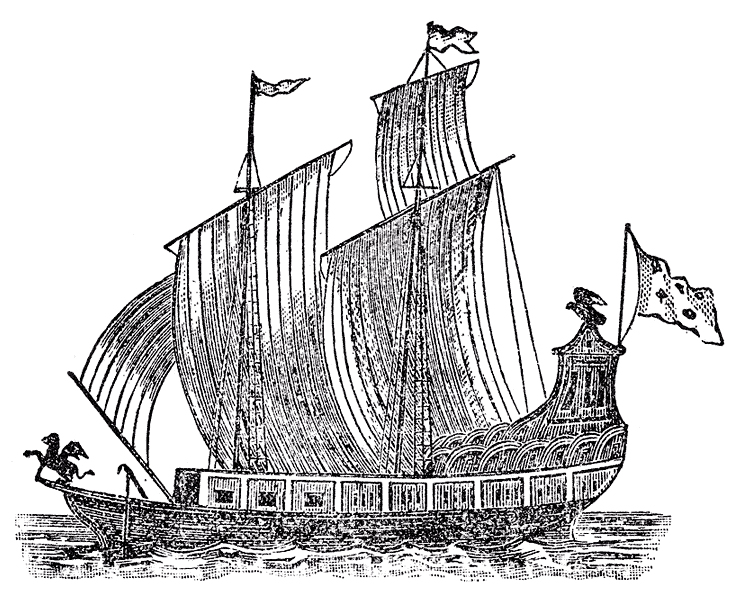 French explorer René Robert Cavelier, Sieur de La Salle had commissioned the construction of Le Griffon, the largest sailing vessel to navigate the upper Great Lakes at the time. After loading approximately 12,000 pounds of valuable furs in present day Green Bay, the ship set sail toward Lake Erie.
It never arrived.
Neither the crew nor the cargo was ever recovered, and despite centuries of searching, no confirmed wreck has been identified.
Many theories emerged over the years. Some believed the ship was lost in a violent storm. Others suspected mutiny or piracy. La Salle himself believed the crew intentionally sank the vessel and escaped with its valuable cargo.
No one knows what truly happened, making Le Griffon one of the earliest unsolved mysteries in Great Lakes history.
Tragedy on the Lady Elgin
Not every event connected to the Michigan Triangle is mysterious.
In September 1860, the wooden steamship Lady Elgin collided with the schooner Augusta during the night. While the Augusta managed to reach shore, the badly damaged Lady Elgin slowly filled with water before sinking.
More than 300 passengers lost their lives, making it one of the deadliest disasters in Great Lakes history.
Although investigators understood how the collision occurred, the tragedy added another chapter to Lake Michigan’s growing reputation as a place where disaster could strike without warning.
 The Disappearance of the Thomas Hume
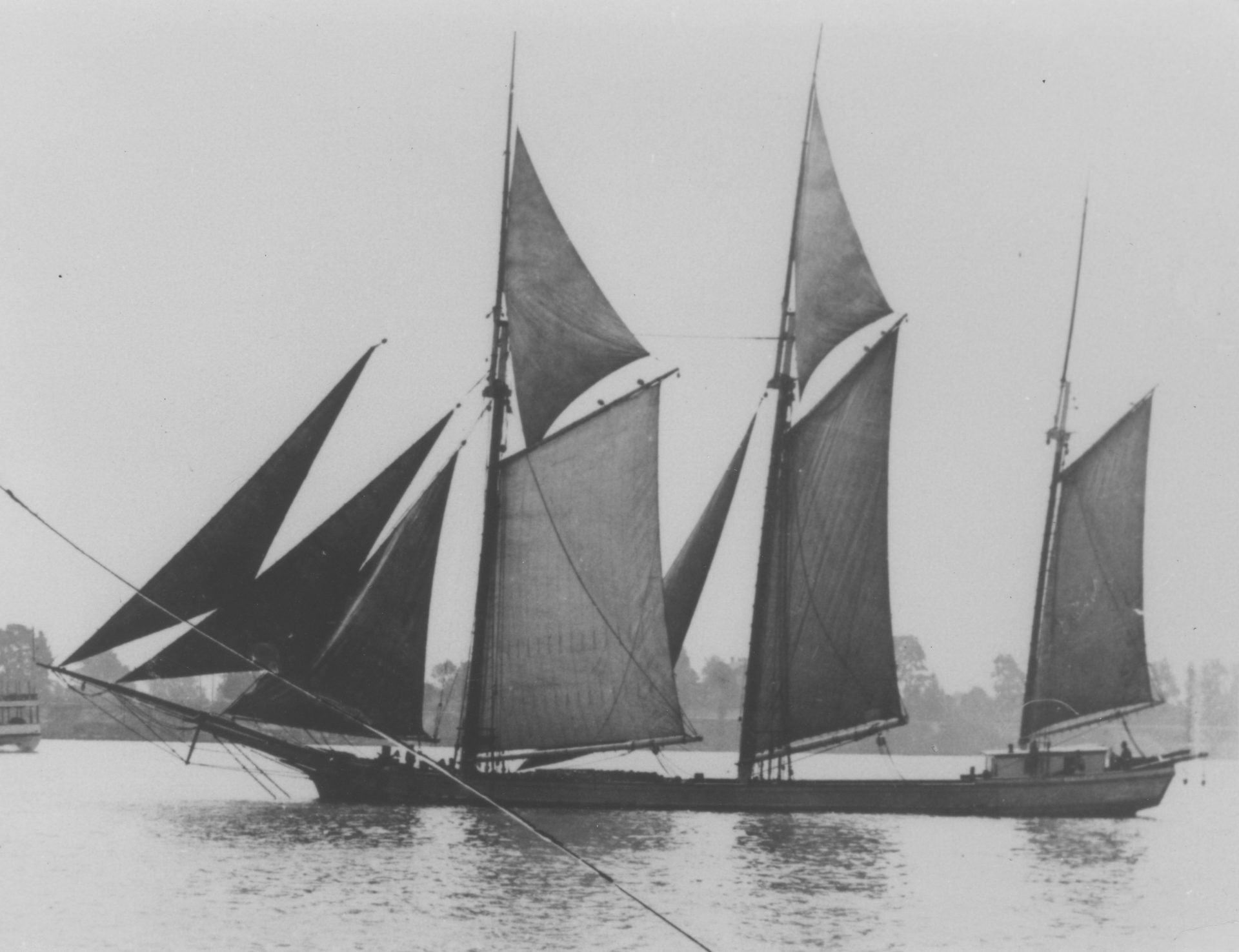
If one event truly launched the legend of the Michigan Triangle, it may have been the disappearance of the schooner Thomas Hume.
On May 21, 1891, the Thomas Hume and another schooner, the Rouse Simmons, delivered lumber to Chicago before beginning the return trip to Muskegon.
As dark clouds gathered over the lake, the captain of the Rouse Simmons chose to return to Chicago and wait out the approaching storm.
The Thomas Hume continued on.
It was never seen again.
The lumber company organized an extensive search and even offered a reward, but no wreckage, cargo, or signs of the seven crew members were ever found.
For more than a century the disappearance remained a mystery.
Then, in 2006, researchers searching for a lost Navy aircraft discovered the Thomas Hume resting nearly intact beneath 150 feet of water. The remarkably well preserved schooner showed little evidence of a collision, leading many historians to conclude that she had simply fallen victim to one of Lake Michigan’s sudden storms.
The discovery solved the fate of the ship, but not before generations had added another mystery to the growing legend.
The Christmas Tree Ship
The Rouse Simmons would become famous for reasons of its own.
Known today as the Christmas Tree Ship, the schooner made annual voyages carrying thousands of evergreen trees from Northern Michigan to families in Chicago.
In November 1912, Captain Herman Schuenemann once again loaded his ship with Christmas trees and set sail across Lake Michigan.
The vessel disappeared during a powerful storm.
Over the following months, Christmas trees began washing ashore, and Captain Schuenemann’s wallet was eventually recovered in Wisconsin. The wreck itself remained hidden until it was discovered decades later beneath the cold waters of Lake Michigan.
The story became one of the Great Lakes’ most beloved maritime legends, remembered every holiday season.
 The Strange Story of the Rose Belle
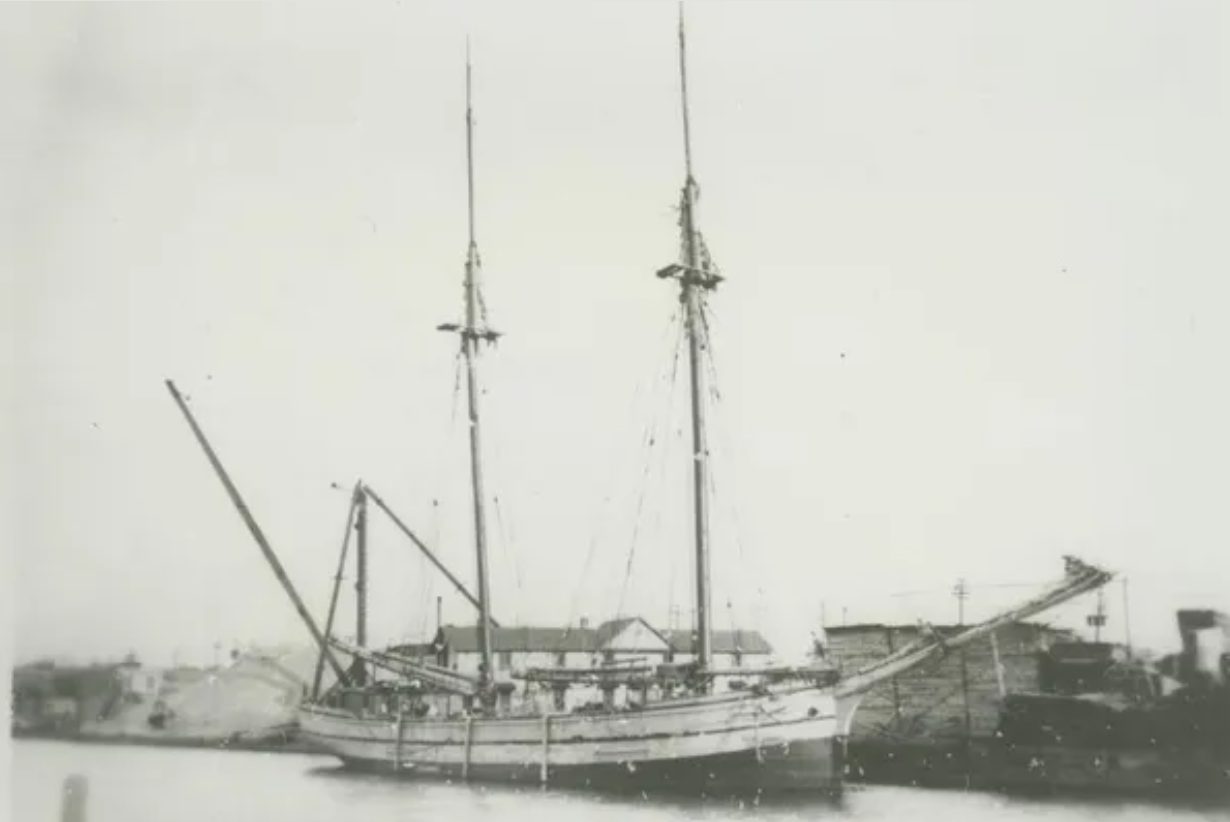
Another mystery unfolded in 1921 when the schooner Rose Belle was discovered floating upside down in Lake Michigan.
Everyone aboard had disappeared.
The damaged vessel appeared to have been struck by another ship, yet no captain reported a collision and investigators found no evidence that another vessel had been involved.
Adding to the mystery was the fact that the Rose Belle had survived an earlier wreck years before, only to meet another unexplained fate.
The Vanishing of Captain George Donner
Few stories are stranger than that of Captain George R. Donner.
In April 1937, Donner was commanding the coal freighter O.M. McFarland across Lake Michigan after navigating difficult ice conditions.
Exhausted, he retired to his cabin and instructed the crew to wake him as they approached their destination.
Three hours later, a crew member found the cabin door locked from the inside.
When the crew forced the door open, the captain was gone.
He was not on deck.
He was not anywhere aboard the ship.
Despite a thorough search of the vessel and surrounding waters, Captain Donner was never found.
His disappearance remains one of the Michigan Triangle’s greatest mysteries.
Flight 2501
The legend expanded beyond ships on the night of June 23, 1950.
Northwest Airlines Flight 2501 was flying from New York toward Minneapolis with 58 people aboard when it encountered severe storms over Lake Michigan.
The crew requested permission to descend to a lower altitude to avoid dangerous weather.
The request was never approved.
Shortly afterward, radio contact ended.
The next morning search crews located floating debris and scattered human remains, but the main wreckage of the aircraft has never been recovered despite decades of searching.
At the time, it was the deadliest commercial airline disaster in American history.
Most investigators believe the aircraft crashed during severe weather, although its final moments remain unknown.
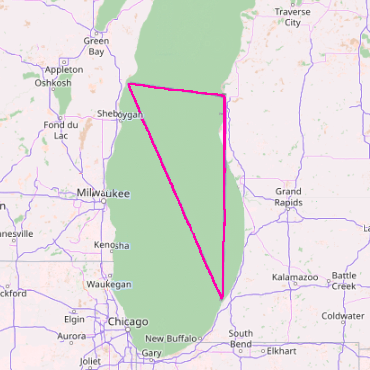
Triangle depiction – By Silent-Rains – OpenStreetMap, ODbL, https://commons.wikimedia.org/w/index.php?curid=127606413
More Than Ships and Airplanes
The stories did not end there.
In 1978, Hope College student Steven Kubacki disappeared while cross country skiing near Lake Michigan. His ski tracks led toward the frozen shoreline before ending abruptly.
More than a year later he unexpectedly reappeared with little memory of where he had been.
Then, in 1998, experienced pilot Donald Schaller and flight instructor Donovan Rodriguez disappeared while flying near Traverse City as they prepared for the National Cherry Festival air show. Despite extensive searches of both land and lake, neither the aircraft nor the men have ever been found.
Each unexplained disappearance added another layer to the legend.
A Stone Circle Beneath the Lake
One of the most surprising discoveries connected to the Michigan Triangle came in 2007.
While conducting sonar surveys for shipwrecks, archaeology professor Mark Holley and his colleague Brian Abbott discovered a line of large stones resting about 40 feet beneath the surface of Lake Michigan.
The arrangement reminded many people of Stonehenge.
Divers later photographed the site, and one stone appeared to contain a carving resembling a mastodon, an Ice Age animal that disappeared thousands of years ago.
Researchers have never confirmed the age or purpose of the underwater formation, and its exact location has not been publicly revealed in an effort to protect the site.
Although the discovery has fueled speculation, archaeologists continue to study what the stones may represent.
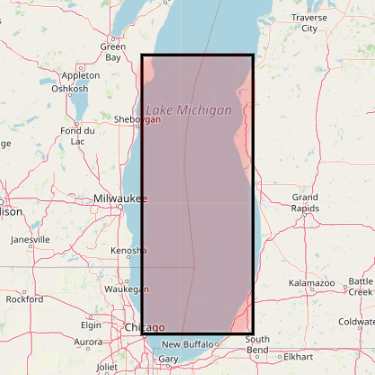
Rectangle Depiction – By Silent-Rains – Open Street Map, ODbL, https://commons.wikimedia.org/w/index.php?curid=127840241
History, Science, and Folklore
Like the Bermuda Triangle, the Michigan Triangle has inspired countless theories.
Some people believe unusual magnetic variations interfere with compasses and navigation. Others point to reports of unidentified flying objects, underwater anomalies, or even mysterious energy fields.
Scientists and Great Lakes historians generally offer a more practical explanation.
Lake Michigan is one of the busiest freshwater lakes in the world. For centuries it has carried commercial shipping, passenger vessels, fishing boats, and aircraft across its waters. Its long north to south shape allows wind to build powerful waves, while rapidly changing weather can create dangerous conditions with little warning.
When combined with heavy traffic over hundreds of years, accidents become inevitable.
Even so, the number of remarkable stories clustered within this region has helped keep the legend alive.
A Legend That Refuses to Fade
Whether the Michigan Triangle is simply folklore or something more mysterious depends on who you ask.
What cannot be disputed is that the people, ships, and aircraft connected to these stories were real. Behind every disappearance were families waiting for loved ones who never returned. Behind every legend lies a chapter of Great Lakes history.
Perhaps that is why the Michigan Triangle continues to capture our imagination.
Lake Michigan has always inspired both admiration and respect. Its beauty is undeniable, but so is its power. As long as unanswered questions remain beneath its waters, the stories of the Michigan Triangle will continue to be shared, reminding us that even in an age of satellites and sonar, the Great Lakes still hold a few secrets of their own.