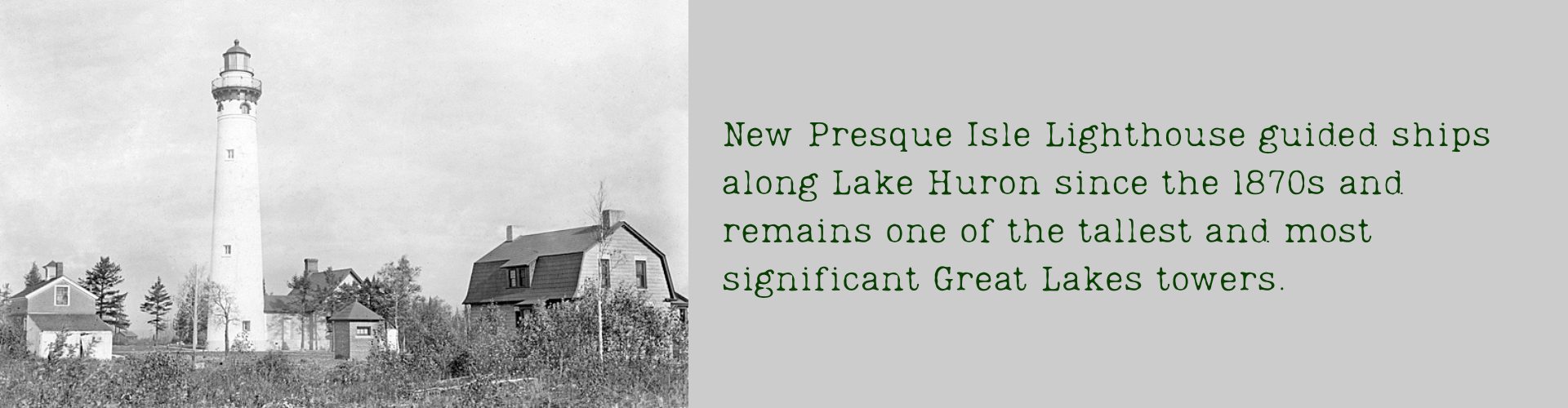
Rising above the forests and shoreline of northeastern Lake Huron, the New Presque Isle Lighthouse has long guided vessels along one of the busiest stretches of Michigan’s maritime routes. Built on the Presque Isle peninsula east of Grand Lake, the tower reflects both the evolving demands of Great Lakes navigation and the ingenuity of nineteenth century engineering.
Replacing an Earlier Light
By the late nineteenth century, shoreline changes and the limitations of the original Presque Isle lighthouse made a replacement necessary. Plans for a new tower were prepared by Major Orlando Metcalfe Poe of the United States Army Corps of Engineers. His proposal called for a more substantial structure, one capable of withstanding Lake Huron’s weather while projecting a stronger and more reliable beam.
Construction began in 1870 after materials and workers were transported to the site by the lighthouse tender Warrington. The new tower was completed the following summer and soon entered service, marking a new chapter in navigation along the peninsula.
Design and Construction
The lighthouse was built with double brick walls and a deeply set foundation that extended below ground level. Its base measured nineteen feet in diameter and gradually tapered as the tower rose toward the gallery. Inside, a spiral cast iron staircase led keepers up one hundred thirty eight steps to the lantern.
A covered passageway connected the tower to the two story keeper’s dwelling, offering protection during harsh weather. Beneath the house, a full cellar provided space for storing oil and supplies necessary for maintaining the light.
The tower’s design proved influential. Similar structures were later built at several other Great Lakes locations, reflecting the effectiveness of Poe’s approach to lighthouse engineering.
Optics and Illumination
The station was equipped with a third order Fresnel lens manufactured in Paris by Henry Lepaute. Standing several feet tall, the lens used concentric rings of glass to focus and project light across long distances. This system represented a major improvement over earlier lighting methods, allowing mariners to see the beacon from many miles offshore.
Unlike some lights of the period, the Presque Isle beam was originally steady rather than flashing. Rotating mechanisms that created distinctive light patterns were available but not initially required at this station.
Life at the Station
Patrick Garraty, who had previously served at the original Presque Isle Light, became the first keeper of the new tower. His wife Mary assisted him, and their son later continued the family’s service well into the twentieth century.
Daily responsibilities at the station were demanding. Keepers cleaned the lens regularly, trimmed wicks, maintained the grounds, and ensured that the light remained dependable in all conditions. Inspectors from the Lighthouse Board visited periodically, reinforcing strict standards for upkeep and operation.
Fog Signals and Expansion
As shipping traffic increased, additional improvements were made. In the late nineteenth century, Congress funded the construction of a steam powered fog signal to aid vessels during periods of low visibility. Supporting structures, including tramways and storage facilities, were added to handle the fuel and supplies required for operation.
Over time, compressed air systems replaced steam powered equipment, improving efficiency and reducing preparation time for sounding the signal. A second keeper’s dwelling was eventually built to support the expanded workload at the station.
Modern Changes and Preservation
Control of the lighthouse passed to the United States Coast Guard in 1939. Technological upgrades followed, including the installation of electricity and indoor plumbing. As navigation systems advanced, the fog signal building was removed and the light was automated in 1970.
In later decades, preservation efforts focused on maintaining the structure and adapting it for public interpretation. The property was eventually transferred to local stewardship and is now part of Presque Isle Park.
Today, the New Presque Isle Lighthouse remains one of the tallest and most recognizable towers on the Great Lakes. Its beam continues to guide vessels along Lake Huron’s shoreline, while its historic buildings offer visitors insight into the lives of those who once tended the light.
Standing high above the surrounding landscape, the lighthouse reflects a long tradition of engineering, dedication, and maritime history on Michigan’s northeastern coast.
Explore our full collection of Northern Michigan lighthouse stories here
Start planning your trip today and explore the legacy of Michigan’s maritime history!
📍 Explore the Map Below