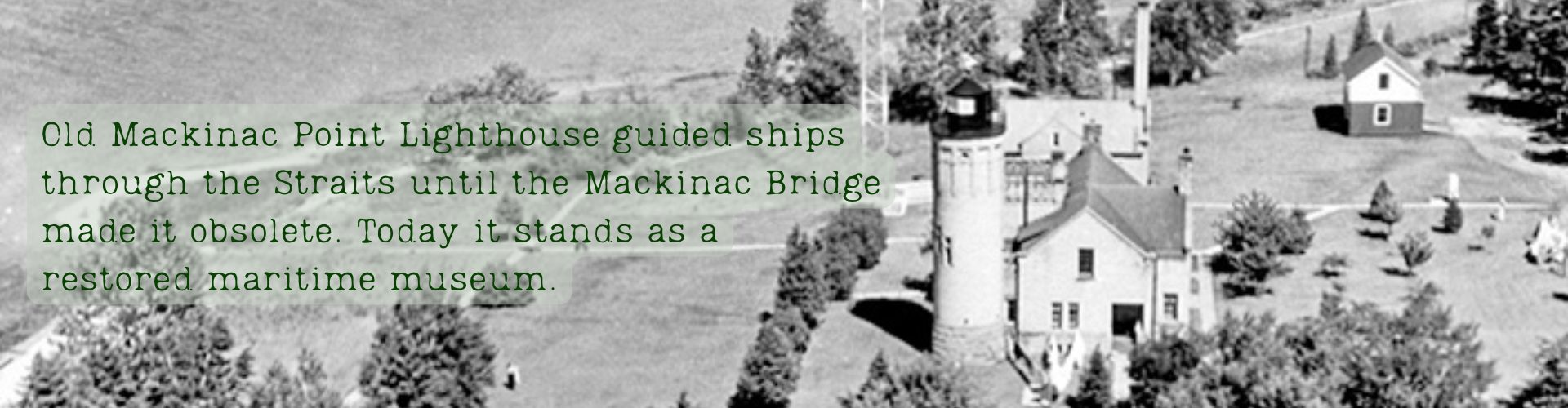
At the northern tip of Michigan’s Lower Peninsula, Old Mackinac Point Lighthouse stands where Lake Michigan meets Lake Huron. Overlooking one of the busiest crossroads in Great Lakes navigation, the light once guided countless vessels through the complex waters of the Straits of Mackinac. Today, it remains a defining landmark in Mackinaw City and a powerful reminder of the region’s maritime past.
Early Navigation in the Straits
Long before European settlement, Native peoples recognized the dangers of navigating the Straits. Shoals, islands, and sudden fog made travel uncertain. To help guide waterborne travelers, the Ojibwa lit fires along the shoreline, creating early navigation aids in a landscape shaped by wind and water.
As commercial traffic increased in the early nineteenth century, formal efforts to mark the passage began. The construction of Bois Blanc Lighthouse in 1829 provided the first permanent guidance for ships entering the Straits. A few decades later, McGulpin Point Lighthouse was established west of Mackinaw Harbor, though its position left portions of the channel unmarked.
The Need for a New Light
By the late nineteenth century, maritime activity in the Straits had grown significantly. Fog presented a persistent challenge, often obscuring shoreline landmarks and increasing the risk of collisions or grounding. Recognizing these hazards, Congress approved funding in 1889 for a steam powered fog signal at Mackinac Point. The signal went into operation in 1890 and quickly proved essential, with operators reportedly burning large quantities of wood to maintain the foghorn during extended periods of dense fog.
Plans soon followed for a full lighthouse station. Funding was authorized in 1891, and construction began the following year. Built on a foundation of ashlar limestone, the structure combined a cylindrical tower with an attached keeper’s dwelling. Cream City brick, trimmed with Indiana limestone, gave the building its distinctive appearance.
Design and Operation
The tower rose approximately forty five feet and was topped by a circular gallery, watch room, and prefabricated iron lantern. Inside, a fourth order Fresnel lens projected a beam visible up to sixteen miles, making the light especially valuable to railroad car ferries operating between Mackinaw City and St. Ignace.
The station’s castle like design set it apart from many other Great Lakes lighthouses. Its duplex keeper’s quarters reflected the demands of maintaining a busy light in a challenging environment. Heavy iron and brass components were incorporated throughout the structure, contributing to its durability and distinctive character.
Changing Times in the Straits
Old Mackinac Point Lighthouse served mariners for more than six decades. During that time, it played a vital role in guiding ships through the turning point of the Straits, where navigation required careful alignment and constant attention to weather conditions.
The completion of the Mackinac Bridge in 1957 marked a turning point. With the bridge illuminated at night, its lights provided a more effective aid to navigation than the lighthouse. As a result, Old Mackinac Point Light was deactivated shortly thereafter.
In 1960, the Mackinac Island State Park Commission acquired the property and incorporated it into Fort Michilimackinac State Park. Later, officials recognized the lighthouse for its historical significance and added it to the National Register of Historic Places
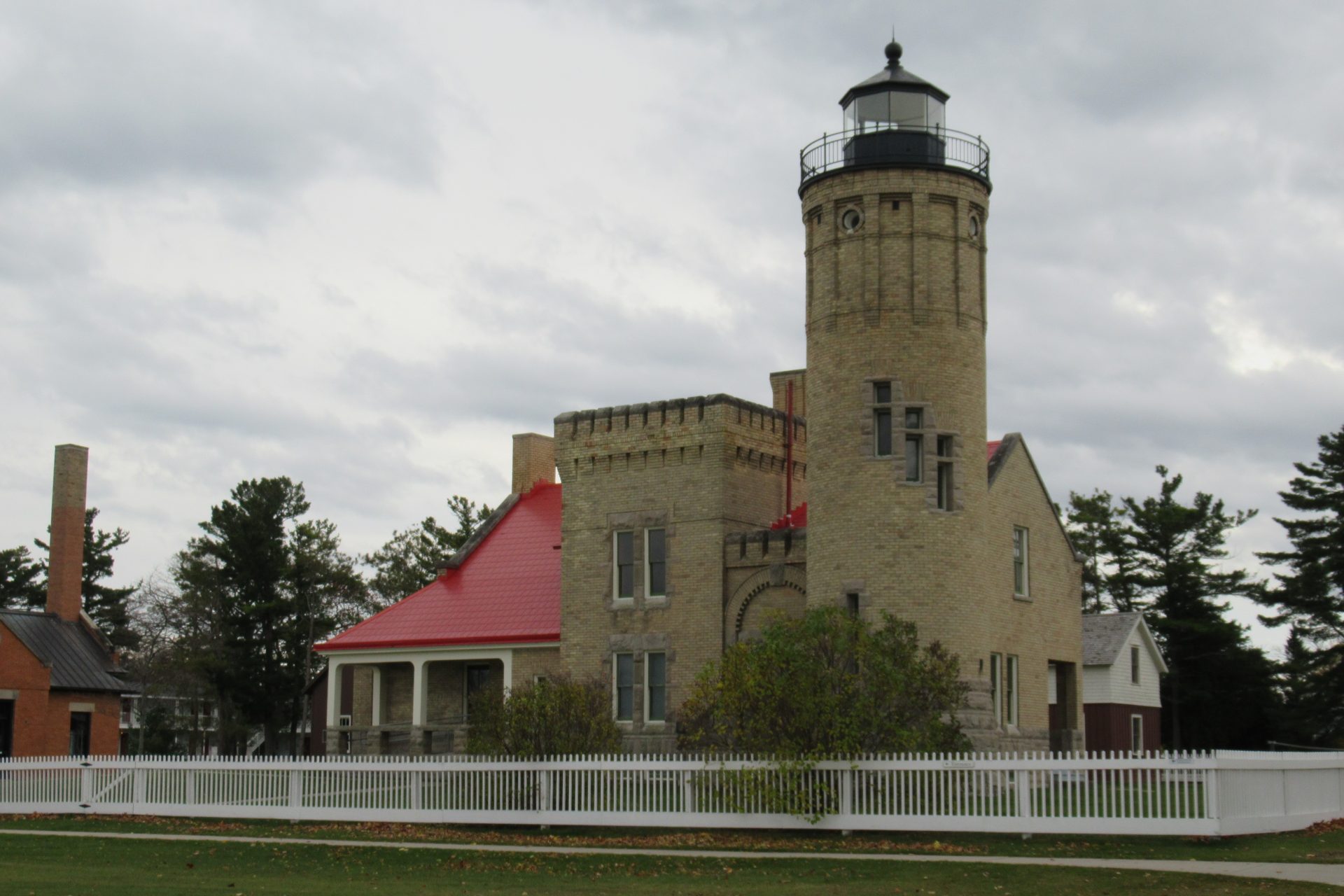
Old Mackinac Point Lighthouse 2022
Restoration and Public Interpretation
Major restoration work began in the late twentieth century, with efforts focused on returning the structure to its early twentieth century appearance. The lighthouse reopened to the public in 2004 as part of the Fort Michilimackinac complex. Visitors can now explore restored rooms furnished to reflect the lives of lighthouse keepers and learn about navigation techniques through interactive exhibits.
Additional masonry restoration in recent years has helped preserve the building’s historic fabric. The original Fresnel lens is displayed on site, allowing visitors to appreciate the craftsmanship that once guided ships across the Straits.
A Landmark at the Crossroads of the Lakes
Today, Old Mackinac Point Lighthouse stands just east of the Mackinac Bridge, overlooking waters that continue to carry vessels between the Great Lakes. Though no longer active, its presence remains deeply connected to the history of maritime travel in Michigan.
As both museum and monument, the lighthouse offers a window into a time when careful navigation and constant vigilance were essential for safe passage through one of the most challenging waterways in North America.
Explore our full collection of Northern Michigan lighthouse stories here
Start planning your trip today and explore the legacy of Michigan’s maritime history!
📍 Explore the Map Below