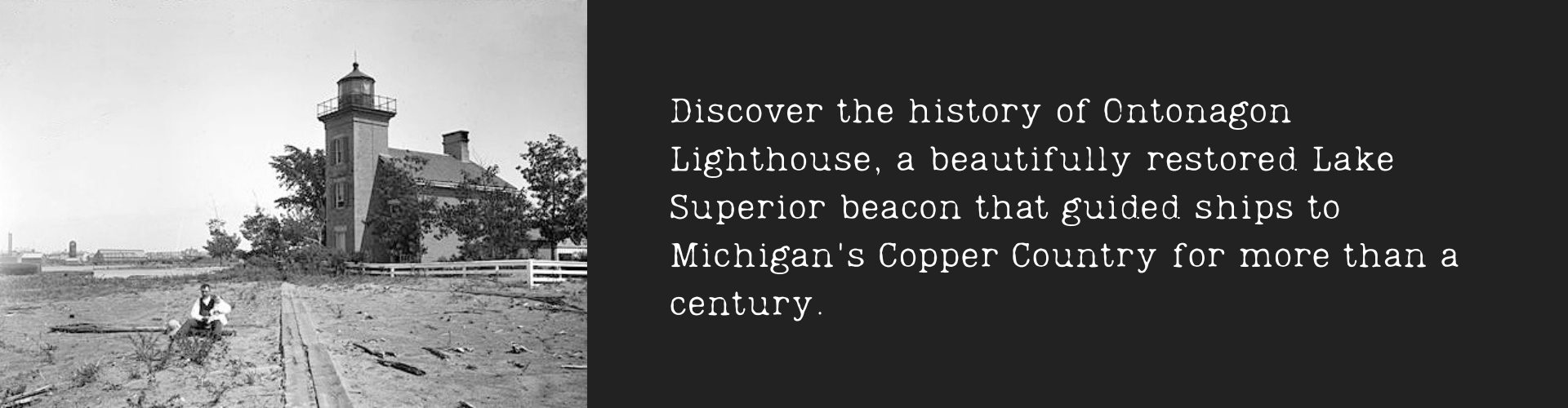
A Beacon for Lake Superior’s Copper Country
Along the shores of western Lake Superior, the Ontonagon Lighthouse stands as a reminder of a time when shipping was the lifeblood of Michigan’s Copper Country.
For more than a century, the lighthouse guided vessels into the mouth of the Ontonagon River, helping mariners navigate one of Lake Superior’s growing ports. As mining, logging, and commerce transformed the region during the nineteenth century, the lighthouse became an essential landmark for ships. These ships carried people, supplies, and valuable cargo.
Today, thanks to extensive preservation efforts, visitors can step inside the historic station and experience a piece of Upper Peninsula maritime history.
A Growing Port Needs a Lighthouse
During the mid nineteenth century, Ontonagon was becoming an increasingly important port on Lake Superior.
The discovery and development of rich copper deposits throughout the western Upper Peninsula brought new attention to the region. Mining operations required equipment, workers, and supplies, while finished copper and other products needed transportation to markets.
As shipping traffic increased, local leaders and federal officials recognized the need for a lighthouse to guide vessels safely into the harbor.
In 1847, funds were appropriated to acquire land for a lighthouse site. Three years later, Congress approved an additional $5,000 for construction of the station.
Work began in 1852, and the first lighthouse was completed the following year.
The First Lighthouse
The original Ontonagon Lighthouse was a wooden structure completed in 1853.
Like many early Great Lakes lighthouses, it was initially illuminated using Lewis lamps, an early lighting system that predated the widespread use of Fresnel lenses.
Although the lighthouse served its purpose, the technology rapidly became outdated.
In 1857, the station received a significant upgrade when a fifth order Fresnel lens was installed at a cost of $500. The improved lens produced a brighter, more focused beam. As a result, visibility for mariners approaching the harbor was greatly enhanced.
Unfortunately, the lighthouse itself did not age as gracefully.
Building a More Permanent Lighthouse
By the 1860s, the original wooden structure had deteriorated significantly.
In 1866, officials determined that replacement rather than repair was the best option.
A new lighthouse was commissioned, and Detroit contractor W. F. Chittenden was selected to oversee construction.
Completed in 1867 at a cost of $14,000, the new station was built of brick and designed to withstand the harsh climate of Lake Superior far better than its predecessor.
The Fresnel lens from the original lighthouse was transferred into the new tower, ensuring continuity of service. This decision provided mariners with a more reliable station.
Once the new lighthouse was operational, the old wooden structure was demolished.
The lighthouse visitors see today is this 1867 replacement.
A Classic Great Lakes Design
The Ontonagon Lighthouse reflects a design that became popular across Michigan during the nineteenth century.
The cream-colored brick keeper’s dwelling and tower were constructed as a single integrated structure. The three-story tower rises 34 feet above the attached one- and one-half story residence.
This practical design allowed keepers to access the lantern room directly from the living quarters, an important convenience during Lake Superior winters.
Similar lighthouse designs were used throughout Michigan, including stations at Copper Harbor, Marquette Harbor, Sand Point, Grand Island North, Bois Blanc, Granite Island, Gull Rock, and Huron Island.
Architecturally, Ontonagon belongs to a family of lighthouse stations that helped define the appearance of Great Lakes navigation during the nineteenth century.
Improvements Through the Years
As technology and maintenance practices evolved, the lighthouse received several updates.
In 1889, an iron gallery was installed around the lantern room. While it added visual character to the tower, its primary purpose was practical. The gallery allowed keepers easier access to clean the lantern windows and maintain the light.
The following year, a kitchen addition was added to the keeper’s residence, improving daily living conditions for lighthouse families.
These changes reflected the reality that a lighthouse was not simply a navigational aid. It was also a home.
For decades, keepers and their families lived at the station while carrying out the demanding responsibilities of maintaining the light and assisting mariners.
The End of Active Service
The Ontonagon Lighthouse remained in operation for more than a century.
By the mid twentieth century, however, advances in navigation technology and changes in harbor operations reduced the need for the historic light station.
The light was discontinued in 1963 and officially closed in January 1964.
For a brief period afterward, the final lighthouse keeper leased the property and continued living there with his family. This provided a direct connection between the station’s active history and its future preservation.
The historic Fresnel lens and the keepers’ logbooks were entrusted to the Ontonagon County Historical Society, ensuring that important pieces of the lighthouse’s story would be preserved.
Saving a Piece of Lake Superior History
Recognition of the lighthouse’s historical importance came quickly.
The Ontonagon Lighthouse was designated a Michigan State Historic Site in 1973 and added to the National Register of Historic Places in 1975.
In 2003, ownership of the station was transferred to the Ontonagon County Historical Society.
The organization launched an extensive restoration effort to preserve the lighthouse and share its history with the public. Today, the society operates the station as a museum and offers tours that allow visitors to explore the keeper’s quarters. They can also climb the tower and learn about life along Lake Superior’s rugged shoreline.
A Lasting Landmark
For more than 110 years, the Ontonagon Lighthouse welcomed ships arriving from across the Great Lakes.
It witnessed the rise of the copper industry, the growth of commerce along Lake Superior, and the countless journeys of sailors, immigrants, miners, and merchants who depended on safe navigation.
Though its light no longer shines across the lake, the lighthouse continues to serve an important purpose.
Standing along the Ontonagon River, it preserves the story of the people who built Michigan’s maritime economy and the keepers who dedicated their lives to helping mariners safely reach shore.
Explore our full collection of Northern Michigan lighthouse stories here
Start planning your trip today and explore the legacy of Michigan’s maritime history!
📍 Explore the Map Below