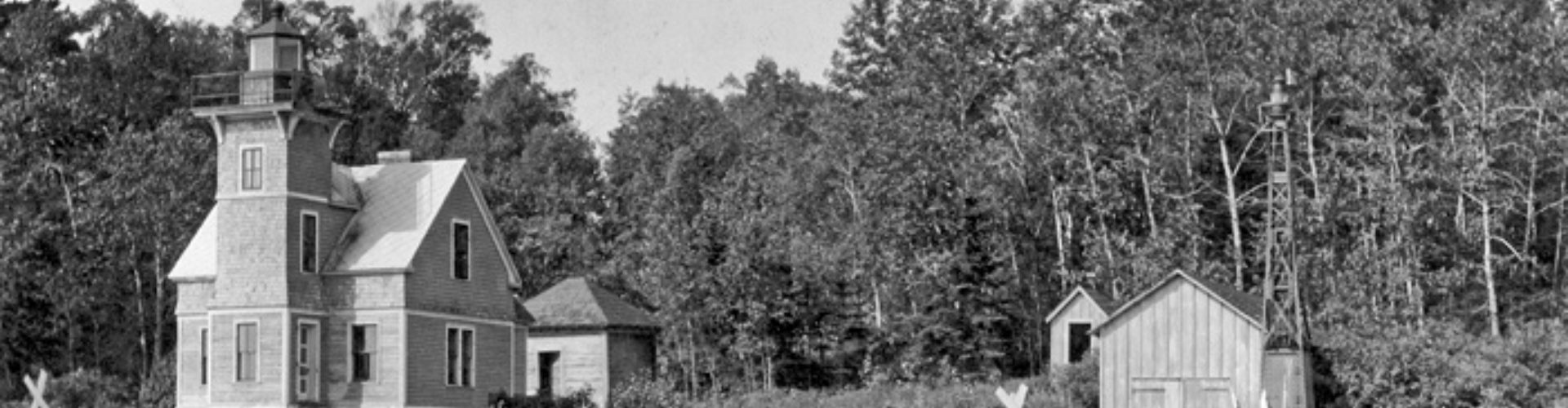
A Private Lighthouse on the St. Marys River
Round Island Light sits quietly on Round Island in the St. Marys River, just about a mile from the Ontario border. While many Michigan lighthouses are open to the public or managed by preservation groups, this one tells a different story. It tells a story of river traffic, changing technology, and a remarkable private restoration that gave new life to a long-darkened light.
Guiding Ships Between Two Great Lakes
The St. Marys River serves as the vital connection between Lake Superior and Lake Huron. After the Soo Locks opened in 1855, ship traffic steadily increased. This made safe navigation along the river more important than ever. Recognizing this need, Congress appropriated $30,000 in 1891 to construct several new lights along the river.
Completed in 1892, its location helped guide vessels through this busy and often challenging stretch of water, especially as commercial shipping expanded in the late 19th century.
A Short Career as an Active Lighthouse
Despite its useful position, Round Island Light had a relatively short working life. In 1922 the switch to steel navigation structure located to the north ended its purpose. Like many lighthouses rendered obsolete by newer technology, the Round Island Light slipped into quiet obscurity once its navigational role ended.
From Forgotten Island to Private Retreat
The lighthouse’s modern chapter began in the late 1990s. Paul Lindberg stumbled upon Round Island while boating the lower St. Marys River in search of a duck hunting spot. upon seeing it, he immediately recognized the island’s potential as a summer home for himself and his wife, Georgeann, a well-known interior decorator.
After tracking down the owners through tax records, Lindberg negotiated a purchase. He became only the third private owner of the lighthouse. Remarkably, the previous owners, who lived in Maine, had visited the island just once in the thirty years they owned it.
A Labor of Love and Ingenuity
Over the next three years, the Lindbergs undertook an extensive renovation of the lighthouse. An addition was built on the west side to accommodate a master bedroom and two bathrooms, blending modern comfort with historic character. A two-level deck was added to the front of the lighthouse. This created a perfect vantage point for watching freighters and other vessels move along the river.
Because the island is only accessible by boat, every piece of construction material and equipment had to be transported by pontoon boat. One of the first major projects was building a boat slip to support the renovation effort.
An experienced landscape contractor, Lindberg also transformed the island’s grounds into a manicured setting. To relocate more than 1,500 rocks around the property, he invented a tool called the Rock Jaw. It was an innovation he later began manufacturing and selling.
Modern Utilities on a Historic Island
Today, the former lighthouse is fully equipped for modern living. An electric cable from the mainland supplies power, including for what Lindberg described as the hardest item to transport to the island: a side-by-side refrigerator. River water is treated using a reverse osmosis system. Furthermore, waste is handled through a sewage filtration system, allowing the island to function comfortably while remaining self-contained.
A Lighthouse with a Second Life
Round Island Light no longer guides ships through the St. Marys River, but it continues to stand as a fascinating example of adaptive reuse. From its origins as a 19th-century navigational aid to its rebirth as a thoughtfully restored private residence, the lighthouse reflects both Michigan’s maritime heritage and the creativity of those determined to preserve it in new ways.
Explore our full collection of Northern Michigan lighthouse stories here
Start planning your trip today and explore the legacy of Michigan’s maritime history!
📍 Explore the Map Below