How Hidden Valley Helped Shape Gaylord’s Alpine Identity
Long before Gaylord became known as Michigan’s Alpine Village, there was another Alpine destination tucked quietly into the hills overlooking the Sturgeon River Valley.
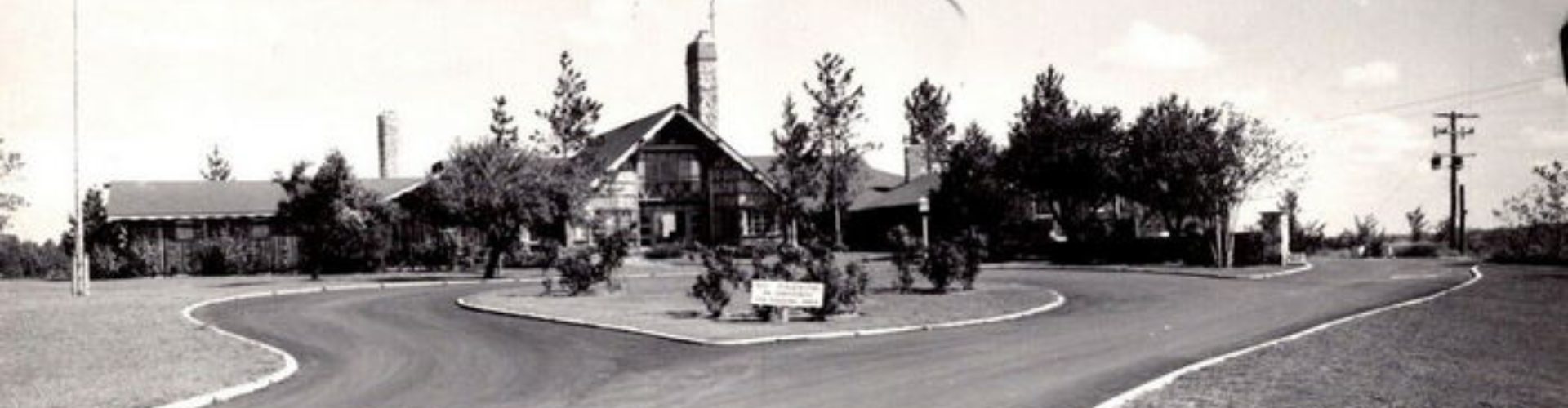
Hidden among the forests was a private retreat known as Hidden Valley, officially called the Otsego Ski Club. It was never intended for the general public. Instead, it served as an exclusive gathering place where some of Detroit’s most influential industrialists could escape the city, enjoy fresh powder, and experience a taste of the European Alps without leaving Michigan.
Over the decades, that private club evolved into today’s Otsego Resort, a destination that welcomes skiers, golfers, families, and travelers from across the Midwest. Along the way, it also helped shape the identity of Gaylord itself.
The Story Begins Before 1939
Although Otsego Resort traces its roots to 1939, its history actually began several years earlier.
In 1936, the Vanderbilt Ski Club became the first organized ski club in Otsego County. Interest in skiing continued to grow, and a group of Detroit businessmen began searching Northern Michigan for terrain that offered dependable snowfall and hills similar to those they had enjoyed while skiing in Canada and New England.
Among them were Donald B. McLouth, founder of McLouth Steel Corporation, along with fellow industrialists C. Thorne Murphy, Alvan MacCauley, David Wallace, Gordon Saunders, and Lang Hubbard.
After exploring Northern Michigan, they found exactly what they were looking for in the secluded hills overlooking the Sturgeon River Valley east of Gaylord.
In 1939, they established the Otsego Ski Club.
The location soon became known simply as Hidden Valley.
Far from the crowds and hidden among the forests, it offered everything the founders had hoped to find, reliable snow, rolling hills, and spectacular scenery that rivaled ski destinations farther east.
A Playground for Detroit’s Industrial Leaders
Unlike most Michigan ski hills that welcomed the public, Hidden Valley operated as a private club.
Membership was limited, and guests generally visited by invitation. Families spent weekends skiing, relaxing by the fireplace, and enjoying the peaceful setting high above the Sturgeon River Valley.
Even as skiing became increasingly popular across Michigan, Hidden Valley remained remarkably exclusive.
A brief notice in Sports Illustrated in 1959 illustrates just how different the club was. The magazine reported the addition of a new double chairlift with a 270 foot vertical rise before noting one important detail.
Admission was by membership only.
That exclusivity became part of the club’s identity for decades.
Bringing the Alps to Northern Michigan
Following World War II, the club entered a period of expansion.
In 1947, renowned Detroit architect Hugh T. Keyes designed a collection of lodges and cabins inspired by the Swiss Alps. Club members had skied in Europe and wanted the same welcoming atmosphere they had experienced in mountain villages there.
Rather than copying European buildings exactly, Keyes created a uniquely Northern Michigan interpretation.
Fieldstone foundations anchored each structure. Vertical log walls, knotty pine interiors, massive fireplaces, decorative balconies, carved wood trim, bell towers, and steep gables gave the resort a warm Alpine character that felt both elegant and inviting.
Buildings including the Main Lodge, Tyrol Lodge, Hilltop Lodge, Forest Lodge, Logmark, and the Loft created what many visitors described as a small European village nestled among the hills.
Today, Hidden Valley remains one of Michigan’s finest examples of Swiss Alpine architecture.
The Resort That Inspired a Town
The influence of Hidden Valley reached well beyond its property lines.
Donald McLouth believed the Alpine architecture that made the ski club so distinctive could also give Gaylord a unique identity.
He encouraged community leaders to embrace the same Tyrolean style throughout downtown.
Over time, businesses remodeled their storefronts, decorative balconies appeared along Main Street, and even the Otsego County Courthouse adopted Alpine inspired features.
Today, visitors recognize Gaylord as Michigan’s Alpine Village, but that story began at Hidden Valley.
A New Chapter Begins
Donald McLouth never saw the resort become the destination it is today.
He died unexpectedly in 1954.
The following year, attorney Alan L. Gornick, former general counsel for Ford Motor Company, purchased the property from McLouth’s estate and began transforming the private ski club into a year round resort.
One of his first major additions was The Classic golf course, designed by noted architect William H. Diddel.
It proved that Hidden Valley could become much more than a winter destination.
Growing Into a Four Season Resort
The resort continued expanding throughout the following decades.
When Keith Gornick assumed leadership in 1981, the property grew from approximately 500 acres into nearly 4,000 acres while increasing its lodging capacity and recreational offerings.
Golf became just as important as skiing.
The Tribute, designed by Rick Robbins in collaboration with PGA Tour professional Gary Koch, quickly earned national recognition. Built across more than 1,000 acres overlooking the Sturgeon River Valley, it was named one of the nation’s best new golf courses and became one of Northern Michigan’s premier golfing destinations.
Throughout the resort’s growth, the historic lodges remained at the heart of the property, preserving the character established decades earlier.
From Private Club to Public Destination
For much of its history, Hidden Valley remained one of Michigan’s most exclusive ski clubs.
Ownership eventually changed after the resort was sold through auction in 2006 and acquired by Osprey Recreational Properties. In 2018, Gary and Kathie Vollmar purchased the historic property and continued its operation as a four season resort.
Today, visitors no longer need an invitation to enjoy the same hills that once welcomed only club members.
Guests can ski the slopes overlooking the Sturgeon River Valley, play championship golf on The Classic and The Tribute, dine at the award winning Duck Blind Grille, or simply relax beside the fireplaces in lodges that have welcomed visitors for generations.
More Than Just a Resort
Otsego Resort tells a story that extends far beyond skiing and golf.
It helped introduce Alpine architecture to Northern Michigan. It influenced the appearance of an entire community. It brought together some of Detroit’s most prominent business leaders, and eventually opened its doors so everyone could experience the beauty that first captured their attention nearly ninety years ago.
Today, many visitors arrive looking for fresh snow, championship golf, or a relaxing weekend getaway.
Few realize they are walking through one of Northern Michigan’s most influential historic resorts, a place whose legacy can still be seen not only across its wooded hillsides, but throughout downtown Gaylord itself.