Archives

Month: June 2025

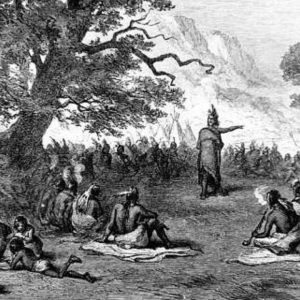
The Pageant of the Sault

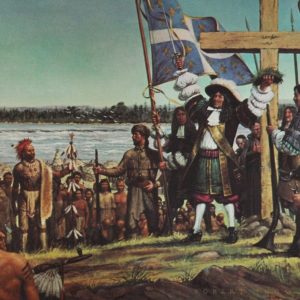
France Claims the Great Lakes On this day in history, June 14, 1671 the French staged one of the most dramatic land grabs in North American history. In a symbolic and theatrical display at Sault Ste. Marie. A gathering at a remote outpost at the crossroads of the Great Lakes, France formally laid claim to an enormous swath of territory. The event, known as The Pageant of the Sault, was a vivid spectacle of colonial ambition, religion, diplomacy, and empire-building. Simon François Daumont, Sieur de St. Lusson, a French officer whose name survives primarily due to this singular event orchestrated… Read More »

Michigan Transfers the Soo Locks to the U.S. Government

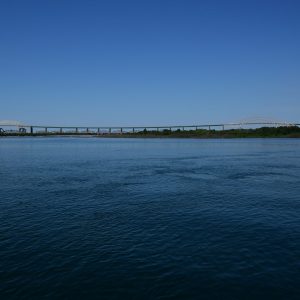
When you think of Michigan history, ship traffic might not be the first thing that comes to mind—but it should be. On June 9, 1881, the State of Michigan officially transferred ownership of the Soo Locks and the St. Marys Falls Canal to the United States government, specifically the U.S. Army Corps of Engineers (USACE). This pivotal moment marked the end of state control and the beginning of federally operated, toll-free passage through one of the most important shipping corridors in North America. The Soo Locks, located in Sault Ste. Marie, were first completed in 1855 to help vessels bypass… Read More »


The Launch of the Edmund Fitzgerald

The Launch of the Edmund Fitzgerald

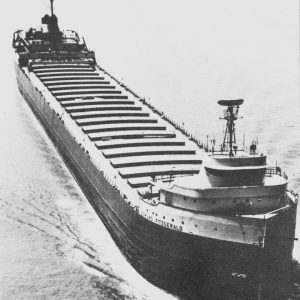
Queen of the Lakes On this day in history, we celebrate a ship that captured the imagination of Great Lakes boat watchers and maritime enthusiasts from the moment she hit the water: the SS Edmund Fitzgerald, launched on June 7, 1958, in River Rouge, Michigan. Commissioned by Northwestern Mutual Life Insurance Company, the Edmund Fitzgerald was no ordinary ore boat. At 729 feet long and with a deadweight capacity of 26,000 tons, she was the largest ship on the Great Lakes at the time and the first built to the exact maximum dimensions allowed through the Saint Lawrence Seaway. She… Read More »


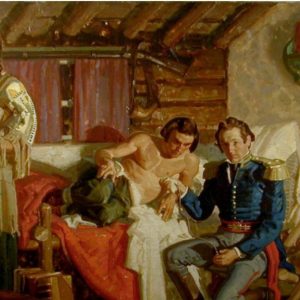
🩺A Musket, a Stomach, and the Birth of Modern Digestive Science

A Musket, a Stomach, and the Birth of Modern Digestive Science. Alexis St. Martin and Dr. Beaumont.

A Musket Shot That Changed Medicine Forever On June 6, 1822, what began as a horrific accident inside the American Fur Company store on Mackinac Island became one of the most extraordinary contributions to medical digestive science. Alexis St. Martin, a young French Canadian voyageur, was accidentally shot in the stomach at close range by a musket. The blast tore a hole in his abdomen, exposing both lung and stomach. Most people wouldn’t have survived such trauma—but Alexis wasn’t most people. Dr. William Beaumont Luckily for him—and for the future of medicine—Dr. William Beaumont, the only physician on the island… Read More »


The Ojibwe Capture of Fort Michilimackinac

he Ojibwe Capture of Fort Michilimackinac

Game, Set, Surprise History is full of battles fought with muskets, swords, and strategy. But, every now and then, a lacrosse stick plays a role too. Read more about the Ojibwe capture of Fort Michilimackinac. On June 2, 1763, a sunny spring day at Fort Michilimackinac turned into a pivotal moment in Pontiac’s Rebellion. The fort is perched on the northern edge of Michigan’s Lower Peninsula. British soldiers stationed at the fort were relaxed and unsuspecting. They were enjoying watching a friendly game of baggatiway (an early form of lacrosse) played by local Ojibwe warriors outside the gates. But this… Read More »


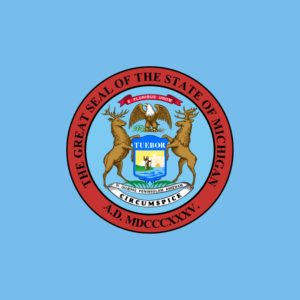
Michigan’s Great Seal Is Adopted

Michigan’s Great Seal Is Adopted

Every great state needs a great symbol—and on June 2, 1835, Michigan got just that. On this date, delegates at the Michigan Constitutional Convention formally adopted the Great Seal of the State of Michigan. They chose a striking emblem that’s been representing our identity, values, and geography ever since. Lewis Cass, Designer The designer behind the seal was Lewis Cass. Cass was Michigan’s second (non-acting) territorial governor and a key figure in shaping early Michigan history. Cass based the seal on the Hudson Bay Fur Company’s emblem. He wanted to recognize Michigan’s strong ties to fur trading and frontier life…. Read More »


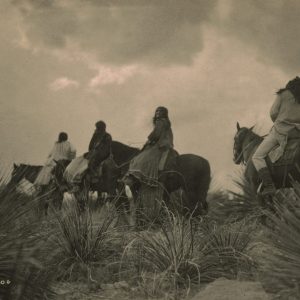
The 1849 Journey of Chief Waukazoo’s Ottawa Band

The 1849 Journey of Chief Waukazoo’s Ottawa Band

From Black Lake to Grand Traverse Bay Chief Peter Waukazoo led his band of Ottawa Indians on a remarkable journey northward. From the shores of Black Lake (now Lake Macatawa) near Holland, Michigan, to the tip of the Leelanau Peninsula. There they would found a new village called Waukazooville. This community would eventually be annexed into what we now know as Northport. The story of the Waukazoo band spans decades of adaptation, cultural preservation, and spiritual exploration. In the early 1830s, their village of about 300 people sat along the Black River. They balanced traditional ways with the pressures and… Read More »