Western Upper Peninsula

Big Annie Clemenc

The Six-Foot Strike Leader Who Defied Calumet Police in 1913 On September 10, 1913, a tall, determined woman named Anna “Big Annie” Clemenc made national headlines. She refused to step aside during a tense miners’ strike in Calumet, Michigan. Standing over six feet tall, carrying herself with quiet but unwavering strength, Big Annie became a symbol of labor resistance in the Copper Country Strike of 1913–1914. Married to a miner Annie was deeply connected to the struggles of the Western Federation of Miners. Annie threw her support behind the fight for better wages and safer working conditions. On that September… Read More »


From Suomi College to Finlandia University

On This Day in History - On Sept 8, 1896, Suomi College, America’s first Finnish college, opened in Hancock, MI. Its historic Old Main still stands today.

The Legacy of America’s First Finnish College On this day in history, September 8, 1896, a groundbreaking institution opened its doors in Hancock, Michigan — Suomi College, the first Finnish college in the United States. With just 27 students in rented quarters, the small school had an ambitious mission: to train Lutheran ministers and preserve Finnish language and culture in America. The driving force behind this mission was J.K. Nikander, a Finnish immigrant and pastor with the Finnish Evangelical Lutheran Church of America (the Suomi Synod). Nikander saw the influx of Finnish settlers to Michigan’s Upper Peninsula — many drawn… Read More »


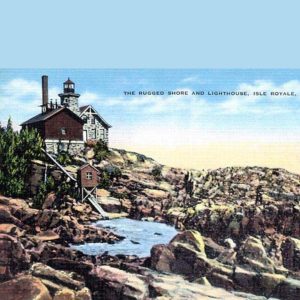
1783 Treaty of Paris and Isle Royale

On this day in history - On Sept. 3, 1783, the Treaty of Paris ended the Revolutionary War and ceded Michigan to the U.S.—but Britain didn’t leave for 13 years.

The Day Michigan Changed Hands (Sort Of) On September 3, 1783, Great Britain and the United States signed the Treaty of Paris, officially ending the Revolutionary War. Among its many consequences, it ceded Michigan—and the rest of the Northwest Territory—to the United States. Sounds neat and tidy, right? Well, not exactly. Britain, eager to keep its profitable fur trade alive, refused to give up its military or political strongholds in Michigan for another thirteen years. In fact, British troops didn’t pack up and leave until after Jay’s Treaty in 1796. Their influence still lingered until after the War of 1812…. Read More »


Michigan’s Final Stagecoach Robbery

On August 26, 1889, Reimund Holzhey committed Michigan’s final stagecoach robbery—ushering out the wild frontier era in the Upper Peninsula.

Reimund Holzhey’s Wild Ride Through Michigan History Before the Old West officially rode off into the sunset, Michigan had one last brush with outlaw justice. On this day in 1889, 22-year-old Reimund Holzhey—known dramatically as the “Black Bart of the Upper Peninsula”—staged the final stagecoach robbery east of the Mississippi River. What unfolded that day was part dime novel, part tragedy, and all true Michigan history. Holzhey wasn’t your run-of-the-mill bandit. He was a young man with a flair for drama, a penchant for train and stagecoach holdups, and an unfortunate taste for dime novels, including those about the infamous… Read More »


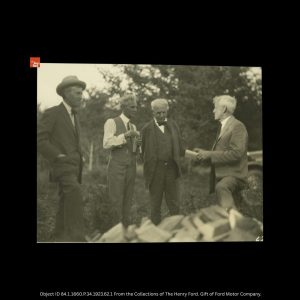
Ford, Edison & Firestone’s 1923 Northern Michigan Adventure

On August 17, 1923, Ford, Edison & Firestone arrived in Escanaba aboard a luxury yacht for a legendary camping trip and tire innovation.

The Vagabonds Land in the U.P. On this day in history—August 17, 1923—three of America’s most iconic innovators set foot in Michigan’s Upper Peninsula. They arrived for a camping trip that was anything but rustic. Henry Ford, Thomas Edison, and Harvey Firestone, along with their wives, friends, and an entourage of staff, arrived in Escanaba aboard Ford’s massive luxury yacht, Sialia. The group, known as “The Vagabonds,” wasn’t just on a vacation—they were making history. The Sialia, a 300-foot sea-going vessel equipped with every modern safety and comfort feature, cruised through dense fog across Lake Michigan after a tour of… Read More »


The Water Lily Sets Sail for Isle Royale

On August 4, 1929, the Water Lily ferry launched from Copper Harbor, giving Michiganders their first direct boat to Isle Royale. Isle Royale Queen IV, current ferry - By Chris Light at English Wikipedia, CC BY-SA 3.0, https://commons.wikimedia.org/w/index.php?curid=6919018

On August 4, 1929, a small but mighty boat named the Water Lily made her maiden voyage from Copper Harbor, Michigan, to Isle Royale—a rugged, remote island in Lake Superior. For the first time ever, Michiganders could board a ferry in their own state and travel to Isle Royale’s pristine wilderness by boat. Before this historic trip, anyone wishing to explore the island had to depart from Duluth, Minnesota, or Port Arthur, Ontario. Charles Kauppi The man behind this bold new service was Charles Kauppi, a former commercial fisherman from the tiny town of Gay, Michigan. With the country on… Read More »


Keweenaw Peninsula Earthquake That Shook Copper Country

On July 26, 1905, a powerful earthquake shook Michigan’s Keweenaw Peninsula, toppling chimneys and rattling copper country towns from Calumet to Marquette.

Copper Country Shaken On July 26, 1905, the quiet towns of Michigan’s Keweenaw Peninsula experienced a startling natural event that left a lasting mark on the region’s history. The Keweenaw Peninsula earthquake, estimated at VIII on the Mercalli Intensity Scale—equivalent to about a 5.0 to 5.9 on the Richter Scale—rattled the area, toppling chimneys, breaking windows, and sending tremors far beyond the immediate vicinity. Residents from Calumet to Copper Harbor and as far east as Marquette felt the shaking, causing such fear that many copper miners refused to descend into the mines for their night shifts. The 1905 quake was… Read More »


The Great Isle Royale Fire of 1936

On July 25, 1936, a massive wildfire ignited on Isle Royale, burning 27,000 acres and shaping the island’s forest landscape for decades.

Fire on Isle Royale Summer of 1936 was hot, dry, and tense on Isle Royale. On July 25, a fire broke out near the Consolidated Paper Company’s lumber mill camp on Siskiwit Bay. What began as a localized blaze quickly escalated into the largest wildfire in Isle Royale history. The island, already home to Civilian Conservation Corps (CCC) camps building the newly authorized national park infrastructure, became the frontline for a fierce battle against the flames. Back then, Isle Royale was experiencing a drought that gripped the northern Midwest, and the tinder-dry mossy ground combined with strong winds created the… Read More »


Calumet Copper Miners Strike Children’s Parade

On July 23, 1913, Copper Country miners struck over wages, automation, and working conditions, culminating in tragedy at the Italian Hall.

The 1913 Calumet Miners’ Strike On July 23, 1913, children marched in Calumet, Michigan, amid one of the most turbulent labor disputes in Copper Country history—the miners’ strike of 1913-1914. This strike wasn’t just about wages or working hours; it highlighted the growing impact of automation, the harsh paternalism of mining companies, and the fight for dignity by hard-working families in the face of industrial change. Over a century later, this strike offers valuable insights into the ongoing struggles between labor, technology, and corporate control. Copper mining in Michigan’s Keweenaw Peninsula was once dominated by a handful of powerful companies,… Read More »


Passage Island Lighthouse Shines for the First Time

On July 1, 1882, Passage Island Lighthouse lit up Lake Superior for the first time—marking the U.S.'s northernmost beacon of light.

💡 Lighting the Way North Tucked in the remote waters of Lake Superior, just off the northeastern tip of Isle Royale, Passage Island Lighthouse blazed to life for the first time on July 1, 1882. It stands as the northernmost lighthouse in the United States. The lighthouse’s powerful beam served as a crucial guidepost for ships navigating the narrow, treacherous passage between Isle Royale and the Canadian shore. But the story of how this iconic light came to be is as rugged and resilient as the rocky outcrop it rests upon. In the late 1860s and early 1870s, copper and… Read More »


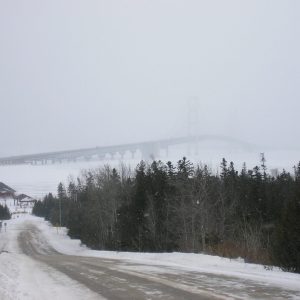
🚢 Near Miss in the Keweenaw Peninsula with the Houghton-Hancock Bridge

🚢 Near Miss in the Keweenaw Peninsula with the Houghton-Hancock Bridge

The Steamer, the Bridge, and the Snag Heard ‘Round Hancock Just one day before the grand dedication of the brand-new Houghton-Hancock Bridge in Michigan’s Upper Peninsula, a near-disaster reminded everyone that no matter how strong a structure is, it’s the little things—like communication—that keep things running smoothly. On the evening of June 24, 1960, the 435-foot steamer J.F. Schoellkopf approached the lift bridge spanning Portage Lake. Captain Albert Wilhelmy dutifully signaled for the vertical lift to rise, allowing his vessel to pass safely underneath. But nothing happened. The bridge didn’t budge. Collision Avoided! Acting quickly, Captain Wilhelmy ordered the engines… Read More »


Cass and Schoolcraft’s 1820 Expedition

Gov. Cass and Henry Schoolcraft historic 1820 expedition to explore Michigan’s Upper Peninsula and its resources was launched.

Exploring the Unknown – Michigan’s Upper Peninsula In the early 1800s, Michigan had a bit of an image problem. The eastern folks weren’t eager to settle there—rumors of swampy land, poor soil, and an unpleasant climate didn’t exactly scream “dream homestead.” So Michigan Territorial Governor Lewis Cass decided to do something about it. On May 24, 1820, Cass teamed up with geologist Henry Schoolcraft and launched the first major American expedition to explore Michigan’s Upper Peninsula, aiming to rewrite the narrative—and maybe pick up a few useful minerals along the way. The Cass/Schoolcraft Expedition was more than just a sightseeing… Read More »