Archives

Month: April 2026

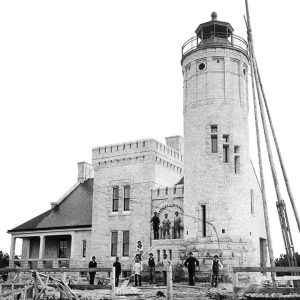
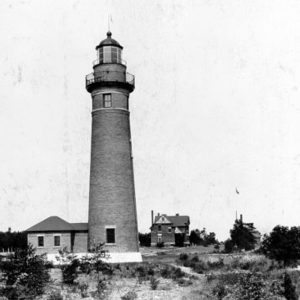
Old Mackinac Point Lighthouse

Old Mackinac Point Lighthouse guided ships through the Straits until the Mackinac Bridge made it obsolete. Today it stands as a restored maritime museum.

At the northern tip of Michigan’s Lower Peninsula, Old Mackinac Point Lighthouse stands where Lake Michigan meets Lake Huron. Overlooking one of the busiest crossroads in Great Lakes navigation, the light once guided countless vessels through the complex waters of the Straits of Mackinac. Today, it remains a defining landmark in Mackinaw City and a powerful reminder of the region’s maritime past. Early Navigation in the Straits Long before European settlement, Native peoples recognized the dangers of navigating the Straits. Shoals, islands, and sudden fog made travel uncertain. To help guide waterborne travelers, the Ojibwa lit fires along the shoreline,… Read More »


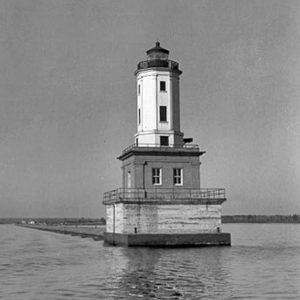
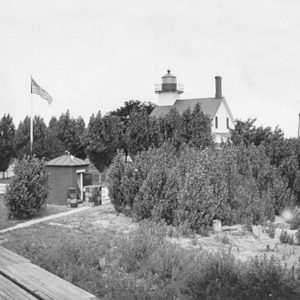
Keweenaw Waterway Lower Entrance Light

Keweenaw Waterway Lower Entrance Light marks the gateway to the Portage Waterway, reflecting Great Lakes engineering and maritime navigation history.

At the southern end of a long breakwater on Lake Superior stands the Keweenaw Waterway Lower Entrance Light, also known as the Portage Entry Light. Positioned at the mouth of the Portage River, this lighthouse has guided vessels into one of the most important interior waterways on Michigan’s Keweenaw Peninsula. Opening a Route Across the Peninsula The Portage River was first dredged in 1860, creating a navigable route that allowed vessels to cross the Keweenaw Peninsula rather than travel around its rugged northern shoreline. As traffic increased, it quickly became clear that reliable navigation aids were needed to mark the… Read More »


Six Mile Point Range Lights

Six Mile Point Range Lights guide ships through the Neebish Channel, reflecting major navigation improvements along the St. Marys River.

Along the western shore of Lake Nicolet, a quiet pair of navigation lights tells the story of one of the Great Lakes’ most important shipping corridors. These are known as the Six Mile Point Range Lights. They were established to guide vessels through the Neebish Channel. This channel is a critical link in the route between Lake Superior and the lower Great Lakes. A River of Growing Importance When the Soo Locks were completed in 1855, they transformed navigation on the St. Marys River. Ships could now bypass the powerful rapids near Lake Superior’s outlet. As a result, this opened… Read More »


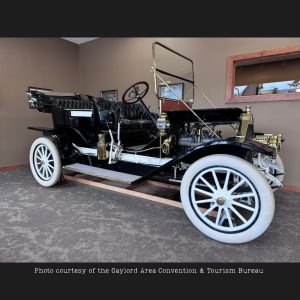
The Gaylord Car Company, A Northern Michigan Dream on Four Wheels

Restored 1911 Gaylord 30 touring car side view showing seating and body design in Gaylord Michigan. Photo courtesy of the Gaylord Area Convention & Tourism Bureau

In the early years of the twentieth century, the future of many Northern Michigan towns felt uncertain. The logging era that had built places like Gaylord was fading. What came next was not always clear. Some communities slowed. Others searched for something new. In Gaylord, a group of local residents decided not to wait and see what would happen. They chose to build something bold. A Community Invests in Its Future In the spring of 1910, the idea began to take shape. A local banker, A. B. C. Comstock, understood that the lumber economy was nearing its end. Around the… Read More »


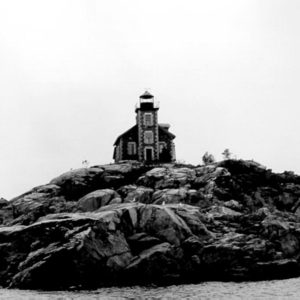
Granite Island Lighthouse

Granite Island Lighthouse has guided ships on Lake Superior since 1869, reflecting changing shipping routes, preservation efforts, and modern scientific use.

Rising from the open waters of Lake Superior, Granite Island Lighthouse has long stood as a quiet sentinel along one of the Great Lakes’ historic shipping routes. The island is remote and often surrounded by powerful winds and waves. The island’s light was once a critical guide for vessels traveling along the southern shore of the lake. A Light for Busy Waters By the middle of the nineteenth century, Lake Superior had become a major corridor for commercial shipping. Steamships and schooners carried iron ore, timber, and other cargo through waters that could turn treacherous with little warning. Positioned near… Read More »


Little Traverse Lighthouse

Little Traverse Lighthouse guided ships into Harbor Springs for decades and reflects the legacy of keepers, rare fog signals, and Lake Michigan navigation.

On the north side of Little Traverse Bay, a graceful lighthouse stands at Harbor Point near Harbor Springs. Known as the Little Traverse Light, it has long marked the entrance to one of Lake Michigan’s most sheltered harbors. Though now surrounded by private homes, its history reflects both the growth of regional navigation. It also reflects the lives of those who kept its beam shining. A Needed Beacon on the Bay By the early 1870s, increasing vessel traffic along the Lake Michigan shoreline highlighted the need for reliable navigation aids at Little Traverse Bay. Engineer Orlando Metcalfe Poe recommended the… Read More »


Middle Island Lighthouse

Middle Island Lighthouse guided ships along Lake Huron’s hazardous shoreline, reflecting evolving technology and community preservation efforts.

Rising from the waters of Lake Huron about ten miles north of Alpena, Middle Island Lighthouse marks a place that long held importance for mariners navigating the Michigan shoreline. Positioned midway between Thunder Bay and Presque Isle, the island offered both refuge and risk. Its sheltered harbor provided protection during storms. Yet, surrounding shoals made approach difficult and dangerous. Recognizing a Hazard on the Lake By the late nineteenth century, the hazards near Middle Island were well known. In 1881, the United States Life Saving Service established a station on the island to assist vessels in distress. As shipping traffic… Read More »