Central Upper Peninsula

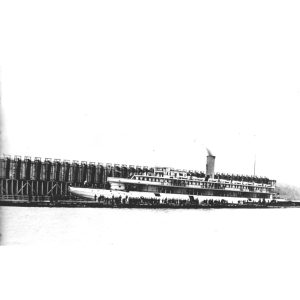
The First Great Lakes Iron Ore Shipment Sets Sail

On July 7, 1852, the first shipment of Lake Superior iron ore traveled by Great Lakes to Lake Erie smelters—just six barrels that changed history.

Barrels of Change In the early days of the mining boom, the iron ore buried beneath the rugged wilderness held promise. But little practicality, transportation was a nightmare. Mule teams, makeshift plank roads, and schooners only getting the job halfway there. The dreaded St. Marys River rapids brought things to a halt. But on July 7, 1852, a tiny but mighty shipment changed all of that. That day, the Marquette Iron Company shipped six barrels of Lake Superior iron ore to New Castle, Pennsylvania. This marked the first time iron ore made the full journey via the Great Lakes from… Read More »

Cass and Schoolcraft’s 1820 Expedition

Gov. Cass and Henry Schoolcraft historic 1820 expedition to explore Michigan’s Upper Peninsula and its resources was launched.

Exploring the Unknown – Michigan’s Upper Peninsula In the early 1800s, Michigan had a bit of an image problem. The eastern folks weren’t eager to settle there—rumors of swampy land, poor soil, and an unpleasant climate didn’t exactly scream “dream homestead.” So Michigan Territorial Governor Lewis Cass decided to do something about it. On May 24, 1820, Cass teamed up with geologist Henry Schoolcraft and launched the first major American expedition to explore Michigan’s Upper Peninsula, aiming to rewrite the narrative—and maybe pick up a few useful minerals along the way. The Cass/Schoolcraft Expedition was more than just a sightseeing… Read More »


The Birth of Dickinson County

On May 21, 1891, The Birth of Dickinson County. Michigan welcomed its final county—Dickinson—crafted from mining roots and named after U.S. Postmaster General Donald Dickinson.

Michigan’s Baby County Let’s rewind to May 21, 1891—a day that marked the end of county-making in Michigan’s history books. On this day, the state officially established its 83rd and final county: Dickinson County, carved from parts of Marquette, Menominee, and Iron counties in the Upper Peninsula. Youngest in the lineup but rich in industry and heritage, Dickinson County tells a story of iron, lumber, politics, and perseverance. Named after Donald M. Dickinson, who served as U.S. Postmaster General under President Grover Cleveland, the county was created by Public Act 89 of 1891, which was signed into law on May… Read More »


Grand Island Natural Recreation Area

On May 17, 1990, Grand Island in Lake Superior was designated a National Recreation Area. Explore its history, trails, cliffs, and wild beauty.

Grand Island’s Journey to Recreation Area Status Tucked just off the shores of Munising in Michigan’s Upper Peninsula, Grand Island is a place of rugged cliffs, lush forests, and serene lake views. On May 17, 1990, this stunning Lake Superior island officially earned its place as a National Recreation Area. Its status as a haven for outdoor lovers and history buffs alike firmly established. The island, covering about 13,500 acres within the Hiawatha National Forest, was purchased by the U.S. Forest Service from Cleveland Cliffs Iron Company. This move turned a once-private industrial holding into a publicly accessible natural retreat…. Read More »


Gold Fever in the Upper Peninsula

Gold Fever in the Upper Peninsula. On May 17, 1881, Julius Ropes discovered gold near Ishpeming, launching the only gold mine east of the Mississippi River.

The 1881 Discovery That Sparked Michigan’s Mining Dreams If you think Michigan’s Upper Peninsula is only famous for copper and iron, think again. On this day in history—May 17, 1881—Julius Ropes, a local chemist from Marquette, unearthed something that would ignite dreams of fortune and glory: gold. Ropes had been studying rock samples in the area and noticed traces of gold and silver. When he discovered a gold-bearing quartz vein just outside Ishpeming, it wasn’t long before the Ropes Gold and Silver Company was formed and the U.P. got its very own gold rush. The Ropes Mine was the only… Read More »


Marquette & Joliet’s Great River Journey

Marquette & Joliet’s Great River Journey

The Journey Begins On May 17, 1673, two unlikely adventurers—Jesuit missionary Father Jacques Marquette and French-Canadian fur trader Louis Joliet—pushed off from St. Ignace in canoes, beginning one of the most significant exploration journeys in North American history. Accompanied by five voyageurs and guided by Indigenous knowledge, their mission was to find and map the mighty river that Native peoples called the Messipi—“the Great River.” Their journey wasn’t just about maps and discovery. It was about connecting a continent. With little more than determination, their canoes, and guidance from Native tribes, they ventured across what would become Wisconsin and followed… Read More »


Theodore Roosevelt arrives in Marquette

May 13, 1913, Theodore Roosevelt arrives in Marquette, MI, to sue a newspaper editor. He won... and accepted just six cents in damages.

Defending His Honor History has its share of courtroom drama, but few moments are quite as delightfully petty—and noble—as when former President Theodore Roosevelt rolled into Marquette, Michigan, on May 13, 1913, to defend his honor. The charge? He was a drunk and a liar—at least, that’s what George Newett, editor of the Iron Ore newspaper in Ishpeming, claimed. Roosevelt, never one to take things lying down (unless he was posing for a hunt), took legal action. The scene was set in Michigan’s Upper Peninsula, where Roosevelt traveled specifically to testify in a libel suit he’d filed against Newett. The… Read More »


The Tragic Sinking of the Schooner Nelson

On May 13, 1899, the schooner Nelson sank in Lake Superior, taking her crew and captain’s family. The wreck was found in 2014.

Lost to the Storm Lake Superior has a long, dark history of claiming ships, sailors, and stories—many of which remain mysteries beneath her cold waves. But on this day in history, May 13, 1899, the sinking of the Schooner Nelson was one of those stories was written in heartbreak and heavy weather. The schooner Nelson, a 199-foot, three-masted vessel built in 1866, sank near Grand Marais, Michigan, taking her entire crew, including the captain’s wife and infant child, down with her. The Nelson was being towed west by Captain White’s steamer alongside the Mary B. Mitchell. The ships were caught… Read More »


From Bleeker County to Menominee County

The Short-Lived County Name That Didn’t Stick March 19, 1863, the people of Michigan’s Upper Peninsula successfully petitioned to rename Bleeker County to Menominee County. If you’ve never heard of Bleeker County, you’re not alone. The county only existed for two years and four days before locals decided they weren’t too fond of the name. Menominee County (/məˈnɒməni/ mə-NAH-mə-nee) is a county located in Michigan’s Upper Peninsula. As of the 2020 census, the population was 23,502. The county seat is Menominee. Bleeker County to Menominee County Originally created in 1861 from part of Delta County, Bleeker County was officially organized… Read More »


Michigan’s Upper Peninsula German POW Camps

A Forgotten Chapter of WWII History February 12, 1944, marked the arrival of German soldiers in Michigan’s Upper Peninsula (U.P.), bringing a piece of World War II history to this remote and rugged region. Members of Field Marshal Erwin Rommel’s Afrika Corps were transported across the Atlantic and the United States to POW camps such as Camp Evelyn and Camp Sidnaw. Eventually, approximately 1,000 German prisoners of war (POWs) would reside in five camps scattered across the U.P., with others sent to facilities in the Lower Peninsula. A Journey Across the Atlantic With Great Britain running out of space for… Read More »


Wings Play First Winter Classic At Marquette Prison

The Day the Detroit Red Wings Played Hockey Behind Bars Detroit Red Wings Winter Classic: Red Wings vs. Marquette Prison Pirates In the winter of 1954, something truly extraordinary happened in Marquette, Michigan—a professional hockey game behind prison walls. The Detroit Red Wings return to play the first outdoor game in NHL history against the Marquette Branch Prison’s inmate team, the “Prison Pirates.” This story is a blend of sportsmanship, innovation, and a setting that’s as unconventional as it gets: a makeshift rink inside a prison courtyard. How it Began The tale begins with Red Wings General Manager Jack Adams… Read More »


Venerable Frederic Baraga’s Legacy

The Snowshoe Priest When you think of the rugged landscapes of Michigan’s Upper Peninsula, the image of a Slovenian priest trekking through snow-covered forests on snowshoes might not be the first thing that comes to mind. For 37 years, Frederic Baraga—fondly known as the “Snowshoe Priest”—dedicated his life to the spiritual and cultural enrichment of the Ottawa and Chippewa tribes. He also ministered to the immigrant communities of the region. His story is one of resilience, faith, and a relentless commitment to his mission. He earned the title “Apostle of the Lakelands” and, in recent years, the honor of being… Read More »