Central Upper Peninsula

Exploring the History of Michigan’s Central Upper Peninsula

In the Central Upper Peninsula, history is closely connected to iron, shipping, and the steady presence of Lake Superior. Towns like Marquette and Ishpeming grew from industry, but they also developed strong identities that remain today. This region offers a look at how work, water, and community came together to shape everyday life.


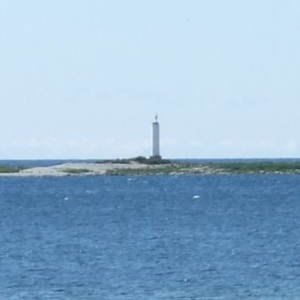
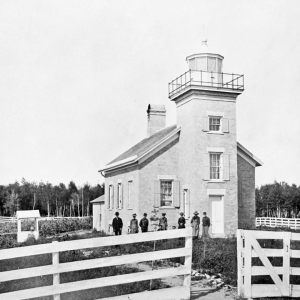
Poverty Island Light

Discover the history of Poverty Island Light, a remote Lake Michigan lighthouse that guided iron ore shipping traffic through Green Bay for decades.

The Isolated Beacon of Green Bay Far from the mainland and surrounded by the waters of northwestern Lake Michigan, Poverty Island Light has stood watch over one of the Great Lakes’ important shipping passages for more than 150 years. Located on Poverty Island, nearly six miles south of the Garden Peninsula, the lighthouse was built to guide vessels through the narrow Poverty Island Passage, a route that became increasingly important as Michigan’s iron industry expanded during the nineteenth century. Today, the lighthouse stands abandoned and weather worn, yet its history remains closely tied to the growth of Upper Peninsula commerce… Read More »

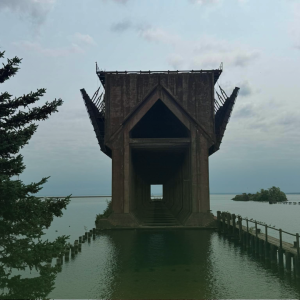
Marquette’s Ore Docks

Learn the history of Marquette’s ore docks and how iron ore, railroads, Lake Superior freighters, and gravity helped shape the Upper Peninsula.

Where Iron, Railroads and Lake Superior Came Together Stand along Marquette’s waterfront today and it is difficult to miss the enormous ore dock reaching into Lake Superior from the Lower Harbor. It is massive, unmistakable, and strangely beautiful. Travel a few miles north to Presque Isle and you will find another one. This dock is not simply a reminder of Marquette’s industrial past. More than a century after it was built, it is still doing the job it was designed to do. Together, Marquette’s Lower and Upper Harbor ore docks tell a much larger story. It is a story that… Read More »


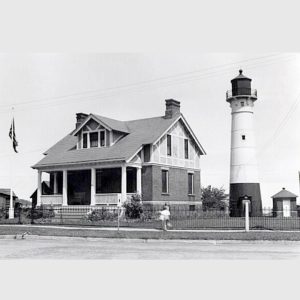
Peninsula Point Lighthouse

Explore the history of Peninsula Point Lighthouse, a Bay de Noc beacon that guided ships, survived abandonment, and now welcomes monarch butterflies.

Guiding Ships and Monarch Butterflies At the southern tip of the Stonington Peninsula, where the waters of Big Bay de Noc, Little Bay de Noc, and Green Bay meet, stands one of Michigan’s most scenic and historically significant lighthouse sites. The Peninsula Point Lighthouse once served as a critical navigational aid for vessels traveling the busy shipping routes of northern Lake Michigan. Today, although its light no longer shines across the water, the lighthouse remains a beloved landmark. In addition, it is now an unexpected destination for another group of travelers: thousands of migrating monarch butterflies. Its story combines maritime… Read More »


Naubinway Island Light

Learn the history of Naubinway Island Light, a small but important Lake Michigan lighthouse built in 1931 to mark dangerous shallow reefs.

A Small Lighthouse with an Important Mission Just offshore from the village of Naubinway, a small island sits quietly in the waters of northern Lake Michigan. At first glance, Naubinway Island may seem unremarkable. However, for generations of mariners it has served as an important landmark along a stretch of shoreline where hidden hazards lie beneath the surface. Standing on the island is the Naubinway Island Light, a modest lighthouse whose primary purpose has always been simple but essential. It helps vessels avoid dangerous shallow waters and safely reach Naubinway Harbor. Though it lacks the size and fame of some… Read More »


Munising Range Lights

Discover the history of Munising Range Lights, the twin beacons that have guided ships safely through Lake Superior's East Channel since 1908.

Guiding Mariners Through the East Channel For more than a century, a pair of lighthouses overlooking Munising Bay have helped mariners safely navigate one of Lake Superior’s most important harbor entrances. Known as the Munising Front Range Light and the Munising Rear Range Light, these towers work together to guide vessels through the East Channel between Grand Island and the mainland. While neither lighthouse is particularly large, their combined role has made them essential to safe navigation in the area since the early twentieth century. Their story is also one of changing technology, dedicated lighthouse keepers, and the continuing effort… Read More »


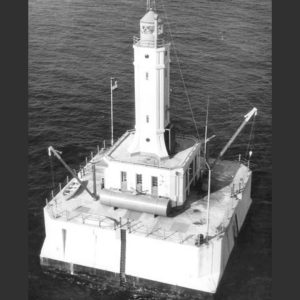
Minneapolis Shoal Light Station

Discover the history of Minneapolis Shoal Light Station, an offshore lighthouse built in 1935 to guide ships through northern Green Bay.

The Offshore Sentinel of Green Bay Rising from the waters of northern Green Bay, the Minneapolis Shoal Light Station stands alone miles from shore, a reminder of an era when Great Lakes navigation depended on carefully placed beacons and the dedication of lighthouse keepers. Located approximately 6.6 miles south of Peninsula Point near Big Bay de Noc, the lighthouse was built during a period of changing shipping patterns on Lake Michigan. While many of Michigan’s lighthouses trace their origins to the nineteenth century, Minneapolis Shoal represents a newer chapter in Great Lakes maritime history, one shaped by modern engineering and… Read More »


Menominee North Pier Lighthouse

Discover the history of the Menominee North Pier Lighthouse, a bright red cast iron beacon that has guided Great Lakes ships since 1877.

Guiding Ships at the Mouth of Green Bay Standing at the end of the north pier in Menominee Harbor, the Menominee North Pier Lighthouse has welcomed sailors and guided vessels safely into port for nearly 150 years. Though modest in size compared to some of the Great Lakes’ towering lights, this bright red beacon has played an important role in maritime navigation along the western shore of Michigan’s Upper Peninsula. Located where the waters of Green Bay meet the harbor shared by Menominee, Michigan, and Marinette, Wisconsin, the lighthouse continues to serve as an active aid to navigation. Its distinctive… Read More »


Marquette Harbor Light

Marquette Harbor Light has guided Lake Superior shipping since 1853, evolving through storms, modernization, and preservation efforts.

Standing at the edge of Lake Superior’s rugged shoreline, Marquette Harbor Light has long served as a vital beacon for vessels navigating the busy ore shipping routes of Michigan’s Upper Peninsula. Over more than a century and a half, the lighthouse has evolved through storms, technological change, and shifting maritime needs while remaining an active aid to navigation. Establishing a Harbor Light As iron ore mining expanded in the mid-nineteenth century, the need for safe navigation into Marquette Harbor became increasingly clear. Congress appropriated funds for a lighthouse in 1850, and construction began two years later. The light was first… Read More »


The History of Kitch-iti-Kipi and Palms Book State Park

Discover the history, legends, and preservation of Kitch-iti-Kipi and Palms Book State Park, one of Michigan’s most fascinating natural wonders.

Deep in the forests of Michigan’s Upper Peninsula sits one of the most remarkable natural wonders in the Great Lakes region. Crystal clear water rises endlessly from the earth below. Ancient tree trunks rest at the bottom like forgotten relics. Sand quietly shifts beneath the surface as thousands of gallons of water surge upward every minute. Today, visitors know it as Kitch-iti-Kipi, the “Big Spring.” For generations, however, this place was far more than a tourist attraction. Long before roads, observation rafts, and state park signs appeared, the Spring was already part of the homeland and traditions of the Anishinaabe… Read More »


Marquette Harbor Breakwater Light

Marquette Harbor Breakwater Light reflects decades of harbor engineering, storm damage, and technological change along Lake Superior’s historic ore port.

The lighthouse at the end of Marquette’s harbor breakwater reflects a long history of change along one of Lake Superior’s most important ore shipping ports. Though modest in size today, the light represents decades of engineering work, maritime growth, and the constant challenge of protecting vessels in exposed waters. Early Harbor Improvements Marquette Harbor first gained a lighthouse on the nearby point in 1853, serving ships involved in the growing iron ore trade. At the time, the harbor offered little natural protection. Storms sweeping in from the north and east could make docking difficult and dangerous. To improve conditions, work… Read More »


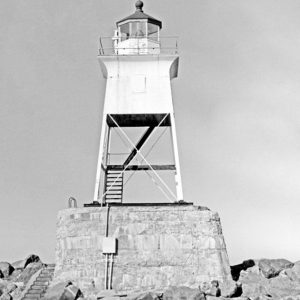
Manistique East Breakwater Light

Manistique East Breakwater Light guided ships into a busy Lake Michigan harbor, reflecting the city’s industrial past and evolving maritime navigation.

At the edge of Manistique’s harbor, a compact steel tower stands as a reminder of the city’s once thriving maritime past. Officials built the Manistique East Breakwater Light during a period when the harbor bustled with activity, serving as a gateway for timber, pig iron, and other cargo moving across Lake Michigan A Harbor in Need of Protection During the late nineteenth century, timber crib piers protected Manistique’s harbor. These early structures, constructed in the 1870s, provided limited shelter from storms that could quickly turn dangerous. As shipping increased, local leaders recognized the need for stronger harbor defenses. By 1910,… Read More »


Granite Island Lighthouse

Granite Island Lighthouse has guided ships on Lake Superior since 1869, reflecting changing shipping routes, preservation efforts, and modern scientific use.

Rising from the open waters of Lake Superior, Granite Island Lighthouse has long stood as a quiet sentinel along one of the Great Lakes’ historic shipping routes. The island is remote and often surrounded by powerful winds and waves. The island’s light was once a critical guide for vessels traveling along the southern shore of the lake. A Light for Busy Waters By the middle of the nineteenth century, Lake Superior had become a major corridor for commercial shipping. Steamships and schooners carried iron ore, timber, and other cargo through waters that could turn treacherous with little warning. Positioned near… Read More »