Northeast Lower Peninsula

The Gift of Bois Blanc

On August 3, 1795, Chief Matchekewis ceded Bois Blanc Island to the U.S. as part of the Treaty of Greenville—an “extra and voluntary gift.

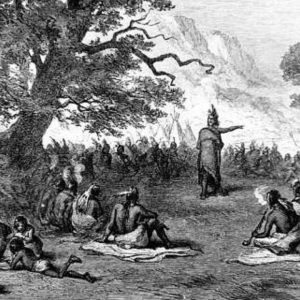
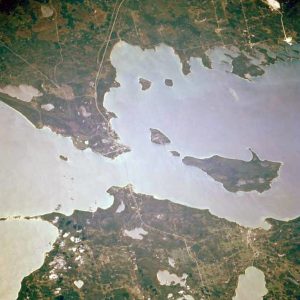
Treaty of Greenville On this day in history—August 3, 1795—Chippewa Chief Matchekewis ceded Bois Blanc Island to the United States as part of the Treaty of Greenville. Described as an “extra and voluntary gift of the Chippewa nation,” but the reality of the treaty came in the shadow of military defeat and expanding settler colonialism. Along with Bois Blanc, the treaty forced Native American tribes to give up most of present-day Ohio, part of Indiana, Mackinac Island, and sixteen strategic sites across Michigan. The Treaty of Greenville followed the Native American loss at the Battle of Fallen Timbers. General “Mad”… Read More »



Camp Grayling Founded in 1913

Founded in 1913, Camp Grayling began as a land grant from lumber baron Rasmus Hanson and became the largest National Guard facility in the U.S.

A Lumberman’s Gift That Built a Military Legacy Camp Grayling was officially founded July 20, 1913—thanks to the foresight and generosity of Grayling lumber baron Rasmus Hanson. What began as a gift of land to the State of Michigan has since grown into the largest National Guard training facility in the United States. Rasmus Hanson understood the importance of national defense and believed Michigan’s vast northern forests could serve a greater purpose beyond logging. He donated land near Grayling to the state specifically for military training, laying the foundation for what would become Camp Grayling. By 1914, troops began arriving… Read More »


Michigan’s Hottest Day

On July 13, 1936, Mio hit a staggering 112°F—still the hottest temperature ever recorded in the state. Here’s the story behind it.

Mio records record temperature of 112 degrees In the middle of the Dust Bowl and Great Depression, the summer of 1936 brought with it an unforgiving heat wave that left much of North America sweltering. And on July 13, 1936, a small Northern Michigan town etched its name into the weather history books. That day, Mio, Michigan—tucked in the Au Sable River valley—hit an unbearable 112 degrees Fahrenheit, making it the record for Michigan’s hottest day. 🌞 And Mio wasn’t alone. That same day, Saginaw sizzled at 111°F, while other cities weren’t far behind: Kalamazoo – 109°F Grand Rapids –… Read More »


Alpena’s Devastating Fire of 1872

On July 12, 1872, Alpena suffered a catastrophic fire that destroyed 75 buildings and reshaped the city forever.

Up in Flames In the early days of Alpena, Michigan, the booming lumber industry brought both prosperity and danger. The city’s rapid growth, wooden structures, and proximity to sawdust-laden mills made it a tinderbox waiting for a spark. That spark came on July 12, 1872, when a catastrophic fire consumed the heart of Alpena, leaving destruction and resilience in its wake. Fire of 1871 Just over a year earlier, Alpena had officially incorporated as a city on March 29, 1871. Within weeks, fire struck the business district on the north shore of the Thunder Bay River, prompting the formation of… Read More »


The Ojibwe Capture of Fort Michilimackinac

he Ojibwe Capture of Fort Michilimackinac

Game, Set, Surprise History is full of battles fought with muskets, swords, and strategy. But, every now and then, a lacrosse stick plays a role too. Read more about the Ojibwe capture of Fort Michilimackinac. On June 2, 1763, a sunny spring day at Fort Michilimackinac turned into a pivotal moment in Pontiac’s Rebellion. The fort is perched on the northern edge of Michigan’s Lower Peninsula. British soldiers stationed at the fort were relaxed and unsuspecting. They were enjoying watching a friendly game of baggatiway (an early form of lacrosse) played by local Ojibwe warriors outside the gates. But this… Read More »


Alpena’s Business District Fire

Alpena Business District Devastated On April 9, 1871, the city of Alpena experienced one of its most destructive disasters. A massive fire that consumed much of its business district. The fire started at the Guild and Clewey’s billiard saloon on the north shore of the Thunder Bay River. It quickly spread to Fletcher Street and down to 2nd Avenue. The result was the loss of several commercial buildings. The Star Hotel, Evergreen Hall, and Bolton and McRae’s store were total losses. At the time, Alpena was a growing community that had just incorporated as a city less than two weeks… Read More »


Exploring Michigan’s North Central State Trail

A Journey Through History and Nature The North Central State Trail in Michigan is more than just a pathway through the state’s scenic landscapes; it’s a journey through history, following the tracks of the once-bustling Michigan Central Railroad. This 74.9-mile trail stretches from Waters to Mackinaw City, winding through some of Michigan’s most beautiful scenery and welcoming communities. Today, this historic rail line has transformed into a beloved recreational trail, offering activities for all seasons. A Glimpse into Railroad History Established in 1882 by the Michigan Central Railroad, the rail line that is now the North Central State Trail was… Read More »


The Coldest Day in Michigan History

Where the Cold Rewrote State History Nestled in the heart of Otsego County, Vanderbilt is a quaint village with a big claim to fame. While its 2020 population of just 498 might suggest a sleepy town, Vanderbilt is anything but ordinary. It was here, on February 9, 1934, that Michigan experienced its coldest recorded temperature: a bone-chilling −51°F (−46°C). Let’s take a closer look at the fascinating history behind this frosty feat and the town that holds the title. A Snapshot of Vanderbilt’s History Vanderbilt’s story began in 1875 when the Michigan Central Railroad planned to extend north from Gaylord…. Read More »


Chief David Shoppenagon: A Chippewa Leader

A Legacy of Leadership, Heritage, and Friendship Chief David Shoppenagon, born on July 1, 1809, along the Tittabawassee River near Saginaw, Michigan, lived a life that seamlessly bridged two worlds. As a proud member of the Chippewa Tribe, he upheld his cultural traditions while becoming a respected figure among Michigan’s early settlers. This article revisits his incredible journey, originally shared in 2022, with a fresh look at the man affectionately known as “Shop.” Early Life Born into the Chippewa Tribe in the Green Point area near Saginaw, Shoppenagon spent his early years living close to nature. He believed that living… Read More »


The Life and Legacy of Jim Harrison

A Prolific Voice of American Literature Jim Harrison (1937–2016) remains one of the most celebrated figures in American literature, weaving poetic lyricism with gritty, earthbound storytelling. Born in Grayling, Michigan, and passing in Patagonia, Arizona, Harrison’s work encapsulates the human struggle between nature and modernity. Renowned for his novellas, novels, essays, poetry, and screenplays, Harrison’s prolific output—spanning more than 30 books—cements his place alongside literary greats like Ernest Hemingway and William Faulkner. Early Life and Influences Jim Harrison’s formative years in rural Michigan laid the foundation for his deep connection to the natural world. Born to avid readers, his upbringing… Read More »


Celebrating the Completion of I-75

On November 1, 1973, Michigan celebrated a significant milestone in its transportation history with the completion of Interstate 75 (I-75). Stretching 395 miles from the Ohio border near Toledo to Sault Ste. Marie, I-75 stands as the longest expressway in Michigan and one of the most important highways in the state. This vital corridor connects the southern and northern regions of Michigan, making road trips and travel across the state faster and more convenient. The Journey to Completion The journey to completing I-75 began in 1957, when construction crews broke ground on this ambitious project. By 1959, signs marking the… Read More »


Topinabee Public Library

Topinabee Train Depot

A Historic Gem Serving the Community Nestled along the serene shores of Mullett Lake, the Topinabee Public Library has been at the heart of its community for generations. Located at 1576 North Straits Highway, this charming library not only serves the residents of Mullett Township and part of Burt Township, but it also provides a unique blend of history and community spirit from a building that once welcomed trains, not books. A Look Back in Time Topinabee’s history dates back to 1881 when the Michigan Central Railroad had plans to turn this picturesque spot into a resort destination. H.H. Pike,… Read More »