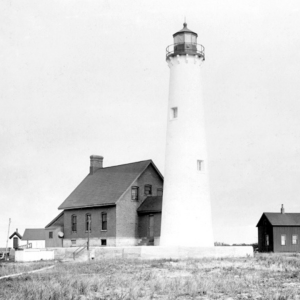
Northeast Lower Peninsula

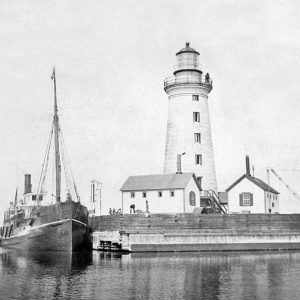
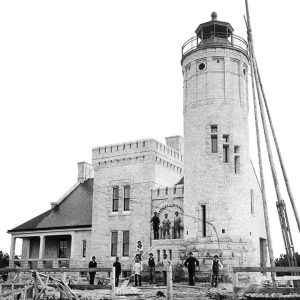
Middle Island Lighthouse

Middle Island Lighthouse guided ships along Lake Huron’s hazardous shoreline, reflecting evolving technology and community preservation efforts.

Rising from the waters of Lake Huron about ten miles north of Alpena, Middle Island Lighthouse marks a place that long held importance for mariners navigating the Michigan shoreline. Positioned midway between Thunder Bay and Presque Isle, the island offered both refuge and risk. Its sheltered harbor provided protection during storms. Yet, surrounding shoals made approach difficult and dangerous. Recognizing a Hazard on the Lake By the late nineteenth century, the hazards near Middle Island were well known. In 1881, the United States Life Saving Service established a station on the island to assist vessels in distress. As shipping traffic… Read More »


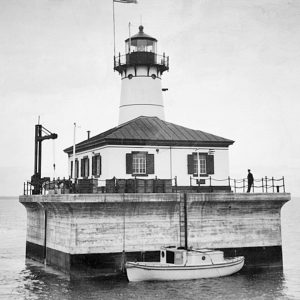
Fourteen Foot Shoal Lighthouse

Fourteen Foot Shoal Lighthouse marks a shallow hazard in Lake Huron, guiding ships through a narrow, historic Great Lakes shipping channel.

Guarding a Shallow Passage in Lake Huron At the northern end of Lake Huron, where deep water gives way to hidden hazards, the Fourteen Foot Shoal Lighthouse quietly does its job. Named for the fact that the lake is only fourteen feet deep at this point, the lighthouse marks a dangerous shoal. This area has long challenged ships and mariners navigating these busy waters. While it’s not a lighthouse most people ever step inside, its role in Great Lakes navigation has been critical for nearly a century. A Strategic Location on Lake Huron Fourteen Foot Shoal Lighthouse stands in U.S…. Read More »


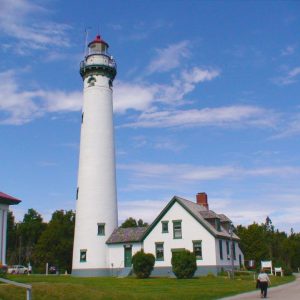
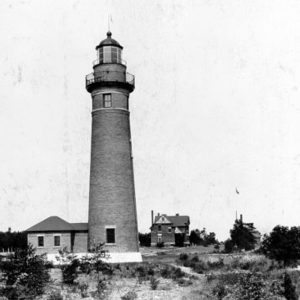
Forty Mile Point Lighthouse

Explore Forty Mile Point Lighthouse on Lake Huron, built to light a dangerous gap in the shoreline and home to the last classic lens on the lake.

Lighting the Gaps Along Lake Huron’s Shore Tucked along the western shore of Lake Huron near Hammond Bay, Forty Mile Point Lighthouse quietly tells a story of necessity, persistence, and Great Lakes resilience. Unlike many lighthouses built to guard busy harbors or river mouths, this light exists for a different reason. It ensures mariners were never left navigating the Lake Huron shoreline in complete darkness. Why Forty Mile Point Was Built By the late 1800s, most of the Presque Isle Peninsula was already illuminated. New Presque Isle Light to the south and Spectacle Reef Lighthouse offshore cast long beams across… Read More »


Cheboygan Front Range Lighthouse

Explore the history of Cheboygan Front Range Lighthouse, from harbor dredging and lumber shipping to dedicated keepers and preservation.

Guiding Ships into a Lumber Boomtown Long before Cheboygan became a quiet harbor town, it was a bustling shipping hub shaped by lumber, lake commerce, and the steady glow of lighthouse beams. The Cheboygan Front Range Lighthouse played a crucial role in guiding vessels safely into the river during a time when shallow water and shifting sandbars made navigation risky. Its story is closely tied to the growth of the harbor. Additionally, it is connected to the people who kept its lights burning. Improving the Cheboygan Harbor In 1871, plans were adopted to dramatically improve Cheboygan Harbor by dredging the… Read More »


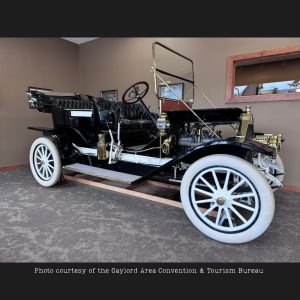
When Alpena Built Automobiles

Discover Alpena’s forgotten auto industry and the rare Alpena Flyer—now on display at the Besser Museum in Alpena. Credit: Besser Museum for Northeast Michigan. Used with permission.

The Rise and Fall of the Alpena Motor Car Company For a brief but ambitious moment in the early 20th century, Alpena believed it was on the verge of becoming something entirely new—an automobile manufacturing hub in a rapidly motorizing America. Long before Alpena became known primarily as a vacation destination and lakeside retreat, the city placed a bold bet on the future of transportation. That bet came in the form of the Alpena Motor Car Company. This short-lived but fascinating enterprise produced the Alpena Flyer, one of Michigan’s many forgotten early automobiles. Though the company operated for only a… Read More »


Cheboygan Crib Light

Discover the history of the Cheboygan Crib Light, from its offshore beginnings to its role today as a beloved Cheboygan landmark.

From Offshore Hazard to Hometown Icon At the mouth of the Cheboygan River, where it meets Lake Huron, stands one of Northern Michigan’s most distinctive navigational lights. Known as the Cheboygan Crib Light, this small but storied beacon has guided vessels for well over a century. Today, it sits proudly at the west pier head in Gordon Turner Park. This location is a familiar landmark and symbol of Cheboygan’s deep maritime roots. Where the Cheboygan Crib Light Is Located The Cheboygan Crib Light marks the west pier head at the entrance of the Cheboygan River into Lake Huron. It stands… Read More »


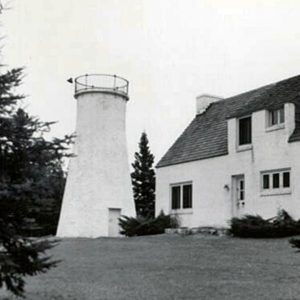
Bois Blanc Lighthouse

Discover the rich history of Bois Blanc Light on Michigan’s Bois Blanc Island, from its early beginnings to its present-day preservation.

Exploring the History of Bois Blanc Light: A Quiet Sentinel of Lake Huron Tucked away on the serene shores of Bois Blanc Island, the Bois Blanc Light has witnessed nearly two centuries of Great Lakes history. Though privately owned and closed to the public today, its story is one of resilience, reconstruction, and dedication to preservation. As part of our Northern Michigan lighthouse series, let’s take a closer look at the lighthouse that has guided mariners across Lake Huron since the early 1800s. The Many Faces of Bois Blanc Light Bois Blanc Light is a name that has applied to… Read More »


Au Sable Pierhead Lighthouse

From fire and storms to steel and survival, the Au Sable Pierhead Lighthouse tells a story of endurance on Lake Huron’s rugged shoreline.

Survivor of Fire and Change Where the Au Sable River meets Lake Huron, a lighthouse once stood watch over one of Michigan’s most bustling lumber towns. The Au Sable Pierhead Lighthouse was established to guide vessels safely into the mouth of the Au Sable River at Oscoda. It served as a vital harbor along Michigan’s northeastern shore. Though the river winds gently for 138 miles through the state’s northern Lower Peninsula, its meeting with Lake Huron was anything but tranquil. This was especially true in the days of lumber, mills, and massive ships. Lighting the Way for Lumber and Trade… Read More »


Alpena Light: “Little Red” Guardian of Thunder Bay

Discover the history of Alpena Light—“Little Red”—a unique 1914 lighthouse guiding ships safely into Michigan’s Thunder Bay.

Standing proudly at the mouth of the Thunder Bay River is the Alpena Light—affectionately known as “Little Red” or the “Thunder Bay River Lighthouse”. The light has guided ships in and out of Alpena’s harbor for more than a century. While it may not be the tallest or most ornate of Michigan’s lighthouses, this small, bright red beacon holds a big place in the region’s maritime story. Lighting the Way for Alpena’s Lumber Industry The history of the Alpena Light is closely tied to the rise of the local timber industry. As Alpena boomed in the mid-1800s, the Thunder Bay… Read More »


The Metz Fire of 1908

On Oct. 15, 1908, the Metz Fire devastated Presque Isle County, leaving 84 families homeless and testing the courage of the community.

Tragedy, Survival, and Rebuilding in Presque Isle County On this day in history, October 15, 1908, a series of massive fires swept through the pine forests of Presque Isle County, Michigan. Fueled by strong winds and dry conditions, the flames spread rapidly, engulfing the village of Metz. The fire continued eastward, threatening Rogers City, reaching the outskirts of Alpena, and even jumping across Grand Lake before finally burning out along the Lake Huron shore. While it became known as “The Metz Fire” due to its severe impact on the village, its destruction extended far beyond Metz itself. The Detroit &… Read More »


Thunder Bay Becomes a National Marine Sanctuary

On Oct. 7, 2000, Thunder Bay was named the first National Marine Sanctuary in the Great Lakes, protecting 116 historic shipwrecks.

On October 7, 2000, Thunder Bay made waves in history when the National Oceanic and Atmospheric Administration (NOAA) officially designated it as the first National Marine Sanctuary in the Great Lakes and 13th in the nation. Known as “Shipwreck Alley,” this stretch of Lake Huron off Alpena, Michigan, has claimed hundreds of vessels over the past two centuries—some lost to fierce storms, others to heavy fog, rocky shoals, or Thunder Bay Island itself. What was once a mariner’s nightmare is now a diver’s dream and a historian’s treasure chest. 116 Shipwrecks Thunder Bay’s reputation for danger began early. Its location… Read More »


Bridging the Straits: Michigan’s First State Ferry Service Set Sail in 1923

On July 31, 1923, Michigan launched its state ferry service across the Straits of Mackinac, and on August 6, 1923, the first car ferry—the wooden-hulled Ariel—made her maiden voyage across the straits.

🚗🚢 Michigan’s First State Ferry Service Ariel made her maiden voyage Before the Mackinac Bridge connected Michigan’s peninsulas, crossing the Straits of Mackinac was a challenge. This was true especially for the growing number of automobile owners in the early 20th century. On July 31, 1923, the State of Michigan stepped in to solve this problem by launching a state-operated ferry service. The ferry service would soon become an essential lifeline for travelers and commerce alike. A week after the service was officially established, on August 6, 1923, the first car ferry—the wooden-hulled Ariel—made her maiden voyage across the straits…. Read More »