Western Upper Peninsula

Marquette & Joliet’s Great River Journey

Marquette & Joliet’s Great River Journey

The Journey Begins On May 17, 1673, two unlikely adventurers—Jesuit missionary Father Jacques Marquette and French-Canadian fur trader Louis Joliet—pushed off from St. Ignace in canoes, beginning one of the most significant exploration journeys in North American history. Accompanied by five voyageurs and guided by Indigenous knowledge, their mission was to find and map the mighty river that Native peoples called the Messipi—“the Great River.” Their journey wasn’t just about maps and discovery. It was about connecting a continent. With little more than determination, their canoes, and guidance from Native tribes, they ventured across what would become Wisconsin and followed… Read More »


Cora Reynolds Anderson Born in L’Anse

A Pioneer in Michigan’s Political and Social Landscape Cora Reynolds Anderson’s was born in L’Anse on April 10, 1882. Her journey from the remote Upper Peninsula to the Michigan House of Representatives marked a monumental shift in Michigan’s political landscape. Anderson grew up within a rich tapestry of English, French, and Chippewa heritage. Her upbringing would deeply influence her advocacy for public health and social justice. She was among the few women and Native Americans who pursued an education during her time. She eventual earned a teaching diploma at the Haskell Institute in Kansas. Anderson’s educational foundation shaped her life’s… Read More »


Isle Royale Officially a National Park

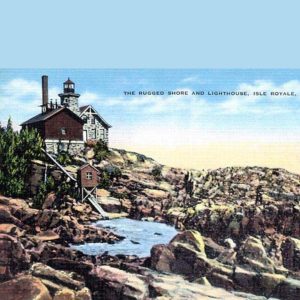
From Authorization to Reality Last month, we highlighted March 3, 1931, as the day Congress authorized the establishment of Isle Royale National Park and the park’s history. But authorization was just the beginning. It wasn’t until April 3, 1940, that President Franklin D. Roosevelt officially designated Isle Royale as a national park. Why the delay? Like many things in government, the process was anything but simple. After Congress authorized the park, the government had to define its boundaries, acquire land, and put the necessary infrastructure in place. This took time, especially considering Isle Royale’s remote location and the interests of… Read More »


Michigan Tech’s World’s Largest Snowball

Rolling Into History March 29, 2013, was a big day—literally—for Michigan Technological University. On that chilly spring day, a group of determined students took to the softball field with a singular mission: reclaim their Guinness World Record for the largest snowball ever made. With 30 students rolling in unison and help from professional surveyors, they spent two and a half grueling hours crafting a giant snowball that would go down in history. When the final measurements were taken, the giant snowball stood at an impressive 32.94 feet in circumference, 10.45 feet in diameter, and 9.28 feet tall. Estimates put its… Read More »


Grand Opening of the Calumet Theatre

A Stage for the Ages On this day in history, March 20, 1900, the Calumet Theatre opened its doors to an eager audience. The first show was a touring Broadway production of The Highwayman by Reginald DeKoven and Harry B. Smith. It was a momentous occasion for the village of Calumet, a community built on copper and ambition. As the first municipally built theater in the country, the Calumet Theatre was more than just a venue; it was a declaration that this mining town could rival the cultural sophistication of major cities. At the turn of the 20th century, Calumet was… Read More »


Houghton County Organized

Michigan’s Copper Country Boomtown Houghton County, nestled in Michigan’s Upper Peninsula, has a history as rich as the copper veins. Those veins once made it a national mining powerhouse. From its earliest settlers in the 1840s to its booming copper industry after the Civil War, this county played a pivotal role in shaping the region’s economy and culture. The Rise of Copper Country On March 19, 1845 Houghton County was organized. Named after Douglass Houghton, Michigan’s first state geologist, the county quickly grew into the heart of the Copper Country. By the 1870s, the Calumet & Hecla Mining Company was… Read More »


Mary Chase Perry Stratton: Co-Founder of Pewabic Pottery

A Legacy in Clay In the world of American ceramics, few names carry the weight of Mary Chase Perry Stratton. Born March 15, 1867 in Hancock, Michigan, she transformed a love of art and craftsmanship into one of the most enduring legacies in architectural ceramics: Pewabic Pottery. From her early days exploring the Upper Peninsula’s copper mines to her later years shaping Detroit’s artistic landscape, Stratton’s impact on ceramic arts is impossible to ignore. Her artistic journey began in Detroit, where she took her first formal art classes before heading to the Art Academy of Cincinnati. There, she studied under… Read More »


Keweenaw County Officially Organized

Michigan’s Northernmost Gem with a Rich Past On this day in history, Keweenaw County was officially organized. The copper rush that shaped Michigan’s northernmost county was in full swing and folks came to work! Keweenaw County, a rugged and beautiful stretch of the Upper Peninsula, saw thousands of miners, investors, and adventurers flock to its shores in the 1840s in search of valuable copper. While the industry has faded, its rich history lives on in the region’s preserved mining towns, maritime landmarks, and stunning landscapes. Tucked away in the rugged Upper Peninsula, Keweenaw County is Michigan’s northernmost and least populated… Read More »


Isle Royale National Park: A Journey Through History

On this day in history, March 3, 1931, Congress authorized the establishment of Isle Royale National Park. The purpose was to preserve its rugged wilderness and deep historical roots. From ancient Indigenous copper mining dating back over 6,500 years to 19th-century fishing settlements and failed mining ventures, Isle Royale has long been a place of human resilience and natural beauty. Now a protected national park, its stories live on through preserved artifacts, historic sites, and even the shipwrecks resting beneath Lake Superior’s waters. A Storied Past in the Heart of Lake Superior Long before it became a national park, Isle… Read More »


Ishpeming: The Birthplace of Organized Skiing in America

Ski Jumps and Slopes In the heart of Michigan’s Upper Peninsula lies a small town with big history: Ishpeming. Known as the “birthplace of organized skiing in America,” Ishpeming’s legacy is steeped in snow, speed, and soaring ski jumps. If you’re a fan of winter sports, this is a story you’ll want to hear. It all began on February 21, 1905, when ski enthusiasts from Ishpeming, Minneapolis, Red Wing, and Eau Claire gathered to form the National Ski Association. This groundbreaking meeting was led by Carl Tellefsen, a Norwegian immigrant and founder of the Ishpeming Ski Club. Tellefsen, an early… Read More »


George Gipp: The Legend Behind “Win One for the Gipper”

The Gipper Few athletes leave a legacy so enduring that their name becomes synonymous with inspiration. George Gipp, affectionately known as “The Gipper,” is one of those rare figures. Born on February 18, 1895, in Laurium, Michigan, on the Keweenaw Peninsula, Gipp’s story is one of raw talent, grit, and a little bit of myth-making. Gipp rose from humble beginnings to become one of Notre Dame’s most celebrated athletes. George Gipp initially enrolled at Notre Dame with dreams of playing baseball. Gipp caught the eye of the legendary coach Knute Rockne, who convinced him to join the football team despite… Read More »


Ski Jumpers and the Birth of Suicide Hill

A Leap Through History in Ishpeming Few traditions in Michigan match the boldness and spectacle of ski jumpers launching themselves off the imposing Suicide Hill in Ishpeming. This iconic ski jump has been the heart of winter sports in the region since February 26, 1926, when brave souls first tested its daring heights. But the story of Suicide Hill goes back even further. It is rooted in the passion of early ski clubs and the adventurous spirit of a community united by winter. Before Suicide Hill came into existence, the Ishpeming Ski Club (formerly the Norden Ski Club) was already… Read More »