Archives

Month: May 2026

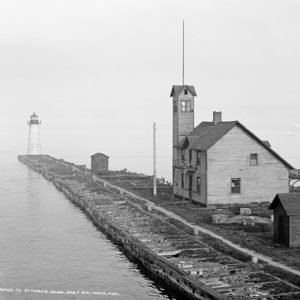
Vidal Shoals Range Lights

Vidal Shoals Range Lights guided ships near the Soo Locks, reflecting major navigation improvements along the St. Marys River shipping corridor.

Along the busy approaches to the Soo Locks, a complex system of range lights once guided vessels through one of the most critical shipping corridors in North America. The Vidal Shoals Range Lights directly supported the growth of the St. Marys River shipping channel and the expanding importance of the canal system connecting Lake Superior to the lower Great Lakes. A Canal of National Importance Workers completed the Soo Locks in 1855, transforming transportation on the Great Lakes. By allowing ships to bypass the rapids at Sault Ste. Marie, the locks created a vital link for iron ore, timber, and… Read More »

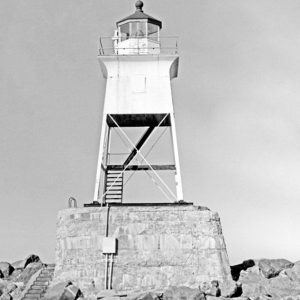
Marquette Harbor Breakwater Light

Marquette Harbor Breakwater Light reflects decades of harbor engineering, storm damage, and technological change along Lake Superior’s historic ore port.

The lighthouse at the end of Marquette’s harbor breakwater reflects a long history of change along one of Lake Superior’s most important ore shipping ports. Though modest in size today, the light represents decades of engineering work, maritime growth, and the constant challenge of protecting vessels in exposed waters. Early Harbor Improvements Marquette Harbor first gained a lighthouse on the nearby point in 1853, serving ships involved in the growing iron ore trade. At the time, the harbor offered little natural protection. Storms sweeping in from the north and east could make docking difficult and dangerous. To improve conditions, work… Read More »


Manning Memorial Lighthouse

Manning Memorial Lighthouse near Empire honors a local fisherman and stands as one of Michigan’s newest private aids to navigation.

Along the shoreline near Empire, a small but meaningful lighthouse stands as a tribute to one man’s love of Lake Michigan. Known as the Manning Memorial Lighthouse, this modern beacon reflects a personal story rather than the large-scale shipping needs that shaped most Great Lakes lights. A Fisherman’s Wish Robert H. Manning was born in 1927 and spent his life in the Empire area. He worked in insurance and later served as a civilian supply worker at the nearby Empire Air Force Station. In his spare time, he found peace on the water, often fishing offshore in Lake Michigan. Returning… Read More »


Club Manitou, Harbor Springs, and the Summers That Weren’t Quite So Quiet

Discover the story of Club Manitou and Club Ponytail in Harbor Springs, from Prohibition era secrets to unforgettable summer music.

On the surface, Harbor Springs feels timeless. Sailboats drift across Little Traverse Bay. Cottages sit quietly behind trees. Summer unfolds at an easy pace that has not changed much in generations. But in the late 1920s, something very different was happening just beyond that calm surface. For a few decades, one secluded club brought together wealth, music, and a shadow of organized crime. It became one of the most talked about places in Northern Michigan, even if few locals ever stepped inside. A Resort Town with Quiet Appeal By the early 1900s, Harbor Springs had already found its rhythm as… Read More »


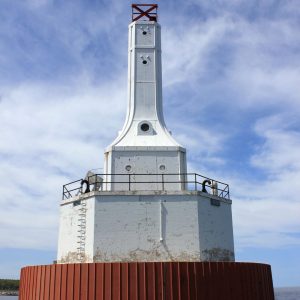
Poe Reef Lighthouse

Poe Reef Lighthouse marks a dangerous shoal in the Straits of Mackinac, reflecting the shift from lightships to permanent offshore lights.

Rising from the waters of the Straits of Mackinac, Poe Reef Lighthouse marks one of the most challenging navigation points along the route between Lake Huron and Lake Michigan. Positioned near the center of the South Channel, the reef has long posed a serious hazard for vessels traveling west toward the open waters beyond the Straits. A Dangerous Passage in the Straits The South Channel became increasingly important as steam powered vessels replaced sailing ships and required deeper, more direct routes. Although the channel is roughly three nautical miles wide, Poe Reef sits near its midpoint. To the north, shallow… Read More »


Keweenaw Waterway Upper Entrance Light

Keweenaw Waterway Upper Entrance Light marks the northern gateway to the Portage Waterway, reflecting decades of engineering and navigation on Lake Superior.

At the northern end of the Portage Waterway, where the canal meets the open waters of Lake Superior, the Keweenaw Waterway Upper Entrance Light stands within what is now McLain State Park. This lighthouse reflects decades of engineering work. Over time, this work transformed the Portage River into a vital passage across Michigan’s Keweenaw Peninsula. Early Navigation Improvements The Portage River was first dredged in 1860, creating a navigable shortcut that allowed vessels to cross the peninsula rather than sail around its exposed northern coast. As traffic increased, the need for reliable navigation aids at the waterway’s entrance became clear…. Read More »


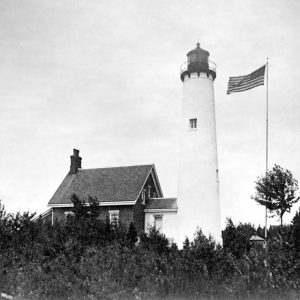
St. Helena Island Lighthouse

St. Helena Island Lighthouse guided ships through the Straits of Mackinac and became Michigan’s first automated light, shaping regional navigation history.

St. Helena Island Lighthouse rises from the southeastern point of a remote island in the Lake Michigan approach to the Straits of Mackinac. Built in the early 1870s, the light became part of a coordinated effort to guide vessels safely through one of the most heavily traveled and hazardous passages in the Great Lakes. A Strategic Island in the Straits Located about ten miles west of Mackinac Island, St. Helena Island covers roughly two hundred forty acres. Its natural harbor on the north shore has long provided shelter from strong southwesterly storms that sweep across the length of Lake Michigan…. Read More »


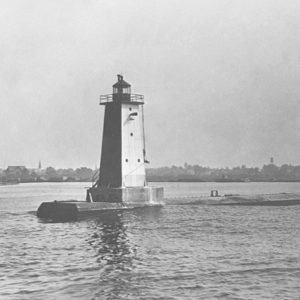
Manistique East Breakwater Light

Manistique East Breakwater Light guided ships into a busy Lake Michigan harbor, reflecting the city’s industrial past and evolving maritime navigation.

At the edge of Manistique’s harbor, a compact steel tower stands as a reminder of the city’s once thriving maritime past. Officials built the Manistique East Breakwater Light during a period when the harbor bustled with activity, serving as a gateway for timber, pig iron, and other cargo moving across Lake Michigan A Harbor in Need of Protection During the late nineteenth century, timber crib piers protected Manistique’s harbor. These early structures, constructed in the 1870s, provided limited shelter from storms that could quickly turn dangerous. As shipping increased, local leaders recognized the need for stronger harbor defenses. By 1910,… Read More »